


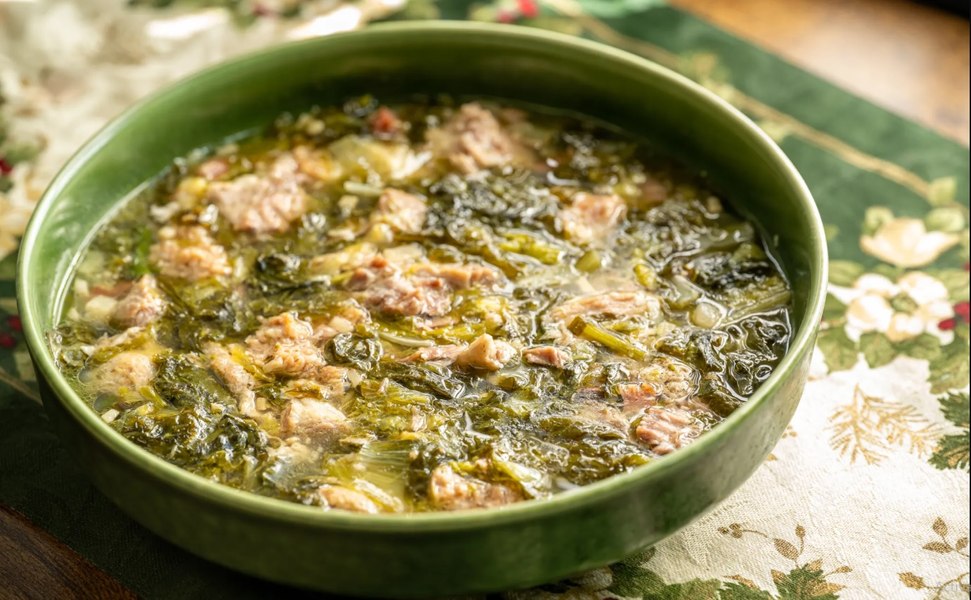
Italian 'poor man's cuisine' dish 'minestra' hailed as healthy, historic elixir
Translated from Romanian, summarized and contextualized by DistantNews.
At a glance
In-depth
Sources not specified
Context piece
- An Italian "poor man's cuisine" dish, "minestra," is highlighted for its health benefits and historical significance.
- This traditional soup, dating back over 2,000 years, was a staple for ordinary Romans and is rich in vitamins and nutrients.
- "Minestra," meaning soup in Italian, is described as a hearty, vegetable- and pasta-filled dish that embodies the resourceful and healthy eating principles of "cucina povera."
A traditional Italian dish, known as "minestra," is being celebrated for its remarkable health benefits and deep historical roots, embodying the essence of "cucina povera," or poor man's cuisine. This dish, far from being a simple soup, is described as a "food medicine" and an "elixir of youth," packed with essential vitamins, nutrients, and minerals that nourish the body while offering an incredibly delicious taste.
It contains a wealth of vitamins, nutrients, and essential minerals that nourish the body. In addition, it is extraordinarily tasty.
With a history stretching back over two millennia, "minestra" was a fundamental part of the diet for ordinary Romans. The word itself derives from the Latin "ministrare," meaning "to serve," reflecting a tradition where the dish was served from a large communal pot. It was considered the main course for plebeian families, showcasing how resourceful ingredients could create a satisfying and healthful meal even in times of scarcity.
It is a dish with extraordinary antiquity and incredible properties for health, as well as for maintaining vitality, even at an advanced age.
While often translated as "soup," "minestra" is typically a thick, hearty concoction brimming with vegetables and often pasta, making it exceptionally filling. There was no single fixed recipe in ancient Rome; instead, it followed the principle of using whatever ingredients were available from gardens and the surrounding environment. Common components included lentils, onions, cabbage, and beans, highlighting its vegetable-centric and adaptable nature.
It was the staple food of the Roman plebeian, that is, the common man.
The "cucina povera" philosophy, from which "minestra" originates, emphasizes simple, flavorful, and healthy preparations using readily available ingredients. This approach is often linked to the longevity observed in Mediterranean populations. "Minestra" stands as a prime example, proving that sophisticated or luxurious cuisine does not necessarily equate to superior health or satiety. It represents the "grandmothers' soup" of Italian history, a testament to enduring culinary wisdom.
The principle of minestra was: whatever we can find in the garden and surroundings goes into the soup.
DistantNews Editorial
Originally published by Adevărul in Romanian. Translated, summarized, and contextualized by our editorial team with added local perspective. Read our editorial standards.
More Stories



From Our Blog

What Gets Lost (and Found) When News Is Translated

The Critical Role of Diaspora Media in Global News

What Travellers Should Know About Countries with Restricted Press

A Digital Nomad's Guide to Following Local News

How the Same Story Looks Different in Different Countries
