

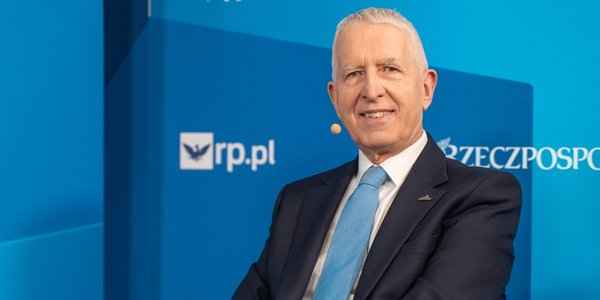

Jędrzej Bielecki: No Polish Leader Has Gone So Far in Undermining NATO as Donald Tusk
Translated from Polish, summarized and contextualized by DistantNews.
TLDR
- Polish Prime Minister Donald Tusk expressed concerns about NATO's commitment and readiness in an interview with the Financial Times.
- Tusk questioned whether the US is prepared to be as loyal as NATO treaties stipulate, particularly regarding the defense of Eastern flank members.
- He emphasized the need for practical, not just theoretical, security guarantees and suggested strengthening European defense capabilities as a potential 'Plan B'.
Prime Minister Donald Tusk's recent remarks in the Financial Times have sent ripples through both domestic and international political circles, articulating a growing unease about the future of transatlantic security. His questioning of NATO's readiness and the United States' commitment to its allies, particularly on the Eastern flank, reflects a pragmatic, albeit potentially controversial, assessment of the current geopolitical landscape.
The most important question is whether the United States is ready to be as loyal as it is written in our (NATO – ed.) treaties.
From a Polish perspective, deeply rooted in historical experiences and proximity to a resurgent Russia, Tusk's anxieties are not unfounded. The "dream" he articulates – of paper guarantees transforming into tangible, practical security – resonates with a nation that has long felt the vulnerability of its position. His warning that the threat from Russia could materialize not in years, but in months, underscores a sense of urgency that may not be fully grasped by all Western allies.
For the entire eastern flank, for my neighbors, the question is whether NATO is still an organization ready to react politically, but also logistically, if, for example, the Russians try to attack.
Tusk's exploration of a "Plan B," centered on strengthening European defense capabilities and deepening integration, including potential bilateral nuclear guarantees with France, signals a strategic shift. While he assures Washington of Poland's loyalty, his focus on European self-reliance highlights a desire to build a more robust security architecture independent of, or at least complementary to, NATO. This approach, while potentially straining relations with the US, is viewed by some in Poland as a necessary adaptation to a changing world, ensuring security even if traditional alliances falter. The publication, Rzeczpospolita, often provides a platform for such strategic discussions, reflecting a national debate on how best to secure Poland's interests in a complex neighborhood.
These words should not be treated as an expression of skepticism towards Article 5 of NATO, considerations of whether it applies or not, but rather as a description of my dream that guarantees on paper will turn into something very practical.
DistantNews Editorial
Originally published by Rzeczpospolita in Polish. Translated, summarized, and contextualized by our editorial team with added local perspective. Read our editorial standards.
More Stories
From Our Blog

What Gets Lost (and Found) When News Is Translated

The Critical Role of Diaspora Media in Global News

What Travellers Should Know About Countries with Restricted Press

A Digital Nomad's Guide to Following Local News

How the Same Story Looks Different in Different Countries
