


Johor election to measure public support for Anwar - Mohd. Syahir
Translated from Malay, summarized and contextualized by DistantNews.
At a glance
News
Sources not specified
Context piece
- A Malaysian politician claims the Johor state election will be a key indicator of public support for Prime Minister Anwar Ibrahim in Peninsular Malaysia.
- He argues that Anwar's legitimacy stems from parliamentary support, not a direct popular mandate from the last general election.
- The politician suggests that declining public confidence, coupled with economic and debt issues, is causing a deficit in trust for Anwar's administration.
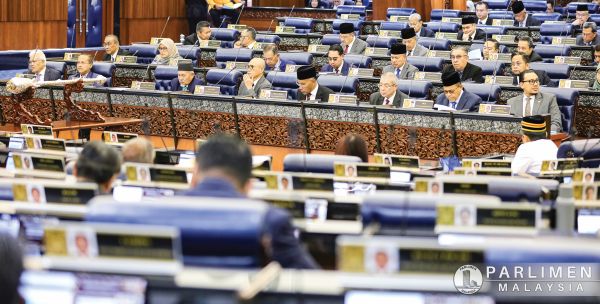
The upcoming Johor state election is being framed as a crucial test of public support for Prime Minister Anwar Ibrahim's leadership in Peninsular Malaysia, according to Bachok Member of Parliament Mohd. Syahir Che Sulaiman.
Despite Anwar's public statements that he will remain Prime Minister regardless of the election outcome, Syahir contends that the results will serve as a significant signal of public acceptance. He noted that the public is increasingly comparing Anwar's leadership style, particularly his crisis management, with that of previous administrations.
Syahir pointed to the Sabah state election as an initial indicator and stated that the Johor election will now measure support in Peninsular Malaysia. He questioned Anwar's confidence in his popular backing, asking if he would dare to prove it at the ballot box.
The MP asserted that Anwar's legitimacy as Prime Minister was established through parliamentary support, not a direct mandate from the people in the 15th General Election (PRU15). He recalled that Pakatan Harapan (PH) secured only 82 seats, and Barisan Nasional (BN) had its worst result ever with 30 seats. Anwar later formed a slim majority government through cooperation between PH and BN, later joined by Gabungan Parti Sarawak (GPS) and Gabungan Rakyat Sabah (GRS).
Syahir argued that Anwar's administration is currently facing not only financial deficits and rising debt but also a "deficit of confidence." He observed that opposition to Anwar comes not only from the opposition parties but also from civil society groups that previously supported reform agendas. The politician suggested that this sentiment is fueled by public questioning of Anwar's leadership, with some expressing nostalgia for previous administrations, especially as Anwar's own legacy remains unclear.
DistantNews Editorial
Originally published by Utusan Malaysia in Malay. Translated, summarized, and contextualized by our editorial team with added local perspective. Read our editorial standards.
More Stories



From Our Blog

What Gets Lost (and Found) When News Is Translated

The Critical Role of Diaspora Media in Global News

What Travellers Should Know About Countries with Restricted Press

A Digital Nomad's Guide to Following Local News

How the Same Story Looks Different in Different Countries
