

Journey down the Mekong River: what to see among rice paddies, mangroves, and traditional villages
Translated from Spanish, summarized and contextualized by DistantNews.
TLDR
- The Mekong River, originating in Tibet, flows through six countries and is crucial for biodiversity and agriculture in Southeast Asia.
- It is known as the 'Mother of Waters' and supports a vast array of species, second only to the Amazon.
- The river's delta in Vietnam is a vital food source, while its tributaries and associated landscapes offer cultural and natural attractions in Cambodia and Vietnam.
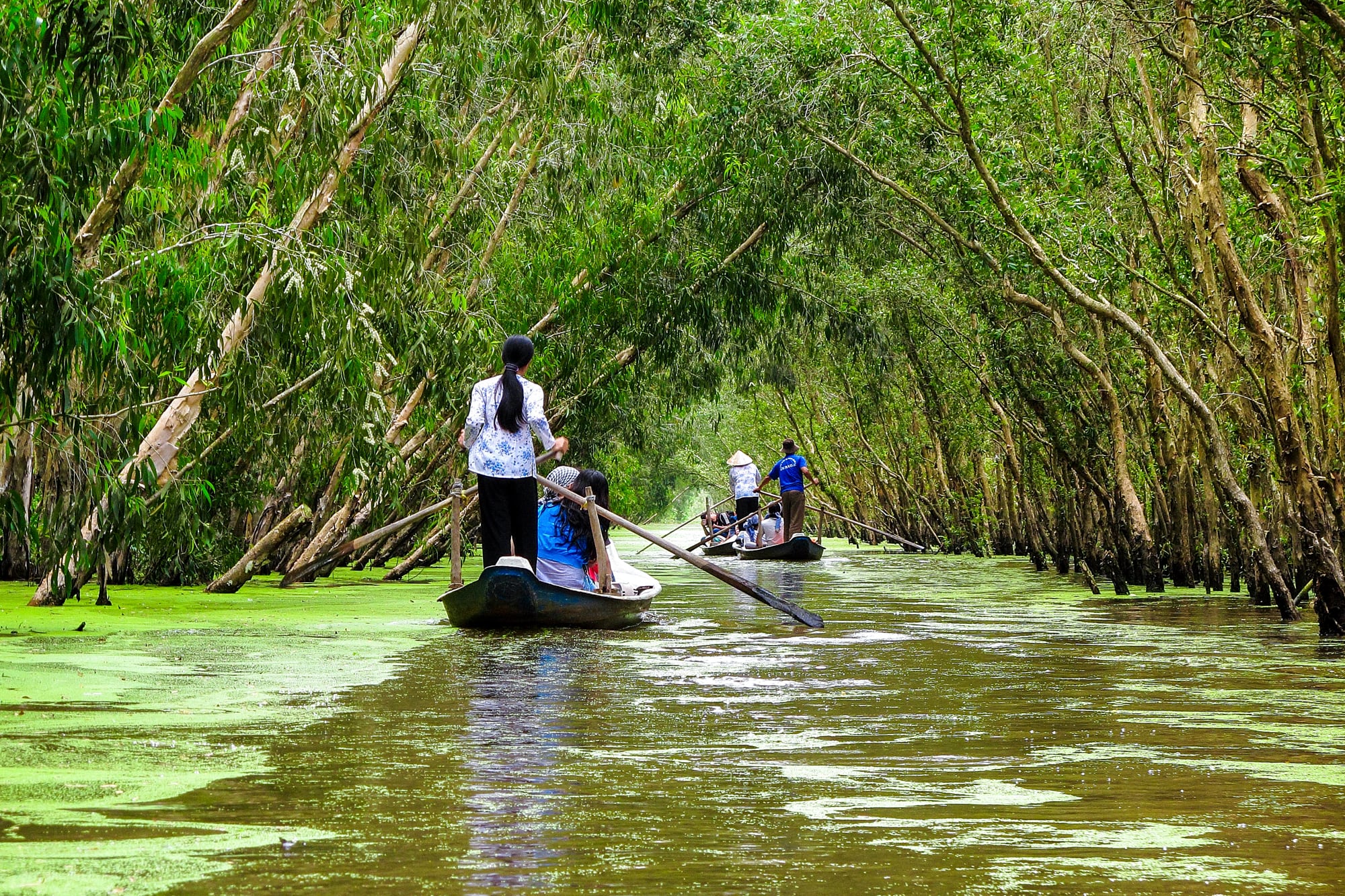
The Mekong River, a lifeblood of Southeast Asia, offers a journey through diverse landscapes and rich cultural heritage. Originating in the Tibetan plateau as the Lancang River, it carves a path through China, Myanmar, Laos, Thailand, Cambodia, and Vietnam, eventually dividing into nine branches – the 'nine dragons' – that irrigate a vast delta.
Referred to as the 'Mother of Waters' (Mae Nam Khong), the Mekong boasts incredible biodiversity, second only to the Amazon. It is home to over 1,000 species, including the Mekong giant catfish and freshwater stingray. This natural wealth is not just an ecological marvel but also a critical resource, providing sustenance and livelihoods for millions.
In Cambodia, the Mekong is the country's main artery. Siem Reap, near the Tonle Sap lake, showcases the cultural significance of the lotus flower, a symbol of purity in Buddhism, with its plants used for food, textiles, and religious offerings. The riverbanks of Phnom Penh, the capital, come alive at sunset, offering a glimpse into local life.
Further downstream in Vietnam, the Mekong Delta, covering 12% of the country's surface, is the nation's breadbasket, supplying 20% of its food. This region, with its intricate network of canals and islands, is a testament to the river's profound impact on human civilization and agriculture. Travel along the Mekong is not just a scenic tour but an immersion into the heart of a region shaped by this mighty river.
DistantNews Editorial
Originally published by La Nación in Spanish. Translated, summarized, and contextualized by our editorial team with added local perspective. Read our editorial standards.
More Stories


From Our Blog

What Gets Lost (and Found) When News Is Translated

The Critical Role of Diaspora Media in Global News

What Travellers Should Know About Countries with Restricted Press

A Digital Nomad's Guide to Following Local News

How the Same Story Looks Different in Different Countries
