

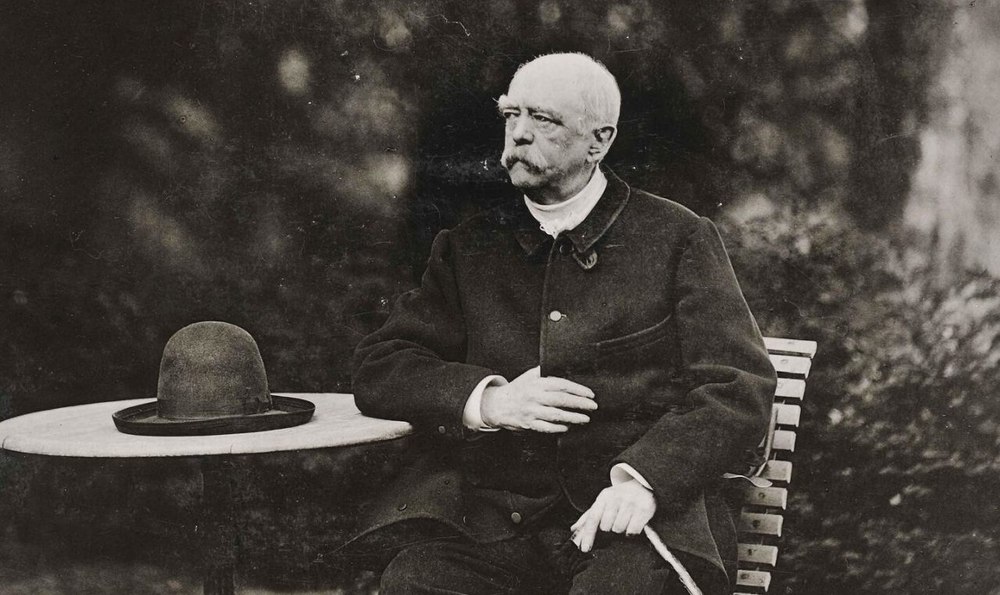
July 30: 1898 - Otto von Bismarck, the 'Iron Chancellor' who unified Germany, dies
Translated from Romanian, summarized and contextualized by DistantNews.
At a glance
News
Sources not specified
Context piece
- Otto von Bismarck, the "Iron Chancellor" who unified Germany, died on July 30, 1898.
- Bismarck served as Prussia's Prime Minister and Foreign Minister, leading decisive wars that resulted in German unification in 1871.
- He implemented domestic policies that laid the groundwork for the first welfare state and managed European peace through a balance of power.
Otto von Bismarck, the pivotal figure behind German unification and the first Chancellor of the German Empire, died on July 30, 1898. Known as the "Iron Chancellor," Bismarck's political career was marked by strategic diplomacy and decisive military action that reshaped the European landscape.
Born in 1815, Bismarck rose through Prussian politics, serving as ambassador to Russia and France before becoming Prime Minister and Foreign Minister of Prussia in 1862. Under his leadership, Prussia achieved victories against Denmark, Austria, and France, culminating in the formation of the German Empire in 1871. As Chancellor, he was instrumental in establishing a system of alliances that maintained peace in Europe for decades.
Bismarck's domestic policies were as impactful as his foreign policy. He laid the foundations for Germany's first welfare state, introducing social insurance programs aimed at improving workers' lives and curbing the influence of socialists. He also engaged in the "Kulturkampf," a conflict with the Catholic Church, though he later shifted his approach.
Despite his authoritarian style, which concentrated power within the monarchy and Prussian elite, Bismarck's legacy is tied to the creation of a unified Germany and a period of relative European stability. He was dismissed by Kaiser Wilhelm II in 1890 and retired from public life, passing away eight years later in Friedrichsruh.
DistantNews Editorial
Originally published by Adevărul in Romanian. Translated, summarized, and contextualized by our editorial team with added local perspective. Read our editorial standards.
More Stories


From Our Blog

What Gets Lost (and Found) When News Is Translated

The Critical Role of Diaspora Media in Global News

What Travellers Should Know About Countries with Restricted Press

A Digital Nomad's Guide to Following Local News

How the Same Story Looks Different in Different Countries
