


Jury finds Duane Davis guilty in 1996 murder of Tupac Shakur
Summarized by DistantNews. Read the original for the full story.
At a glance
Newswire
Named sources
Ongoing story
- A jury found Duane “Keffe D” Davis guilty in the 1996 drive-by killing of rapper Tupac Shakur in Las Vegas.
- Prosecutors said Davis’s statements showed he organized the shooting, while his defense argued that no evidence placed him in Las Vegas or inside the vehicle used in the attack.
- The jury reached its verdict in less than three hours.
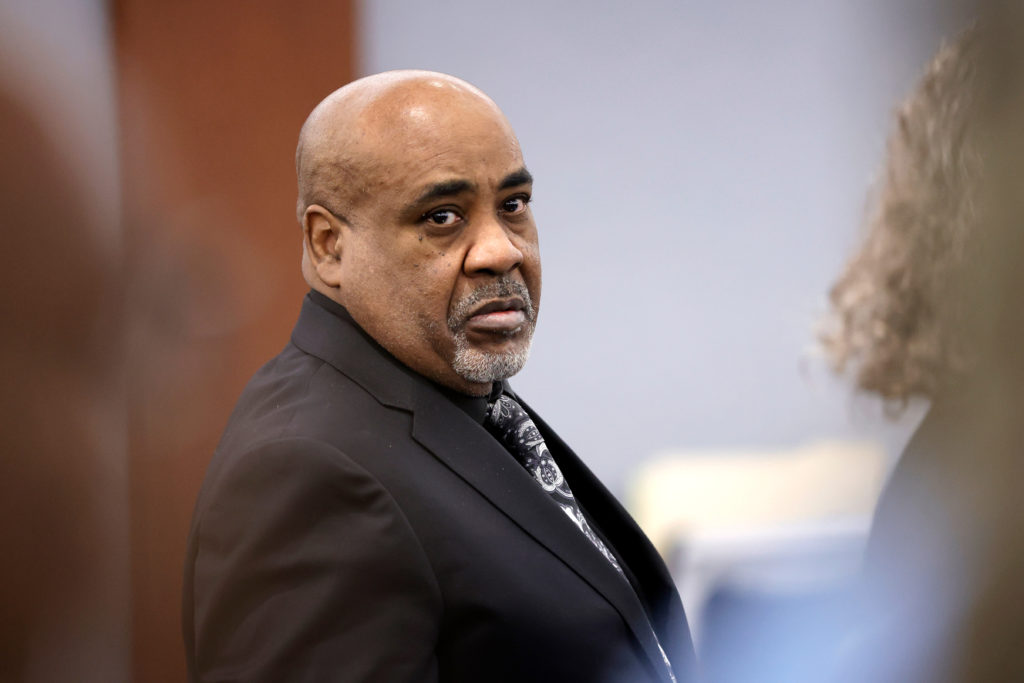
Duane “Keffe D” Davis was found guilty in the killing of Tupac Shakur, ending a nearly three-decade wait for a verdict in one of hip-hop’s most prominent unsolved murders.
The jury deliberated for less than three hours. Davis, 63, faced a murder charge involving a deadly weapon, with prosecutors alleging that the crime aimed to promote, further or assist a criminal gang. He had pleaded not guilty.
went hunting
Chief Deputy District Attorney Binu Palal told jurors that Davis obtained a gun and “went hunting” for Shakur and Death Row Records co-founder Marion “Suge” Knight. Palal said the two had beaten Davis’s nephew earlier that night. Prosecutors argued that Davis’s own words connected him to the shooting.
Palal acknowledged that Davis had given differing accounts over the years. He said those changes reflected Davis’s shifting motivations and attempts to protect himself, while one central detail stayed consistent: Davis repeatedly placed himself inside the white Cadillac from which the shots were fired.
“The core facts remain. The material facts remain,” Palal said in closing arguments.
The core facts remain. The material facts remain.
Defense attorney Michael Sanft challenged jurors to find evidence beyond Davis’s statements that put him in Las Vegas or inside the Cadillac on Sept. 7, 1996. He cited the absence of surveillance footage, phone records and other evidence tying Davis to the scene.
“They have nothing in this case that says that man was here in Las Vegas on Sept. 7, 1996,” Sanft said, pointing toward Davis.
They have nothing in this case that says that man was here in Las Vegas on Sept. 7, 1996.
About this summary
Originally published by CBS News. Summarized and contextualized automatically by DistantNews, with a note on how the source frames the story. Not individually reviewed before publishing. How this works.
More Stories

From Our Blog

How the Same Story Looks Different in Different Countries

What Gets Lost (and Found) When News Is Translated

The Critical Role of Diaspora Media in Global News

What Travellers Should Know About Countries with Restricted Press

A Digital Nomad's Guide to Following Local News
