


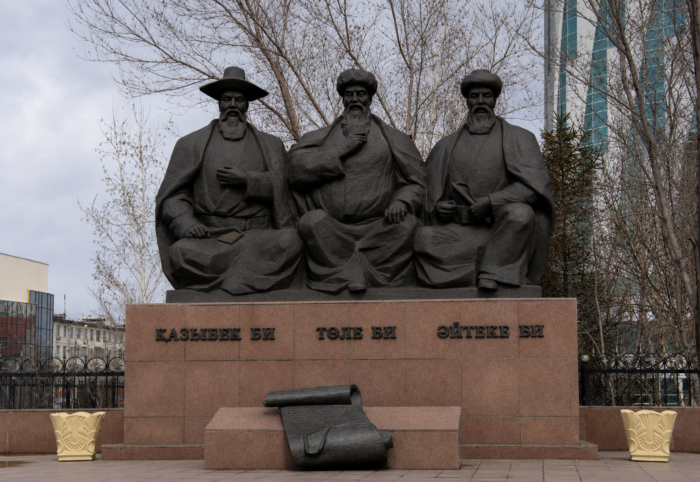
Justice on Steppe: How Kazakh Judges Settle Disputes
Summarized and contextualized by DistantNews.
At a glance
In-depth
Named sources
Context piece
- Kazakhstan's traditional dispute resolution methods involved respected judges called biys, whose authority came from public trust and knowledge of customary law.
- Modern legal systems have largely replaced biys, but their legacy influences contemporary Kazakh jurisprudence.
- The Astana Times explores the historical role of biys and their connection to modern judicial practices in Kazakhstan.
Long before modern courts, disputes on the Kazakh steppe were settled by biys. These respected judges derived their authority not from official appointment, but from public trust and a deep understanding of customary law. Their reputation for fairness was paramount.
While modern legal systems have largely superseded the biys, their legacy continues to influence contemporary Kazakh jurisprudence. The Astana Times delves into the historical significance of these traditional judges and their enduring connection to Kazakhstan's current judicial practices.
Zharilkasyn Zhappasov, a professor and candidate of historical sciences, contributes to the discussion, highlighting the historical context and evolution of justice on the steppe. The article examines how these ancient methods shaped the principles of fairness and public trust that are still relevant in Kazakhstan today.
Long before modern courts emerged, disputes on the Kazakh steppe were resolved by biys, a respected judges whose authority stemmed not from official appointment but from public trust, deep knowledge of customary law and a reputation for fairness.
DistantNews Editorial
Originally published by The Astana Times. Summarized and contextualized by our editorial team with added local perspective. Read our editorial standards.
More Stories


From Our Blog

What Gets Lost (and Found) When News Is Translated

The Critical Role of Diaspora Media in Global News

What Travellers Should Know About Countries with Restricted Press

A Digital Nomad's Guide to Following Local News

How the Same Story Looks Different in Different Countries
