


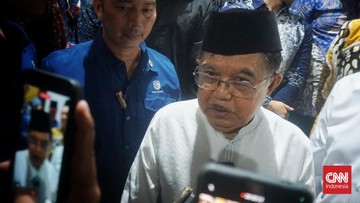
Jusuf Kalla Faces Blasphemy Accusation Over 'Martyrdom' Remarks in Lecture
Translated from Indonesian, summarized and contextualized by DistantNews.
TLDR
- Former Indonesian Vice Presidents Jusuf Kalla is facing a blasphemy accusation for remarks made during a March 5, 2026, lecture.
- The accusation, filed by the Indonesian Christian Youth Movement (GAMKI) and other organizations, centers on Kalla's use of the term 'martyrdom' in relation to religious conflicts in Poso and Ambon.
- Kalla stated that both Christian and Muslim teachings do not guarantee a murderer entry into heaven, aiming to de-escalate religious conflict.
The recent report of a blasphemy accusation against former Vice President Jusuf Kalla, stemming from a lecture at UGM Mosque on March 5, 2026, has stirred considerable debate. The accusation, brought forth by the Indonesian Christian Youth Movement (GAMKI) and other affiliated organizations, centers on Kalla's remarks concerning religious conflicts in Poso and Ambon during the late 1990s and early 2000s. Specifically, the term 'syahid' (martyr) used by Kalla in his lecture has become the focal point of contention.
Ada juga (konflik) karena agama, walaupun didahului dengan ketidakadilan. Kemudian akibatnya ke agama, kaya Poso, Ambon, DI/TII. Kenapa agama gampang menjadi jadikan alasan konflik, kaya di Poso, Ambon. Karena kedua-duanya Islam dan Kristen berpendapat mati atau menewaskan orang, mati atau mematikan, itu syahid. Semua pihak, Kristen juga berpikir begitu, kalau saya bunuh orang Islam saya syahid, kalau saya mati pun, saya syahid. Akhirnya susah berhenti kalau konfliknya orang membawanya ke agama.
Kalla, in his lecture titled 'Indonesian Diplomacy Strategy in Mitigating Potential Escalation of Multipolar Regional Wars,' touched upon 15 major conflicts in Indonesia, two of which were the Poso and Ambon tragedies. He explained that while these conflicts were initially rooted in injustice, religion became a significant factor. Kalla argued that the concept of martyrdom, perceived by both Muslims and Christians as a reward for killing or dying in conflict, made these wars difficult to end. He stated that both sides believed they were martyrs, whether they killed or were killed.
Waktu di Ambon terbagi kota itu, ini Kristen, ini Islam. Kalau masuk (wilayah) Kristen, dipenggal orang. Kalau masuk daerah Islam, orang Kristen dipenggal. Ribuan hampir lima ribu orang meninggal hanya karena yang membunuh merasa syahid, hebat. Dibunuh pun orang tuanya tidak menyesal, tidak ada tangis yang menyesal di Ambon itu kalau anaknya mati, dia bilang anak saya sudah masuk surga.
During the lecture, which was broadcast on the UGM Campus Mosque's official YouTube channel, Kalla also shared his personal involvement in mediating three of these major conflicts. He emphasized that neither Islamic nor Christian teachings guarantee a murderer a place in heaven. He recounted the division in Ambon, where Christians and Muslims lived in separate areas, and the brutal violence that ensued, resulting in thousands of deaths. Kalla highlighted that the perpetrators acted with the belief of achieving martyrdom, and their families showed no remorse, believing their children had attained martyrdom. Kalla's intervention, despite security warnings, aimed to bring an end to this cycle of violence by speaking directly to the involved parties.
Dengan hanya satu kata, bahwa sekalian anda merasa masuk surga
DistantNews Editorial
Originally published by CNN Indonesia in Indonesian. Translated, summarized, and contextualized by our editorial team with added local perspective. Read our editorial standards.
More Stories


From Our Blog

What Gets Lost (and Found) When News Is Translated

The Critical Role of Diaspora Media in Global News

What Travellers Should Know About Countries with Restricted Press

A Digital Nomad's Guide to Following Local News

How the Same Story Looks Different in Different Countries
