


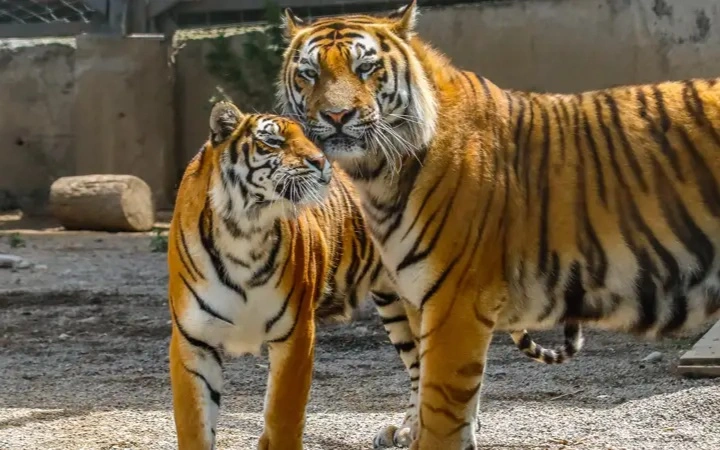
Kazakhstan Prepares for First Wild Tiger Release as Reintroduction Project Enters Defining Stage
Summarized and contextualized by DistantNews.
At a glance
News
From a news agency
Ongoing story
- Kazakhstan is preparing to release two adult Amur tigers into the wild within the next month, marking a critical milestone in its decade-long tiger restoration project.
- The tigers are undergoing final behavioral assessments to ensure they can hunt independently and maintain a natural avoidance of humans, which are crucial for successful reintroduction.
- The project involves extensive habitat restoration in the Ili-Balkhash ecosystem, prey population rebuilding, and preparing local communities for coexistence, aiming to eventually restore the extinct Caspian tiger's ecological niche.
Kazakhstan is on the cusp of a significant conservation achievement as it prepares for the first release of adult Amur tigers into the wild, a move that will test the success of nearly a decade of dedicated restoration efforts in the Ili-Balkhash ecosystem.
The two tigers, transferred from Russia, are undergoing rigorous behavioral assessments. Conservationists deem their ability to hunt live prey independently and, crucially, to maintain a natural wariness of humans as essential prerequisites for their survival and the project's ultimate success. The Ministry of Ecology and Natural Resources stated that if these final stages are completed successfully, the release could occur within the next month, though the exact date hinges on expert evaluations.
This planned release signifies a transition from extensive preparation to the practical implementation of one of Central Asia's most ambitious wildlife recovery initiatives. Kazakhstan's strategy has focused not just on breeding or relocating animals but on recreating the necessary ecological conditions for a self-sustaining tiger population. This includes a significant expansion of the Ile-Balkhash State Nature Reserve, now over 450,000 hectares, alongside efforts to restore prey populations and bolster environmental protection.
The broader ambition of the project extends to restoring the ecological niche once occupied by the Caspian (Turanian) tiger, which vanished from the region by the mid-20th century. Success, experts emphasize, will also depend heavily on the cooperation and adaptation of local communities, who are being prepared for coexistence with these large predators. Remote feeding practices are employed to prevent the tigers from associating humans with food, reinforcing their natural avoidance behaviors.
If the current positive results are maintained and the final stages of the assessment are successfully completed, the release may take place in the next month. However, the exact date will be determined only after all the necessary procedures have been completed and the relevant expert opinions have been received.
DistantNews Editorial
Originally published by The Astana Times. Summarized and contextualized by our editorial team with added local perspective. Read our editorial standards.
More Stories


From Our Blog

What Gets Lost (and Found) When News Is Translated

The Critical Role of Diaspora Media in Global News

What Travellers Should Know About Countries with Restricted Press

A Digital Nomad's Guide to Following Local News

How the Same Story Looks Different in Different Countries
