


Kazakhstan's Kurultai Election Reshapes Politics, Experts Say
Translated from English, summarized and contextualized by DistantNews.
At a glance
News
Named sources
New plan
- Kazakhstan held its first Kurultai election on Aug. 23, with preliminary results showing the Adilet party securing over 71% of the vote.
- Experts note the election reshapes Kazakhstan's parliamentary architecture, highlighting voter turnout above 74% and the indication of five parties likely to cross the 5% threshold for seats.
- The election is seen as the start of a long path for constitutional reform, with the Kurultai's future performance determining the success of institutional changes.
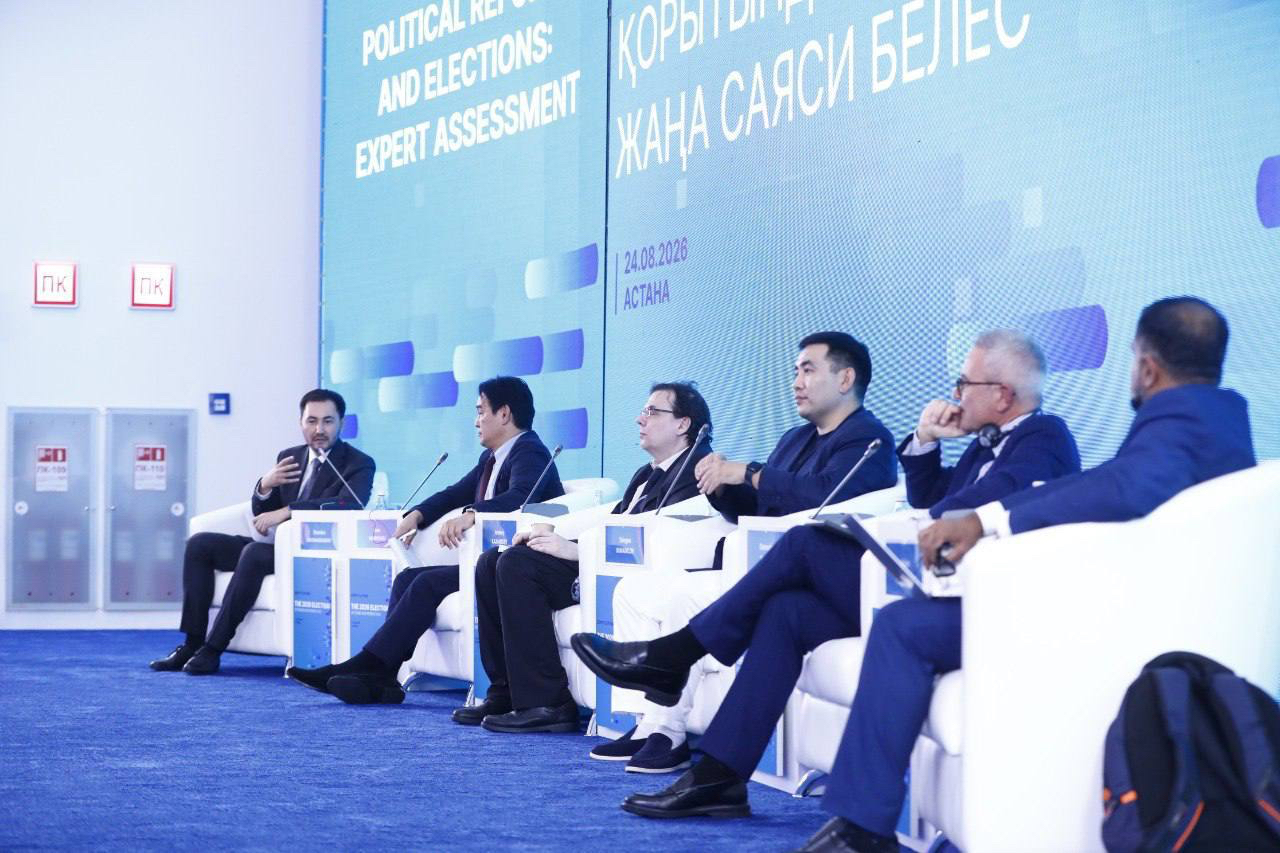
Kazakhstan's inaugural Kurultai election on Aug. 23 has significantly altered the nation's parliamentary landscape, according to experts. Preliminary results show the Adilet party dominating with 71.17% of the vote, while five other parties are poised to surpass the 5% threshold required for representation in the new legislature.
The election tested Kazakhstan's recently adopted constitutional reforms, translating them from legal text into political practice. Voter turnout exceeded 74%, a figure highlighted by KazISS Director Zhandos Shaimardanov as a key feature shaping the new parliament. He noted the emergence of a dominant political force alongside several smaller parties, emphasizing the need to observe how this electoral outcome translates into legislative priorities and the daily operations of the Kurultai.
The task now is to understand how this electoral choice will translate into the work of the new Kurultai, its legislative priorities and the parties’ day-to-day activities.
Domenico Palmieri, director of the Italian Institute for Asia, cautioned that the election is merely the beginning of a lengthy process. The true measure of institutional reform's success will depend on the Kurultai's performance in the coming months and years. While the transition to a unicameral parliament could enhance efficiency, its effectiveness remains to be seen once lawmakers begin legislating. Palmieri suggested waiting at least six months to assess the new parliament's functionality.
Experts also pointed to the growing geopolitical competition in Central Asia as a backdrop to these domestic political shifts. Kazakhstan is navigating this complex environment as it seeks to solidify its political system following constitutional reforms. The Kurultai's role in shaping foreign policy and its response to regional dynamics will be critical in the coming years.
Yesterday was a very important day for Kazakhstan, but it’s only the start of a new path. All these changes, all these reforms must be implemented and followed in the coming months and years.
DistantNews Editorial
Originally published by The Astana Times in English. Translated, summarized, and contextualized by our editorial team with added local perspective. Read our editorial standards.
More Stories


From Our Blog

What Gets Lost (and Found) When News Is Translated

The Critical Role of Diaspora Media in Global News

What Travellers Should Know About Countries with Restricted Press

A Digital Nomad's Guide to Following Local News

How the Same Story Looks Different in Different Countries
