

Kazakhstan's Middle Corridor Bet Pays Off as Alstom Sees Strategic Validation
Translated from English, summarized and contextualized by DistantNews.
At a glance
Interview
Named sources
Context piece
- Kazakhstan is becoming a vital transit hub between Asia and Europe due to geopolitical disruptions affecting maritime trade.
- French rail giant Alstom sees its long-term investment in Kazakhstan validated by the growing importance of the Middle Corridor.
- The Middle Corridor offers a rail alternative to sea freight, which has become more expensive and time-consuming due to global shipping disruptions.
As global trade routes shift under geopolitical pressure, Kazakhstan is solidifying its position as a crucial link between Asia and Europe. French rail manufacturer Alstom views this development as a validation of its strategic vision and significant investments in the country. Over the past 15 years, Alstom has poured more than 200 million euros (US$228 million) into Kazakhstan, establishing its largest industrial presence in Central Asia and the Caucasus.
In just a few words, more than 96% of the freight from China to Europe is going by sea. Only about 4% is going through rail.
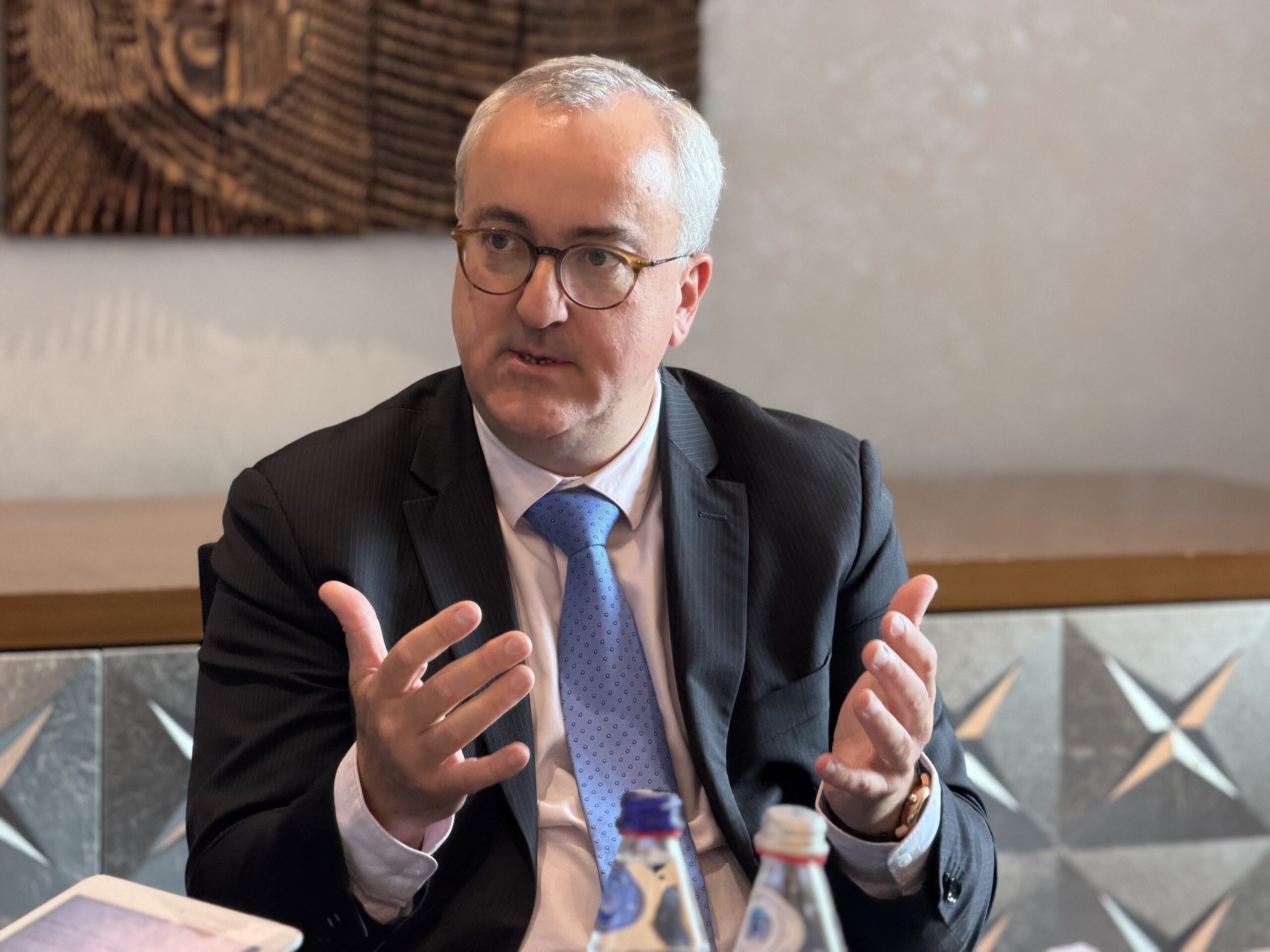
Alstom executives Martin Vaujour and Jérôme Boyet highlighted the growing significance of the Middle Corridor in an interview with The Astana Times. They noted that while over 96% of freight between China and Europe traditionally travels by sea, recent disruptions have dramatically increased the cost and transit time of maritime shipping. This has fueled a surge in demand for rail alternatives like the Middle Corridor.
"The cost of freight by sea and the cost of insurance has increased dramatically. The time to get the goods from China to Europe is much longer because they have to go all the way around Africa. So the appetite for the rail solution through the Middle Corridor is multiplied," Vaujour explained. He praised Kazakhstan's foresight, noting the government's strategic focus on developing the Middle Corridor route 15 to 20 years ago, long before it became a global necessity.
The cost of freight by sea and the cost of insurance has increased dramatically. The time to get the goods from China to Europe is much longer because they have to go all the way around Africa. So the appetite for the rail solution through the Middle Corridor is multiplied.
Cargo volumes along the Middle Corridor have surged significantly since 2022, with transit traffic through Kazakhstan increasing severalfold. Alstom's contribution to this growing Eurasian connectivity includes supplying locomotives and other essential rail infrastructure, positioning Kazakhstan at the heart of one of Eurasia's most important transport arteries.
It is incredible to see the vision that the Kazakhstan government had already 15 or 20 years ago, saying we should be part of this and build a reliable solution for the Middle Corridor.
DistantNews Editorial
Originally published by The Astana Times in English. Translated, summarized, and contextualized by our editorial team with added local perspective. Read our editorial standards.
More Stories

From Our Blog

What Gets Lost (and Found) When News Is Translated

The Critical Role of Diaspora Media in Global News

What Travellers Should Know About Countries with Restricted Press

A Digital Nomad's Guide to Following Local News

How the Same Story Looks Different in Different Countries
