


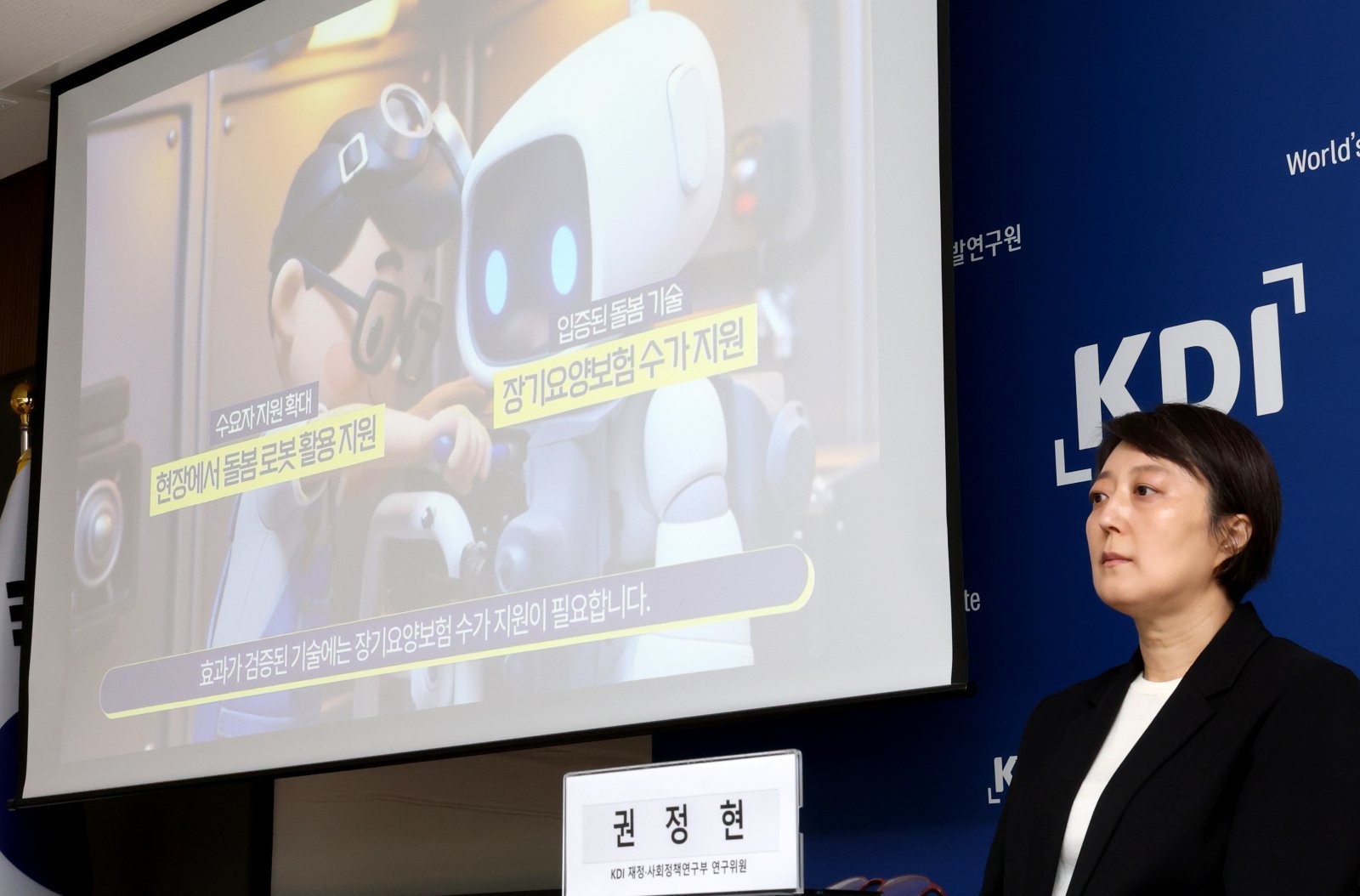
KDI: South Korea to Need 990,000 More Care Workers by 2043 Amid Super-Aging
Translated from Korean, summarized and contextualized by DistantNews.
TLDR
- South Korea faces a severe shortage of care workers due to its rapidly aging population.
- By 2043, an estimated 990,000 additional care workers will be needed to maintain current care standards.
- The report suggests policy changes, including visa programs for care workers and the promotion of care robots, to address the looming crisis.
A stark warning has emerged from the Korea Development Institute (KDI), a leading state-run think tank, highlighting the profound demographic challenge South Korea faces with its rapidly aging population. The KDI's report, 'Outlook and Policy Directions for Elderly Care Services,' projects a critical shortage of care workers in the coming decades. This isn't just a matter of inconvenience; it's a potential crisis that could strain families and the social welfare system to its breaking point.
The numbers are sobering: by 2043, South Korea will require an additional 990,000 care workers simply to maintain the current level of care for its elderly citizens. This surge in demand is driven by the aging of the first baby boomer generation, born between 1955 and 1963, who will begin entering the 75-and-over age bracket between 2030 and 2038. The KDI emphasizes that this projection is conservative, assuming current care standards and family support structures remain unchanged. Any weakening of family caregiving or expansion of public support could further escalate demand.
This is a conservative projection based on the assumption that the level of use in 2023 will continue.
From our perspective at Dong-A Ilbo, this report underscores the urgent need for proactive policy interventions. While the government has acknowledged the demographic shift, the scale of the projected shortage demands more than just acknowledgment. The KDI's recommendations, such as implementing targeted visa policies for care workers and actively promoting the adoption of care robots, offer potential pathways forward. However, the societal implications of relying on foreign labor or advanced technology for elder care require careful consideration and public discourse. This issue transcends mere economics; it touches upon the very fabric of our society and our responsibilities to the older generations.
If the possibility of care within the family weakens or policies change, such as expanding institutional support, demand could increase further.
DistantNews Editorial
Originally published by Dong-A Ilbo in Korean. Translated, summarized, and contextualized by our editorial team with added local perspective. Read our editorial standards.
More Stories


From Our Blog

What Gets Lost (and Found) When News Is Translated

The Critical Role of Diaspora Media in Global News

What Travellers Should Know About Countries with Restricted Press

A Digital Nomad's Guide to Following Local News

How the Same Story Looks Different in Different Countries
