


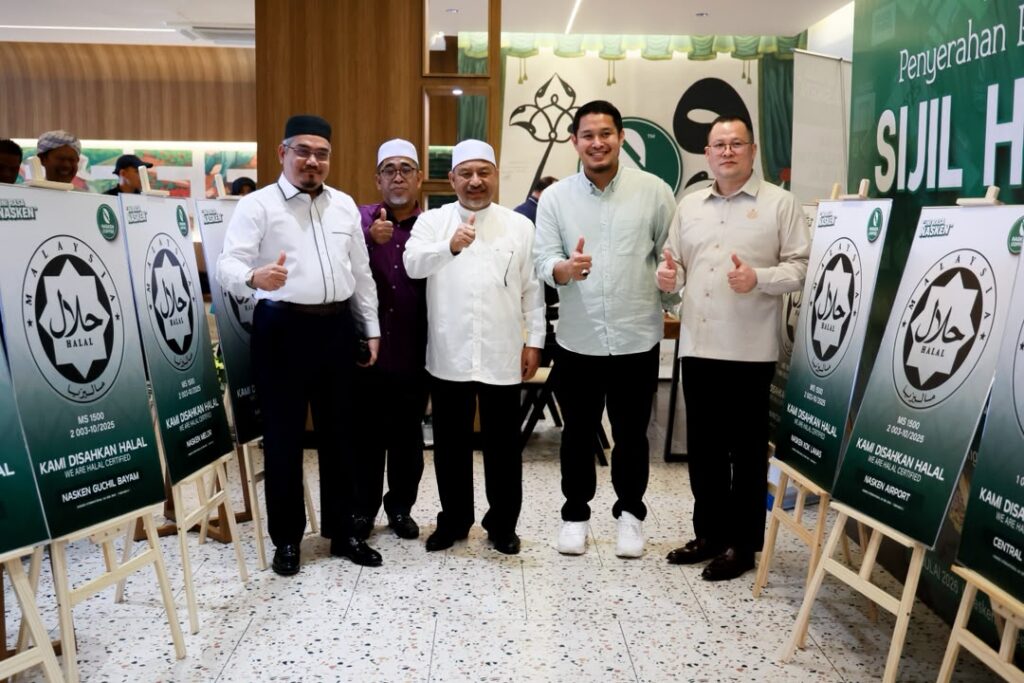
Kelantan government to investigate food premises lacking halal certification
Translated from Malay, summarized and contextualized by DistantNews.
At a glance
News
Sources not specified
New plan
- The Kelantan state government will investigate food premises operating without a Malaysian Halal Certificate of Authentication (SPHM).
- This includes non-Muslim eateries frequented by Muslims, emphasizing the importance of halal certification for consumer confidence and adherence to Islamic principles.
- Authorities urge food business owners to apply for the SPHM, a process that takes about 30 days, to ensure food is pure, clean, and compliant with syariah standards, not just profit-driven.
The Kelantan state government is launching a thorough investigation into food establishments lacking the Malaysian Halal Certificate of Authentication (SPHM). This initiative extends to non-Muslim businesses that are popular among Muslim customers, highlighting a growing concern for halal compliance in the state.
As Muslims, we should be aware and prioritize premises that have SPHM.
Mohd. Asri Mat Daud, chairman of the state's Islamic Development, Da'wah, Information, and Public Relations Committee, stated that while many non-Muslim eateries are patronized by Muslims, it is crucial for the Muslim community to prioritize establishments with the SPHM.
We want food premise owners in the state to apply for the halal certificate according to procedures. The period to obtain the certificate takes 30 days.
"As Muslims, we should be aware and prioritize premises that have SPHM," he said. The state government is taking this matter seriously and hopes to increase public awareness regarding the importance of halal certification. Owners are encouraged to apply for the SPHM, a process that takes approximately 30 days. Authorities stressed that businesses should focus on ethical practices, ensuring food products are pure, clean, syariah-compliant, and meet all required standards, rather than solely pursuing profits.
We do not want premise owners to just chase profits, but they must adhere to ethics, ensure food products are pure, clean, syariah-compliant, and meet the set requirements.
DistantNews Editorial
Originally published by Utusan Malaysia in Malay. Translated, summarized, and contextualized by our editorial team with added local perspective. Read our editorial standards.
More Stories


From Our Blog

What Gets Lost (and Found) When News Is Translated

The Critical Role of Diaspora Media in Global News

What Travellers Should Know About Countries with Restricted Press

A Digital Nomad's Guide to Following Local News

How the Same Story Looks Different in Different Countries
