


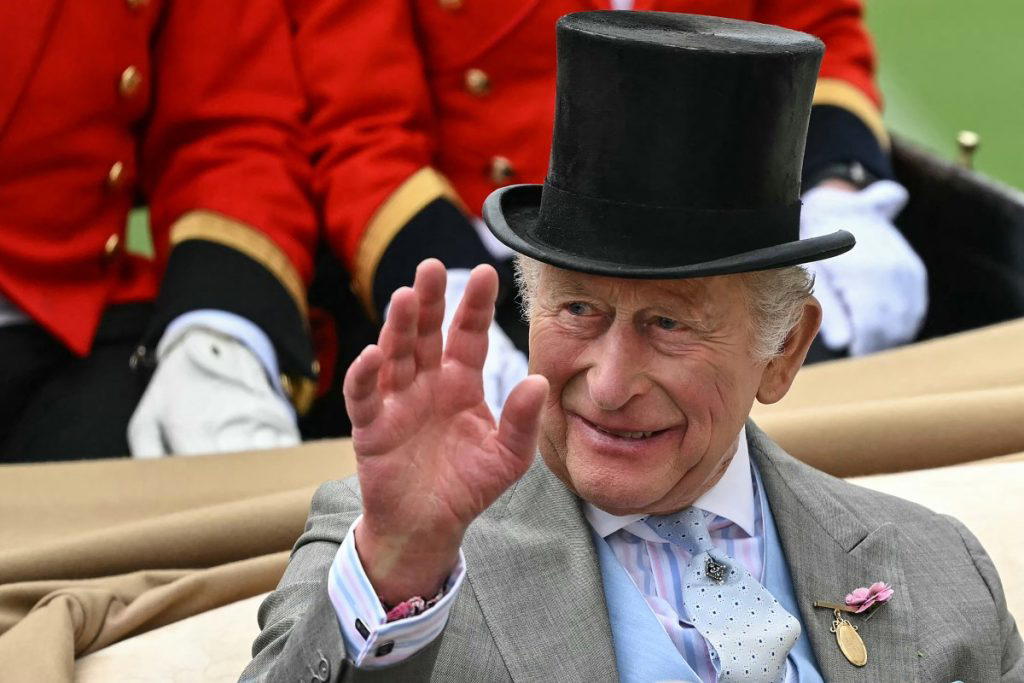
King Charles has paid more than £30m in personal taxes since 2022 - Palace
Summarized and contextualized by DistantNews.
At a glance
News
Official statement
New plan
- King Charles III has paid over £30 million in personal taxes since ascending the throne in September 2022.
- This disclosure marks the first time a reigning British monarch has revealed such tax information.
- Prince William also disclosed paying over £20 million in taxes since becoming Prince of Wales.
King Charles III has paid more than £30 million ($39.6 million) in personal taxes since becoming monarch in September 2022, Buckingham Palace announced Thursday. This marks the first time a reigning British sovereign has publicly disclosed such financial information, which the palace attributes to its "commitment to transparency" amid increasing public scrutiny of royal finances.
Charles's eldest son and heir, Prince William, also revealed his personal tax information for the first time, having paid over £20 million in taxes since inheriting the title of Prince of Wales when his father became king. While British monarchs are legally exempt from certain taxes, they have voluntarily paid some duties for decades and are not obligated to disclose their private tax bills.
The palace stated that the amount of tax payable by His Majesty since his accession is more than £30 million. Specifically, for the two full tax years since he took the throne on September 10, 2022, his personal tax bill amounted to £24.6 million, comprising £11.7 million in 2023-24 and £12.9 million in 2024-25. The figure for the 2022-2023 tax year was not provided. Prince William, 44, paid over £20 million in income and capital gains taxes, with £8.34 million in 2023-24 and £7.76 million in the 2024-25 tax year.
King Charles began releasing his personal tax information as heir to the throne, a practice his mother, Queen Elizabeth II, did not follow during her reign. British monarchs receive funds from various sources, including the publicly funded Sovereign Grant and private income from the Duchy of Lancaster, which covers personal expenses and some official duties. Additional private income streams include revenue from the Balmoral and Sandringham estates, as well as collections of art, jewelry, and stamps, investments, and private savings. Although monarchs are not legally required to pay income, capital gains, or inheritance taxes, they have voluntarily paid the first two since 1993 following public pressure after the Windsor Castle fire necessitated costly repairs. This scrutiny has resurfaced amid recent scandals involving Prince Andrew and revelations about his token rent payments for a Windsor estate mansion.
The amount of tax payable by His Majesty since Accession is more than £30 million
DistantNews Editorial
Originally published by Vanguard. Summarized and contextualized by our editorial team with added local perspective. Read our editorial standards.
More Stories


From Our Blog

How the Same Story Looks Different in Different Countries

What Gets Lost (and Found) When News Is Translated

The Critical Role of Diaspora Media in Global News

What Travellers Should Know About Countries with Restricted Press

A Digital Nomad's Guide to Following Local News
