


KIST develops transparent neural electrode technology to advance artificial vision
Translated from Korean, summarized and contextualized by DistantNews.
At a glance
News
Named sources
New plan
- Researchers at the Korea Institute of Science and Technology (KIST) have developed a transparent electrode technology for artificial vision.
- This technology enables light to be transmitted to the brain while simultaneously reading neural signals.
- Animal experiments have confirmed signals similar to actual visual responses, paving the way for advancements in treating blindness.
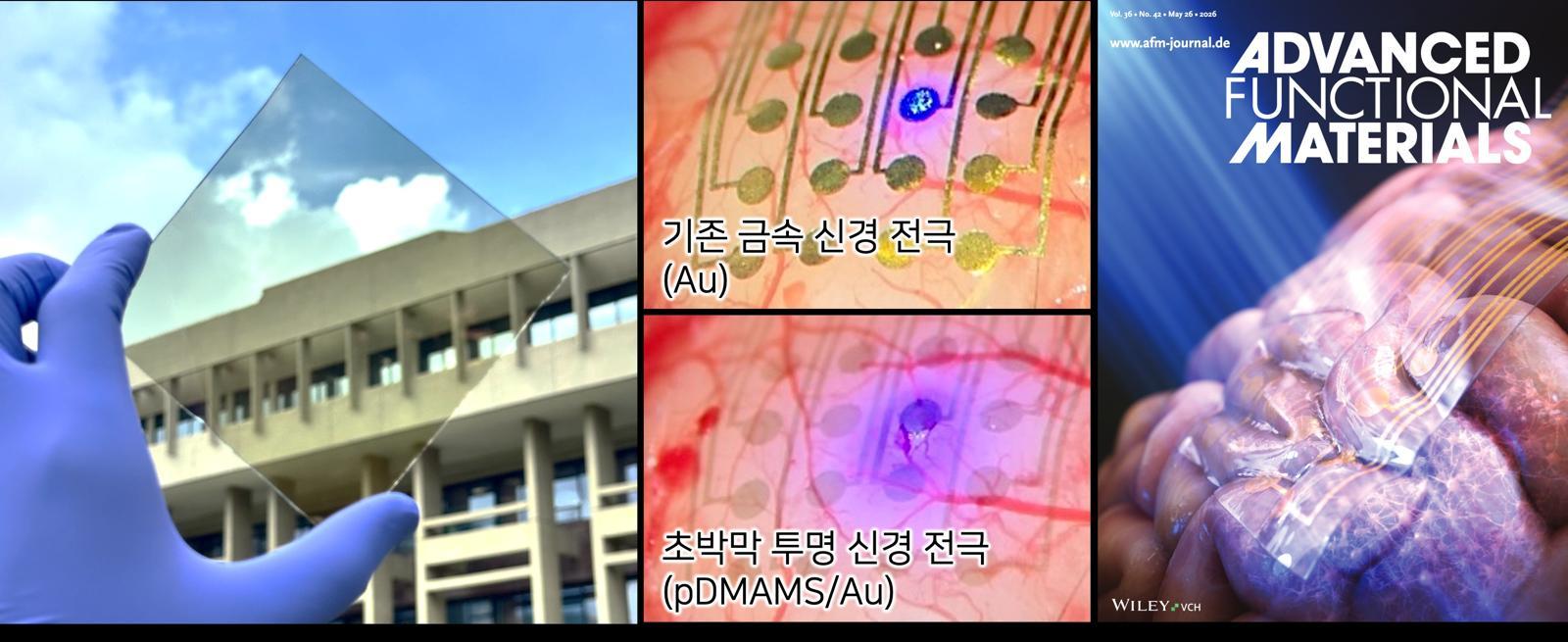
A joint research team from the Korea Institute of Science and Technology (KIST) has achieved a significant breakthrough in artificial vision technology by developing a transparent neural electrode. This innovative material allows for the transmission of light to the brain while simultaneously capturing neural signals, a dual function crucial for restoring sight.
The research, led by Hye-jeong Seong and Mae-soon Im from KIST's Brain Science Institute, successfully generated artificial visual signals in the brains of mice with retinal degeneration. The developed electrode is an ultra-thin, transparent film, designed to integrate seamlessly with neural tissue without causing significant disruption.
Initial experiments conducted on mice have yielded promising results. The study confirmed that the signals generated by the transparent electrode closely mimic actual visual responses observed in healthy subjects. This validation is a critical step towards developing practical applications for individuals suffering from various forms of blindness, including retinitis pigmentosa.
The potential impact of this technology is substantial, offering new hope for restoring vision to those affected by conditions that lead to irreversible sight loss. KIST's advancement represents a significant stride in the field of neurotechnology and biomedical engineering, moving closer to realizing functional artificial vision.
DistantNews Editorial
Originally published by Chosun Ilbo in Korean. Translated, summarized, and contextualized by our editorial team with added local perspective. Read our editorial standards.
More Stories


From Our Blog

What Gets Lost (and Found) When News Is Translated

The Critical Role of Diaspora Media in Global News

What Travellers Should Know About Countries with Restricted Press

A Digital Nomad's Guide to Following Local News

How the Same Story Looks Different in Different Countries
