


KOSPI Plunges 10%, Reigniting Bubble Debate; Retail Investors Buy Record Amount
Translated from Korean, summarized and contextualized by DistantNews.
At a glance
News
Sources not specified
Context piece
- The KOSPI index plummeted nearly 10%, reigniting concerns about a market bubble.
- The sharp decline followed SK Hynix surpassing Samsung Electronics in market capitalization, triggering massive sell-offs by foreign and institutional investors.
- Individual investors bought a record amount of stocks, contrasting with the sell-off.
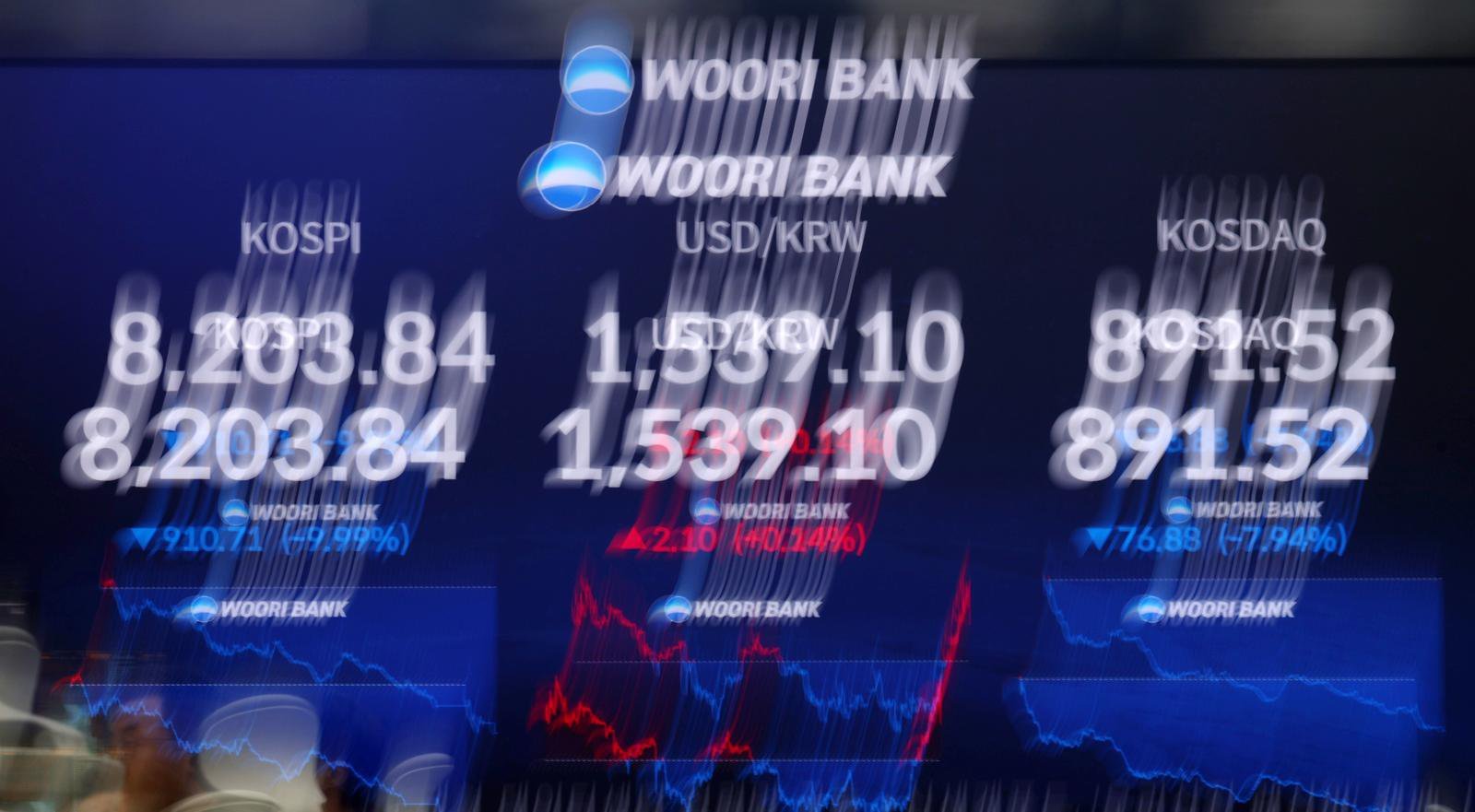
South Korea's KOSPI index experienced a dramatic fall of nearly 10% on April 23, closing at 8203.84 points. This sharp decline, the largest since March 4 following the outbreak of the US-Iran war, occurred just three trading days after the index had surpassed the 9000 mark for the first time in history. The market saw a temporary halt in trading when the Level 1 circuit breaker was triggered due to heavy sell-offs.
The plunge was largely attributed to a massive sell-off of semiconductor stocks, particularly SK Hynix and Samsung Electronics. This occurred the day after SK Hynix became the first company to top the market capitalization rankings ahead of Samsung Electronics. Concerns about a potential bubble, fueled by the rapid rise in semiconductor stock values and the fact that SK Hynix's net profit is smaller than Samsung Electronics', drove foreign and institutional investors to divest heavily.
The concentration in stocks like Samsung Electronics and SK Hynix was particularly severe during the competition for the No. 1 market cap position yesterday, and today, the pressure for profit-taking, mainly from foreign investors, intensified, leading to this sharp decline and amplified volatility.
Analysts noted that the intense concentration of market value in these two companies, which together accounted for 55.6% of the KOSPI's total market capitalization on April 22, exacerbated the volatility. The shift in market leadership from Samsung Electronics to SK Hynix, based on stock price momentum rather than solely on profit scale, has drawn comparisons to the dot-com bubble of 1999-2000.
Adding to the market's woes, US stock markets showed weakness, particularly in big tech, reigniting concerns about AI profitability. In contrast to the foreign and institutional sell-off, individual investors recorded their largest-ever daily net purchase, buying 8.5 trillion won worth of stocks, while foreign investors sold 4.1 trillion won and institutions sold 4.5 trillion won.
The end of the tech bubble in 2000 occurred when only the No. 1 market cap company changed without regard to profit scale, and the situation yesterday could be a signal for the end of the current bull market.
DistantNews Editorial
Originally published by Hankyoreh in Korean. Translated, summarized, and contextualized by our editorial team with added local perspective. Read our editorial standards.
More Stories


From Our Blog

What Gets Lost (and Found) When News Is Translated

The Critical Role of Diaspora Media in Global News

What Travellers Should Know About Countries with Restricted Press

A Digital Nomad's Guide to Following Local News

How the Same Story Looks Different in Different Countries
