

Kospi tumbles below 6,600 as hawkish Fed remarks hit South Korean chip stocks
Translated from Korean and summarized by DistantNews. Read the original for the full story.
At a glance
News
Named sources
Ongoing story
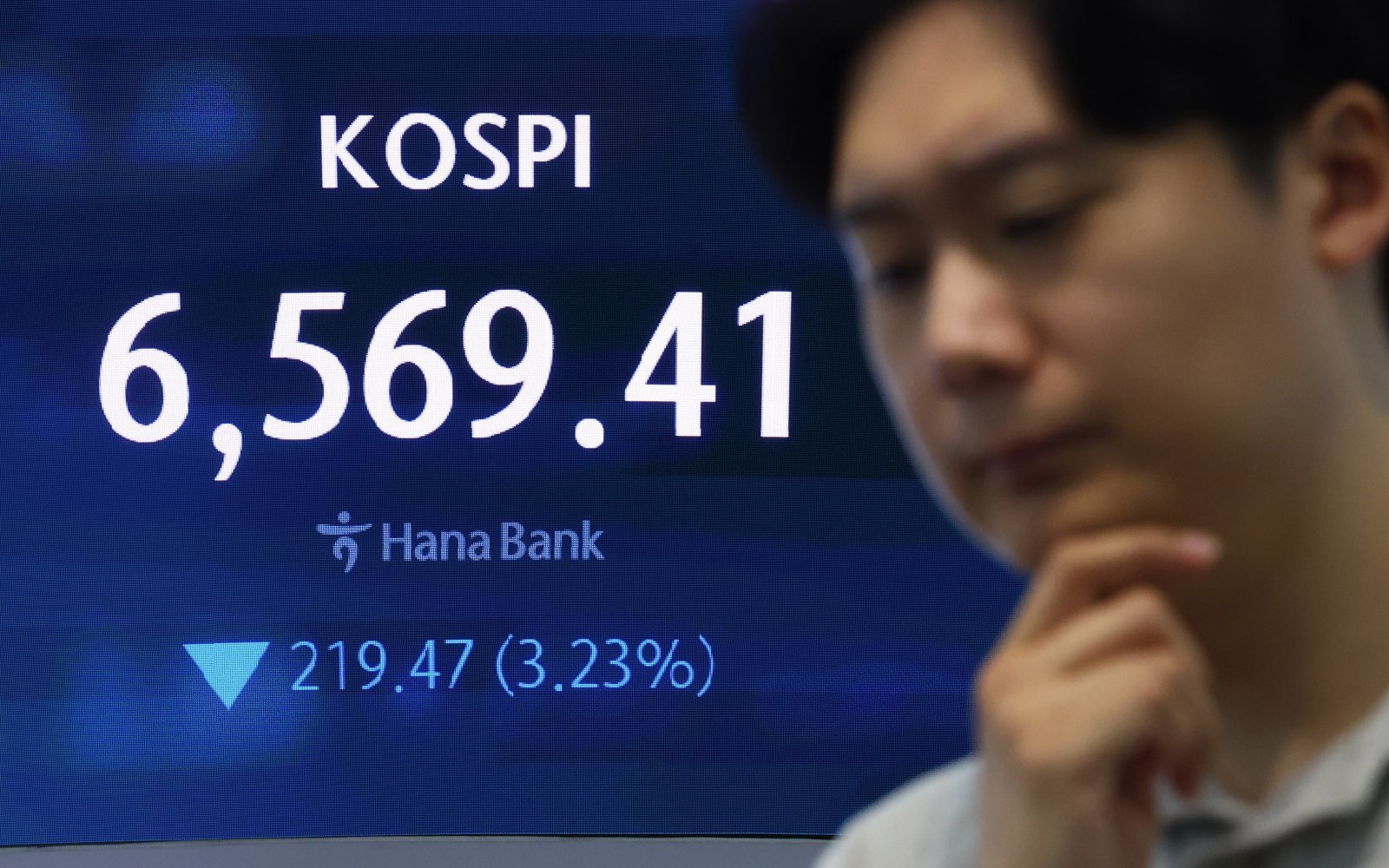
- The Kospi opened down 2.58% at 6,613.58 and fell 2.83% to 6,596.44 shortly after trading began, briefly dropping more than 3%.
- Samsung Electronics and SK Hynix, South Korea's two largest companies by market value, each fell more than 3%.
- Foreign and institutional investors sold shares while retail investors bought, as markets reacted to Kevin Warsh's hawkish comments on inflation.
South Korea's Kospi slipped below 6,600 in early trading on Monday as investors reacted to hawkish comments from Federal Reserve Chair Kevin Warsh. The index opened down 2.58% at 6,613.58 and fell 2.83% to 6,596.44 by 9:11 a.m., after briefly dropping to around 6,547.
Semiconductor stocks led the decline. Samsung Electronics and SK Hynix, the market's two largest companies by capitalization, each fell more than 3%. Doosan Enerbility dropped more than 4%, while Samsung Biologics and Samsung C&T lost more than 2%.
Warsh did not give a direct signal on the Federal Open Market Committee's September decision during his Jackson Hole keynote speech. He said, however, that progress in slowing inflation had been insufficient and indicated the Fed would respond if inflation failed to return to its 2% target. Expectations for a September rate increase rose, and all three major U.S. stock indexes closed lower.
Kiwoom Securities researcher Han Ji-young said Warsh had largely emphasized the Fed's dual mandate of price stability and full employment. Foreign and institutional investors were net sellers of roughly 200 billion won each in the combined KRX and Nextrade markets, while individual investors bought about 400 billion won. The Kosdaq also fell 3.1% to 812.45, with Alteogen down more than 6%.
Warsh's remarks largely served to emphasize the Fed's dual mandate of price stability and full employment.
About this summary
Originally published by Dong-A Ilbo in Korean. Translated, summarized, and contextualized automatically by DistantNews, with a note on how the source frames the story. Not individually reviewed before publishing. How this works.
More Stories


From Our Blog

What Gets Lost (and Found) When News Is Translated

The Critical Role of Diaspora Media in Global News

What Travellers Should Know About Countries with Restricted Press

A Digital Nomad's Guide to Following Local News

How the Same Story Looks Different in Different Countries
