


KP Assembly scraps lifetime blue passports, reduces arms licenses after public backlash
Translated from English, summarized and contextualized by DistantNews.
At a glance
News
Sources not specified
Outcome reported
- Khyber Pakhtunkhwa's Assembly withdrew controversial provisions from a new law granting privileges to lawmakers, including lifetime blue passports and reduced arms licenses.
- The amendment follows public and media criticism, with the government agreeing to revert to the 1988 Act's provisions regarding official passports and reducing lifetime arms licenses from eight to four.
- The assembly also passed a resolution to resist any federal government attempts to alter KP's territorial jurisdiction or control its natural resources.
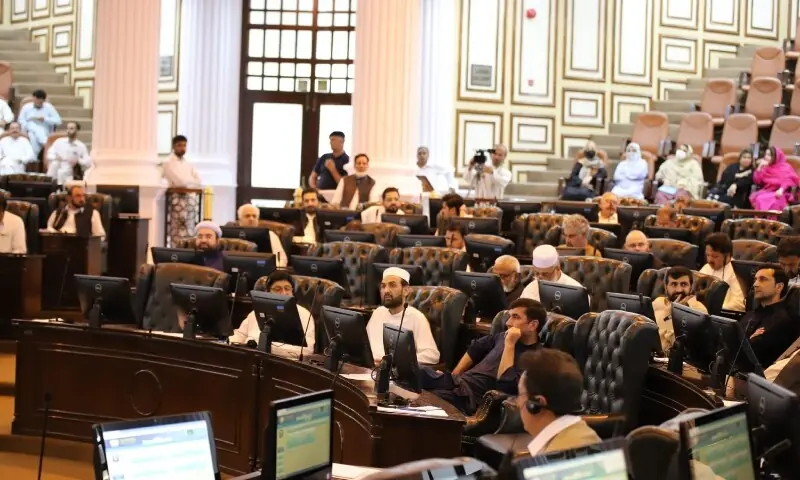
The Khyber Pakhtunkhwa Assembly has backtracked on a controversial law that granted extensive privileges to lawmakers. The recently enacted KP Provincial Assembly (Powers, Immunities and Privileges) Act, 2026, which included lifetime blue passports for members and their spouses, blanket immunity from preventive detention, and mandatory speaker permission for arrests, faced widespread criticism.
The concerns raised by the journalist community over enhanced fines and punishments were also addressed, with both fines and punishments being reduced.
Following media and public outcry, KP Chief Minister Sohail Afridi ordered a review, leading to the withdrawal of contentious clauses. Information Minister Shafi Jan confirmed the government would restore the law to its 1988 status. An amendment, tabled by Ghazi Ikram and passed during a session chaired by Speaker Baber Saleem Swati, limits official passports to a lawmaker's parliamentary tenure and reduces lifetime non-prohibited bore arms licenses from eight to four. Fines and punishments for journalists were also reduced.
Haripur, Abbottabad and all other districts were integral parts of KP and could not be annexed to any other part of the country.
In a separate but related development, the assembly unanimously passed a resolution opposing any federal government attempts to alter KP's territorial jurisdiction. The resolution, moved by Akbar Ayub, asserted that districts like Haripur and Abbottabad are integral parts of KP and cannot be annexed. It stressed that any changes affecting administrative, political, financial aspects, or control over natural resources would be illegal and violate the constitutional rights of KP residents over minerals, forests, and hydel projects. The assembly condemned such plans, demanding the federal government respect KP's geographical, constitutional, and administrative status.
It stated that any changes, whether administrative, political, financial or aimed at controlling natural resources, would be against the law.
DistantNews Editorial
Originally published by Dawn in English. Translated, summarized, and contextualized by our editorial team with added local perspective. Read our editorial standards.
More Stories


From Our Blog

What Gets Lost (and Found) When News Is Translated

The Critical Role of Diaspora Media in Global News

What Travellers Should Know About Countries with Restricted Press

A Digital Nomad's Guide to Following Local News

How the Same Story Looks Different in Different Countries
