


Kyiv Endures "Night of Terror" Amid Intense Russian Air Assault; Casualties Reported
Translated from German, summarized and contextualized by DistantNews.
At a glance
News
Sources not specified
Ongoing story
- Ukraine endured a "night of terror" with intense Russian air attacks targeting Kyiv.
- The attacks, involving hundreds of drones and missiles, lasted nearly twelve hours, causing significant damage to residential buildings and infrastructure.
- Ukrainian officials reported casualties and condemned the attacks as deliberate acts of terrorism, while President Zelenskyy shortened a visit to Ireland.
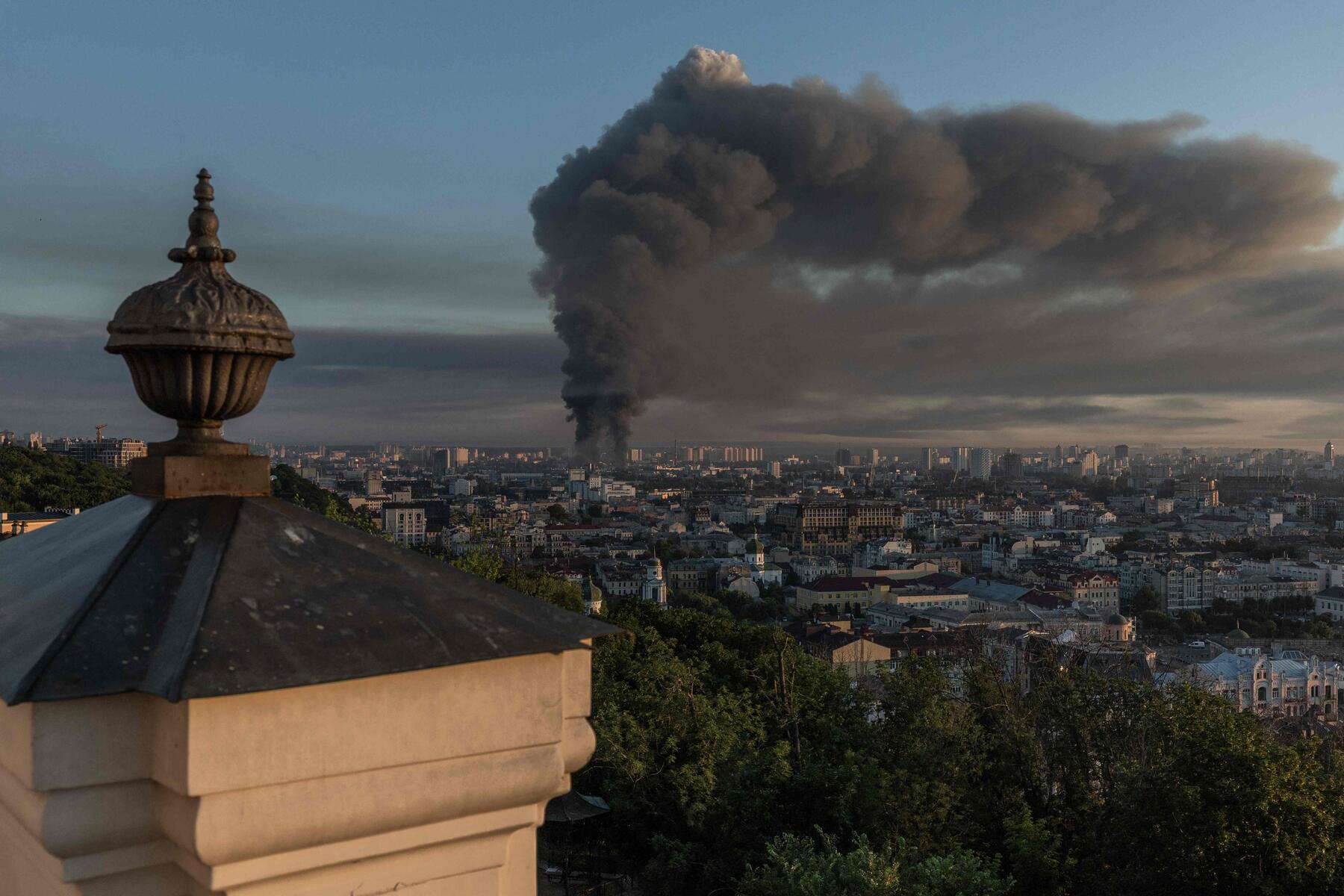
Kyiv experienced a "night of terror" as Russia launched a massive air assault, deploying hundreds of drones and missiles. The Ukrainian capital endured nearly twelve hours of air raid alerts, forcing thousands of residents to seek shelter in subway stations, basements, and parking garages. The relentless attacks, which resumed on Thursday morning, left smoke billowing over the city as emergency services battled fires.
Officials reported "heavy direct hits on residential buildings," with people trapped under rubble. Tymur Tkatschenko, head of the Kyiv military administration, accused Russia of "deliberately targeting residential buildings" and stated, "These nights have once again shown their terrorist intentions." Photos released by the Ukrainian State Emergency Service depicted destroyed buildings and a large bomb crater in front of an apartment complex. A logistics center for the courier service Nova Poshta and critical infrastructure were also reportedly hit.
Ukrainian Foreign Minister Andrij Sybiha described the event as a "night of terror." President Volodymyr Zelenskyy curtailed his visit to Ireland in response to the escalating attacks. The EU's foreign policy chief, Kaja Kallas, called for new sanctions against Russia. Ukrainian authorities reported intercepting the majority of the 496 drones and 74 missiles used, but 25 missiles and twelve drones still struck 33 locations. Kyiv reported at least 17 deaths and over 80 injuries, marking one of the most severe attacks since the war began.
Military analysts note that Russia's strategy involves launching multiple large-scale air offensives monthly to overwhelm Ukraine's air defenses. While Ukraine's interception rate, particularly for drones, has improved, ballistic missiles pose a greater challenge. Experts suggest Russia's persistent air campaign aims to wear down the Ukrainian population, with Vladimir Putin seemingly believing he can bomb Ukraine into submission. However, past experiences indicate this approach has consistently failed.
DistantNews Editorial
Originally published by Die Presse in German. Translated, summarized, and contextualized by our editorial team with added local perspective. Read our editorial standards.
More Stories


From Our Blog

What Gets Lost (and Found) When News Is Translated

The Critical Role of Diaspora Media in Global News

What Travellers Should Know About Countries with Restricted Press

A Digital Nomad's Guide to Following Local News

How the Same Story Looks Different in Different Countries
