


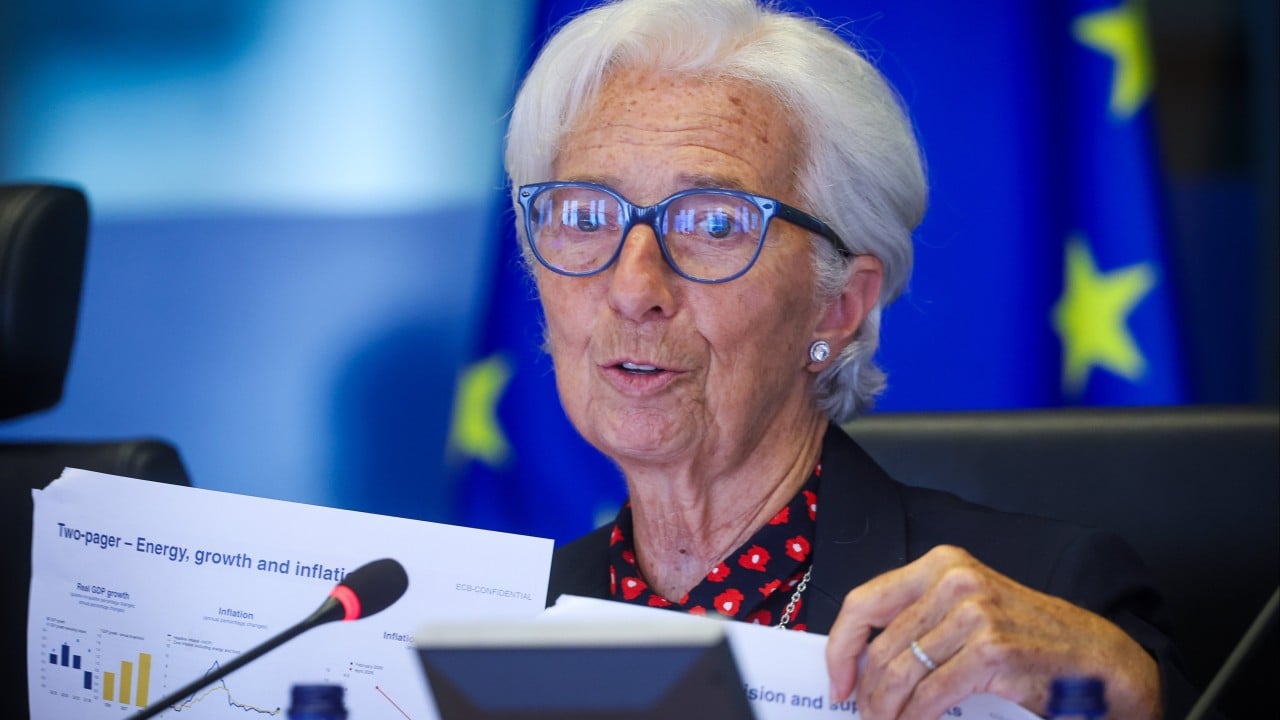
Lagarde Urges Talks on Yuan Undervaluation Amid Global Imbalances
Translated from English, summarized and contextualized by DistantNews.
At a glance
News
Sources not specified
Context piece
- European Central Bank President Christine Lagarde called for discussions on the undervaluation of the Chinese yuan.
- She stated that this issue contributes to global economic imbalances.
- Lagarde's comments come as G7 leaders express concerns about China's trade surpluses and other macroeconomic mismatches.
European Central Bank President Christine Lagarde has urged global leaders to address the undervaluation of the Chinese yuan, identifying it as a factor contributing to dangerous global economic imbalances. Her remarks highlight growing international concern over China's economic policies.
Lagarde's call for dialogue comes amid discussions among Group of Seven (G7) nations, who met recently in France. Leaders from these major economies are worried about several macroeconomic mismatches, including China's consistently surging trade surpluses, alongside chronic deficits in the United States. These imbalances pose risks to global economic stability.
While China has repeatedly denied manipulating its currency for trade advantage, its substantial trade surpluses remain a point of contention. The G7 nations are seeking ways to foster a more balanced global economy, and currency valuation is a key aspect of these ongoing discussions. Lagarde's intervention underscores the urgency felt by international policymakers to resolve these complex economic issues.
urged global leaders to discuss undervaluation of the Chinese currency as a facet of the imbalances endangering the global economy.
DistantNews Editorial
Originally published by South China Morning Post in English. Translated, summarized, and contextualized by our editorial team with added local perspective. Read our editorial standards.
More Stories

From Our Blog

Countries Without a Free Press: What You Need to Know

What Press Freedom Means for the News You Read

What Gets Lost (and Found) When News Is Translated

The Critical Role of Diaspora Media in Global News

What Travellers Should Know About Countries with Restricted Press
