


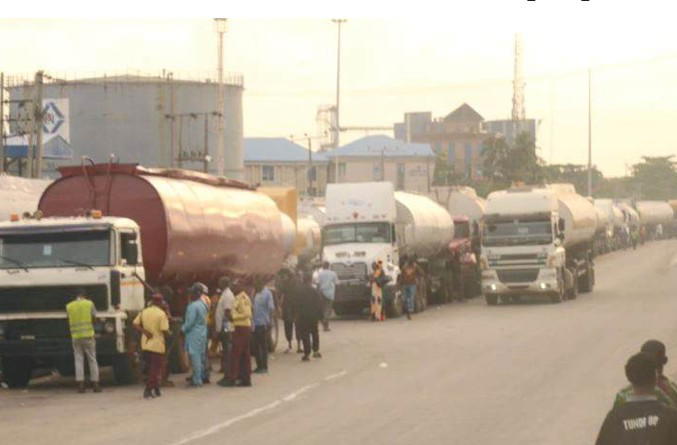
Mayhem as NPA, tank farm owners, police, LASTMA lock down Oshodi-Apapa Expressway
Summarized and contextualized by DistantNews.
At a glance
News
Sources not specified
Context piece
- A severe traffic gridlock paralyzed the Oshodi-Apapa Expressway in Lagos, Nigeria, trapping thousands of commuters and motorists.
- Negligence and lack of coordination among the Nigerian Ports Authority (NPA), police, LASTMA, and tank farm owners are blamed for the chaos.
- The gridlock, worsened by indiscriminate truck parking and reckless driving, crippled movement to and from the nation's busiest seaports.
The Oshodi-Apapa Expressway, a vital artery to Nigeria's busiest seaports, was thrown into chaos yesterday as a massive traffic jam brought movement to a standstill. Thousands of commuters and motorists found themselves trapped in a prolonged traffic nightmare, a situation exacerbated by what witnesses described as a severe lack of coordination and negligence among key stakeholders.
The Nigerian Ports Authority (NPA), the Police, the Lagos State Traffic Management Authority (LASTMA), and tank farm owners have all been implicated in the unfolding crisis. The gridlock, particularly along the Mile 2-Berger Yard axis and surrounding routes, was significantly worsened by the indiscriminate parking of trucks and the reckless driving habits of truck operators. This paralysis turned journeys that typically take less than an hour into multi-hour ordeals.
Blame is being shifted among various parties. Some tanker drivers and the Petroleum Tanker Drivers (PTD) union pointed fingers at poor traffic management by the Lagos State Government, the NPA, and the actions of independent tanker drivers. Conversely, customs agents accused the NPA of failing to effectively manage port access roads. Truck owners, meanwhile, blamed petroleum tankers for abandoning a designated single-lane arrangement. Even the electronic call-up platform managers, Traffic Transit Point (TTP), stated that tankers are not yet integrated into their system, absolving them of direct responsibility for the current gridlock.
Residents, transport operators, and businesses affected by the congestion also cited the commencement of operations at the new Kirikiri terminal, inadequate road infrastructure, poor traffic coordination, and weak enforcement of traffic regulations as contributing factors to the recurring crisis. Despite the presence of police, military personnel, and LASTMA officials, the gridlock persisted for hours, leaving a trail of frustration and significant economic losses.
DistantNews Editorial
Originally published by Vanguard. Summarized and contextualized by our editorial team with added local perspective. Read our editorial standards.
More Stories


From Our Blog

How the Same Story Looks Different in Different Countries

What Gets Lost (and Found) When News Is Translated

The Critical Role of Diaspora Media in Global News

What Travellers Should Know About Countries with Restricted Press

A Digital Nomad's Guide to Following Local News
