

"Larva from hell" spreads across Europe, reaching Poland
Translated from Polish, summarized and contextualized by DistantNews.
At a glance
News
Sources not specified
Ongoing story
- The oak processionary moth caterpillar, known as the "larva from hell," is spreading across Europe and has now reached Poland.
- Its microscopic hairs, carried by the wind, cause severe allergic reactions in humans and animals.
- Denmark is struggling with an infestation, leading to proposals like cutting down thousands of oaks, while Germany and the Netherlands are also battling the pest.
A dangerous pest, dubbed the "larva from hell," is expanding its reach across Europe, with recent sightings confirmed in Poland.
The oak processionary moth caterpillar (Thaumetopoea processionea) poses a significant threat due to its microscopic hairs. When dispersed by wind, these hairs can trigger severe allergic reactions in people and animals, causing intense itching and respiratory problems.
Denmark has been particularly affected, with thousands of oaks potentially facing removal in areas like Odense and Copenhagen where nests have been found on numerous trees. Experts suggest the caterpillar may have arrived in Denmark via imported oak saplings used in infrastructure projects, such as tram line construction. The lack of natural predators in Denmark allows the population to flourish unchecked.
Larva from hell
Other European countries, including Germany and the Netherlands, are also implementing control measures, such as aerial spraying. However, a Danish scientist noted that these countries do not seem to experience the same level of health issues for residents as Denmark. He explained that in Denmark, the caterpillars lack natural enemies like viruses, bacteria, and fungi, and birds and insects that would normally feed on them may not be present or do not consider them food.
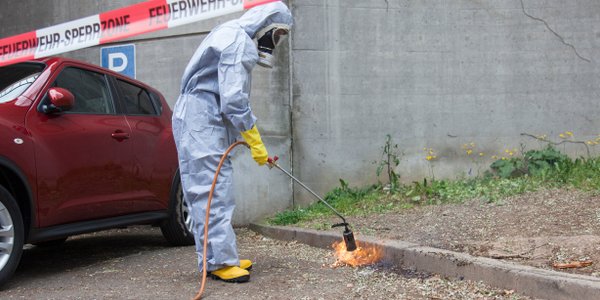
Strategies to combat the infestation include introducing natural predators and promoting biodiversity. Scientists also advocate for monitoring and rapid response, suggesting the development of an app to report caterpillar nests. In response to the threat, some Danish municipalities have closed kindergartens, playgrounds, and recycling stations, while some residents in vulnerable homes have temporarily relocated due to their children experiencing skin and eye irritation.
They do not have natural enemies, viruses, bacteria, and fungi (...). For thousands of years, the spread of the caterpillar was also limited by birds and insects that fed on it.
DistantNews Editorial
Originally published by Rzeczpospolita in Polish. Translated, summarized, and contextualized by our editorial team with added local perspective. Read our editorial standards.
More Stories

From Our Blog

What Gets Lost (and Found) When News Is Translated

The Critical Role of Diaspora Media in Global News

What Travellers Should Know About Countries with Restricted Press

A Digital Nomad's Guide to Following Local News

How the Same Story Looks Different in Different Countries
