

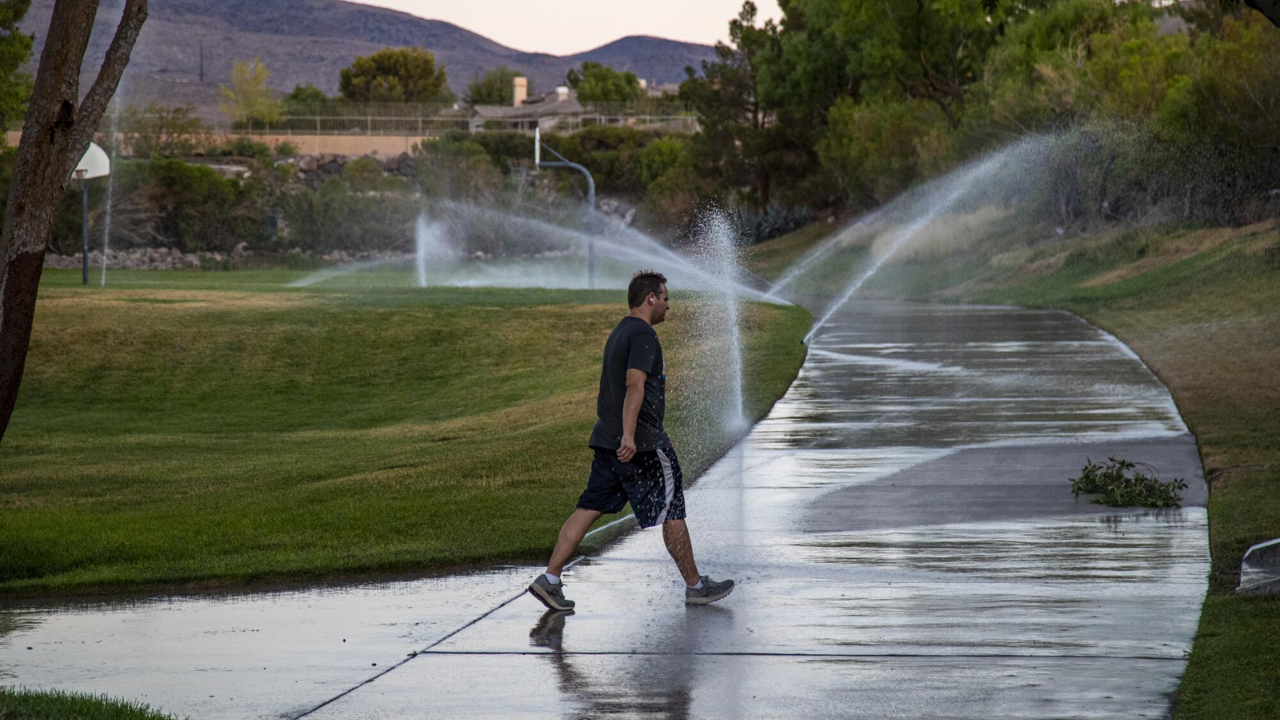
Las Vegas lawn removal saves billions of gallons but raises local temperatures
Translated from English and summarized by DistantNews. Read the original for the full story.
At a glance
News
Sources not specified
Context piece
- Las Vegas Valley has removed 250 million square feet of grass lawns since 1999, conserving an estimated 203 billion gallons of water.
- Research indicates this large-scale removal has increased local summer land-surface temperatures by about 20 degrees Celsius due to the loss of evapotranspiration cooling.
- Water authorities are now promoting water-efficient landscaping and new guidelines restrict residential grass installations to balance water conservation with heat reduction.
A significant water conservation effort across the Las Vegas Valley has successfully removed 250 million square feet of grass lawns since 1999, resulting in the saving of an estimated 203 billion gallons of water. This initiative, driven by programs like the Southern Nevada Water Authority’s Water Smart Landscapes Rebate and supported by state legislation, incentivizes property owners to replace water-intensive lawns with desert-appropriate landscaping.
However, this large-scale environmental strategy has an unintended consequence: a noticeable rise in local surface temperatures. Scientific research published in the journal Urban Climate found that the removal of turf grass has increased summer land-surface temperatures by approximately 20 degrees Celsius (20 ± 0.3 Kelvin). This warming effect is attributed to the loss of evapotranspiration, the natural cooling process where grass releases water vapor.
The study highlights that replacing lawns with materials like gravel, rocks, or artificial turf eliminates this cooling effect. While urbanization itself contributes to a heat island effect, the removal of grass has a more pronounced impact on local temperatures. Researchers noted that commercial buildings and asphalt roads remain primary contributors to the broader urban heat island effect.
This situation presents a critical dilemma for Las Vegas, a region heavily reliant on the Colorado River for its water supply. With outdoor irrigation accounting for the majority of water loss in the valley, planners have prioritized grass removal to meet federal water usage limits. Yet, the resulting increase in heat necessitates a new approach. Water agencies are now actively promoting water-efficient landscaping, shade trees, and have implemented new guidelines that prevent grass installations in residential yards, seeking a balance between conserving precious water resources and mitigating extreme local heat.
Turf grass removal increased temperatures by 20 ± 0.3 K, while urbanization, in general, increased LST by 5 ± 0.3 K.
About this summary
Originally published by Times of India in English. Translated, summarized, and contextualized automatically by DistantNews, with a note on how the source frames the story. Not individually reviewed before publishing. How this works.
More Stories

From Our Blog

What Press Freedom Means for the News You Read

What Gets Lost (and Found) When News Is Translated

The Critical Role of Diaspora Media in Global News

What Travellers Should Know About Countries with Restricted Press

A Digital Nomad's Guide to Following Local News
