


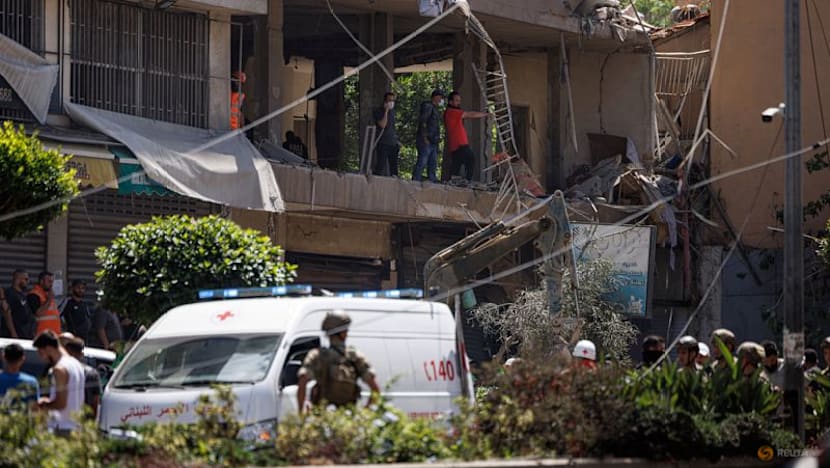
Lebanon reports Israeli strikes kill three amid US-Iran peace deal
Translated from English, summarized and contextualized by DistantNews.
At a glance
News
Sources not specified
Ongoing story
- Israeli strikes in southern Lebanon killed three people on Thursday, according to Lebanese state media.
- The strikes occurred hours after the United States and Iran signed an agreement to end the Middle East war.
- The violence in Lebanon has sharply decreased since the US-Iran agreement was announced, though limited exchanges of fire continue.
Israeli airstrikes in southern Lebanon resulted in the deaths of three people on Thursday, Lebanese state media reported. These strikes occurred just hours after the United States and Iran announced a significant agreement aimed at ending the Middle East war.
The official National News Agency (NNA) reported that an Israeli drone targeted a car in the Kfar Tebnit area, killing two individuals, and another drone strike in the neighboring village of Zebdine claimed one life. These incidents followed an announcement by the Israeli military regarding the death of one of its soldiers the previous night in an incident in south Lebanon that also wounded seven others.
Since the US-Iran agreement was publicized on Monday, there has been a noticeable reduction in the level of violence along the Lebanese border. Hezbollah, a militant group backed by Iran, had previously drawn Lebanon into the conflict in March. However, since the agreement, Hezbollah has not claimed responsibility for any new attacks against Israel. Despite this de-escalation, limited exchanges of fire have persisted, with Israeli strikes killing four people in Lebanon on Tuesday.
Israel has not officially commented on the US-Iran agreement. The memorandum of understanding signed on Wednesday between the United States and Iran is intended to halt fighting on all fronts, including in Lebanon, marking a potential turning point in the protracted conflict.
DistantNews Editorial
Originally published by CNA in English. Translated, summarized, and contextualized by our editorial team with added local perspective. Read our editorial standards.
More Stories


From Our Blog

What Gets Lost (and Found) When News Is Translated

The Critical Role of Diaspora Media in Global News

What Travellers Should Know About Countries with Restricted Press

A Digital Nomad's Guide to Following Local News

How the Same Story Looks Different in Different Countries
