


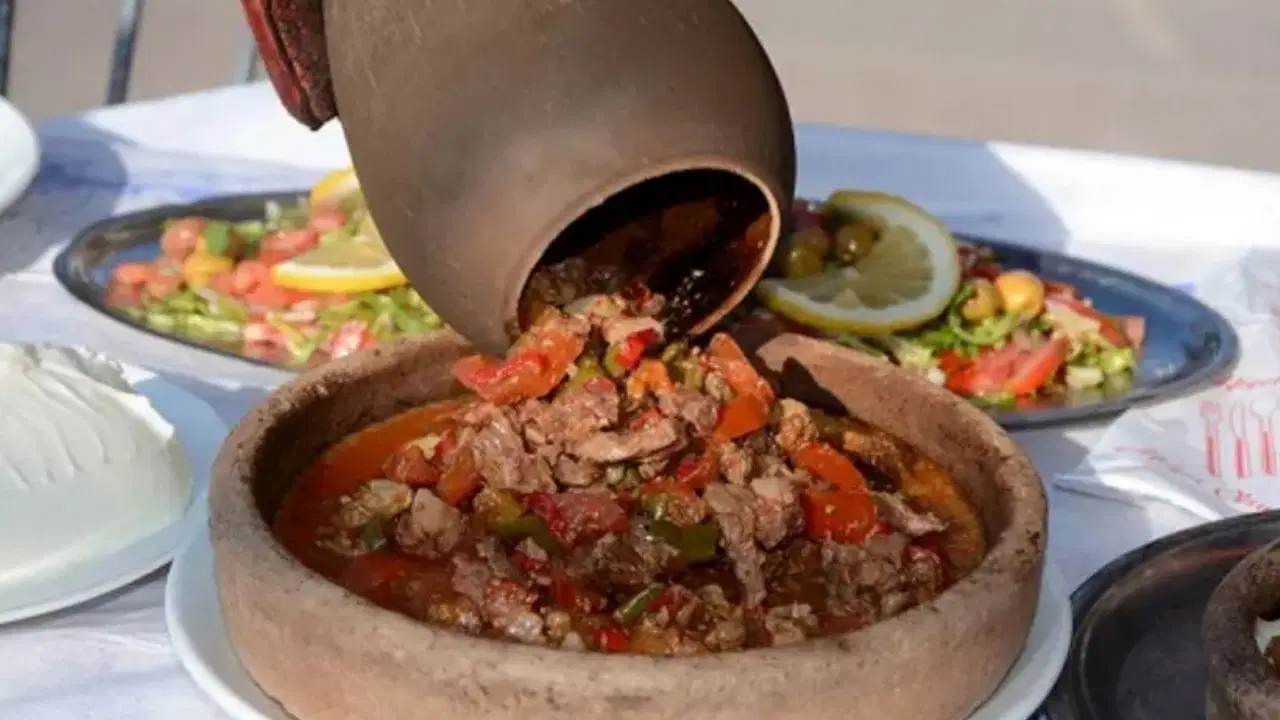
Legendary Flavor: Antakya-Style Tepsi Kebab Recipe
Translated from Turkish, summarized and contextualized by DistantNews.
At a glance
In-depth
Sources not specified
Context piece
- Antakya-style Tepsi Kebabı is a legendary meat dish from Turkey's Southeastern cuisine.
- It involves minced beef and lamb mixed with vegetables and spices, then baked in a pan.
- The recipe emphasizes the fat content of the meat and finely chopped fresh vegetables for a rich flavor.
Antakya-style Tepsi Kebabı stands as a legendary meat dish from Turkey's Southeastern culinary tradition, particularly iconic to the Hatay Antakya region. This dish represents a perfect fusion of butcher culture and bakery techniques, resulting in a uniquely flavorful experience.
The preparation involves mincing medium-fat beef and lamb, then thoroughly mixing it with finely chopped ingredients such as capia peppers, onions, garlic, and parsley. A blend of aromatic spices, including cumin, black pepper, and red pepper flakes, along with salt, is incorporated to create a cohesive paste.
The secret to its rich taste lies in the fat content of the meat and the integration of finely chopped fresh vegetables. When baked, the kebab releases its own juices and fat, which combine with a tomato-based sauce drizzled over the top, forming a magnificent flavor emulsion.
To prepare Tepsi Kebabı at home, one begins by finely chopping the vegetables and mixing them with the minced meats, garlic, spices, and a touch of biber salçası (pepper paste). This mixture is kneaded for at least 8-10 minutes until it reaches a paste-like consistency. The seasoned meat is then pressed evenly into a lightly oiled baking pan and scored into portions.
Finally, sliced tomatoes, peppers, and shallots are arranged on top. A sauce made from biber salçası, hot water, and olive oil is poured over the dish. It is then baked in a preheated 200°C (392°F) oven for approximately 35-40 minutes, or until the meat is cooked through and the top is golden brown and sizzling.
DistantNews Editorial
Originally published by Cumhuriyet in Turkish. Translated, summarized, and contextualized by our editorial team with added local perspective. Read our editorial standards.
More Stories



From Our Blog

What Gets Lost (and Found) When News Is Translated

The Critical Role of Diaspora Media in Global News

What Travellers Should Know About Countries with Restricted Press

A Digital Nomad's Guide to Following Local News

How the Same Story Looks Different in Different Countries
