

Libya Reaches Deal to Hold Elections, But Will This Time Be Different?
Translated from French and summarized by DistantNews. Read the original for the full story.
At a glance
Analysis
Sources not specified
New plan
- Rival Libyan parties reached an agreement on Aug. 30, under United Nations mediation, to organize presidential and legislative elections within 24 months.
- Libya has remained divided between the Tripoli-based Government of National Unity and an eastern administration backed by Khalifa Haftar’s forces since the 2021 elections failed.
- The agreement faces uncertainty because earlier election dates and competing United Nations and United States initiatives have not produced a vote.
Libya’s rival factions have given themselves 24 months to organize presidential and legislative elections. The agreement, reached on Aug. 30 by a joint committee after negotiations led by the United Nations Support Mission in Libya, offers another possible route out of a political crisis that has lasted since the fall of Muammar Gaddafi in 2011.
The deal is being presented as progress, but its timing also revives a familiar question: will this attempt finally lead to the ballot box? Libya has repeatedly announced election dates without holding a vote. The 2021 elections, which were expected to restore constitutional order, collapsed amid disputes over electoral rules and the eligibility of candidates.
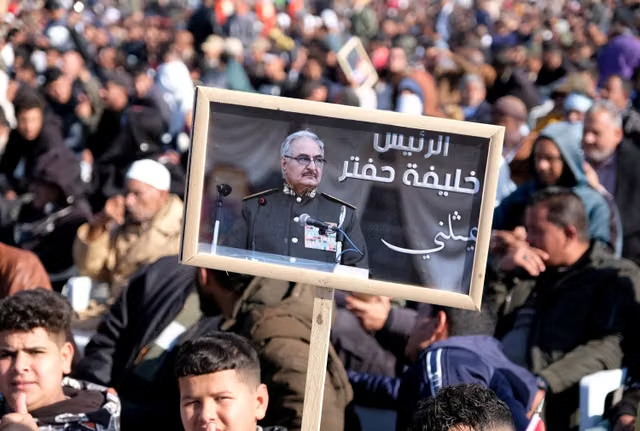
Since 2022, two rival governments have claimed authority. The internationally recognized Government of National Unity, led by Prime Minister Abdul Hamid Dbeibah, operates from Tripoli in the west. A competing administration is based in Benghazi in the east, where forces loyal to General Khalifa Haftar hold sway. Each government has support from a separate parliament, the High State Council in Tripoli and the House of Representatives in Tobruk.
The division has left peace fragile as both camps defend their positions. Another proposed date, Feb. 17, 2027, emerged in June through a national roadmap, but major United Nations decision-makers did not endorse it.
The United Nations mission is pursuing its own timetable, while a separate United States initiative remains an option. The proliferation of plans risks making the process harder to follow and adding to uncertainty over when, and under whose terms, Libyans will vote. The new agreement is therefore an advance, but not yet proof that the country’s long-delayed elections will take place.
About this summary
Originally published by Le Pays in French. Translated, summarized, and contextualized automatically by DistantNews, with a note on how the source frames the story. Not individually reviewed before publishing. How this works.
More Stories
From Our Blog

What Gets Lost (and Found) When News Is Translated

The Critical Role of Diaspora Media in Global News

What Travellers Should Know About Countries with Restricted Press

A Digital Nomad's Guide to Following Local News

How the Same Story Looks Different in Different Countries
