


Lignite mining leaves Lusatia with massive water deficit, report says
Translated from German, summarized and contextualized by DistantNews.
At a glance
News
Official statement
Context piece
- The lignite mining in the Lusatia region of Saxony has caused a significant water deficit, according to a report by the Left Party in the state parliament.
- Approximately 5.7 billion cubic meters of water are needed to refill mining lakes and groundwater levels, a quantity that could have supplied the Saxon population with drinking water for about 40 years.
- The Left Party criticizes the continued extraction of lignite for its energy inefficiency and climate damage, advocating for measures like reducing evaporation surfaces and promoting water retention through reforestation and wetland restoration.
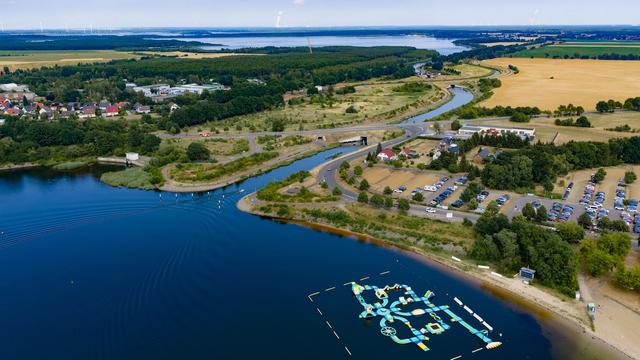
Lignite mining in Saxony's Lusatia region has created a massive water deficit, with the potential to have supplied the region's drinking water needs for 40 years. The Left Party in the state parliament highlighted this issue, citing figures that show 5.7 billion cubic meters of water are required to refill mining lakes and groundwater.
"So much was and continues to be pumped out for an energetically inefficient and climate-damaging energy source," criticized Left Party representative Stefan Hartmann. He questioned how this deficit would be resolved, noting that studies and model calculations are ongoing. The water shortage is already palpable and will persist for decades.
Hartmann stressed that the remaining open-pit mines, Nochten and Reichwalde, should be kept as small as possible to minimize evaporation. He also called for prioritizing water retention across the landscape through measures such as sealing industrial wastelands, reforestation, forest protection, and restoring moors and floodplains. The Ministry of Environment stated that approximately 9,000 hectares of open water surface will exist in the Saxon part of the Lusatian Lake District after the remediation of post-mining areas.
So much was and continues to be pumped out for an energetically inefficient and climate-damaging energy source.
DistantNews Editorial
Originally published by Die Zeit in German. Translated, summarized, and contextualized by our editorial team with added local perspective. Read our editorial standards.
More Stories
From Our Blog

What Gets Lost (and Found) When News Is Translated

How the Same Story Looks Different in Different Countries

The Critical Role of Diaspora Media in Global News

What Travellers Should Know About Countries with Restricted Press

A Digital Nomad's Guide to Following Local News
