


Local Taxation in Senegal: Monograph of a Failing System
Translated from French, summarized and contextualized by DistantNews.
TLDR
- Senegal's local taxation system is characterized by a disconnect between its decentralized goals and centralized administration.
- This system suffers from outdated legal bases for some local taxes and fragmented administrative responsibilities.
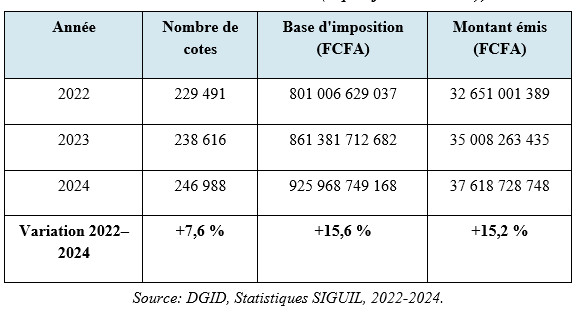
- Despite revenue increases between 2022 and 2024, structural issues persist, hindering local financial autonomy.
Le Soleil, as a leading publication in Senegal, views the current state of local taxation with a critical yet constructive eye. Our analysis, drawing from the work of Cheikhna Ibrahima Seck, highlights a persistent paradox: while decentralization aims to empower local communities with financial self-sufficiency, the very mechanisms designed to achieve this remain largely under state control. This inherent tension creates a fragile system, one that struggles to meet the evolving needs of our collectivités territoriales.
The study underscores that the issues extend beyond mere revenue generation. It points to a deeper crisis in normative coherence and administrative governance. The legal frameworks governing several local taxes are, frankly, antiquated and poorly integrated with national fiscal reforms. Furthermore, the division of responsibilities among the tax administration, the public treasury, and local authorities leads to a lack of clarity for taxpayers and operational inefficiencies. This fragmentation is a significant barrier to true local autonomy.
While recent figures show an increase in tax collection between 2022 and 2024, this progress is overshadowed by structural anomalies. A disproportionate concentration of revenue from a few key taxes and the persistent challenges in financial management mean that local authorities still lack the stable, predictable, and dynamic resources necessary to fund their transferred responsibilities. This situation is particularly acute given that Senegal has been committed to territorial decentralization since independence, with successive reforms amplifying local duties without a commensurate strengthening of their fiscal bases.
From our perspective at Le Soleil, the path forward requires not just incremental adjustments but a fundamental re-evaluation of the system's architecture. True local autonomy, as emphasized in classical literature on local finance, is intrinsically linked to financial autonomy. For Senegal, this means ensuring that our local governments possess robust and reliable revenue streams. The ongoing process of decentralization, a cornerstone of our national development, must be supported by a fiscal system that genuinely empowers, rather than constrains, our local communities. This is not merely a technical matter; it is central to the effectiveness and legitimacy of our governance model.
DistantNews Editorial
Originally published by Le Soleil in French. Translated, summarized, and contextualized by our editorial team with added local perspective. Read our editorial standards.
More Stories


From Our Blog

What Gets Lost (and Found) When News Is Translated

The Critical Role of Diaspora Media in Global News

What Travellers Should Know About Countries with Restricted Press

A Digital Nomad's Guide to Following Local News

How the Same Story Looks Different in Different Countries
