


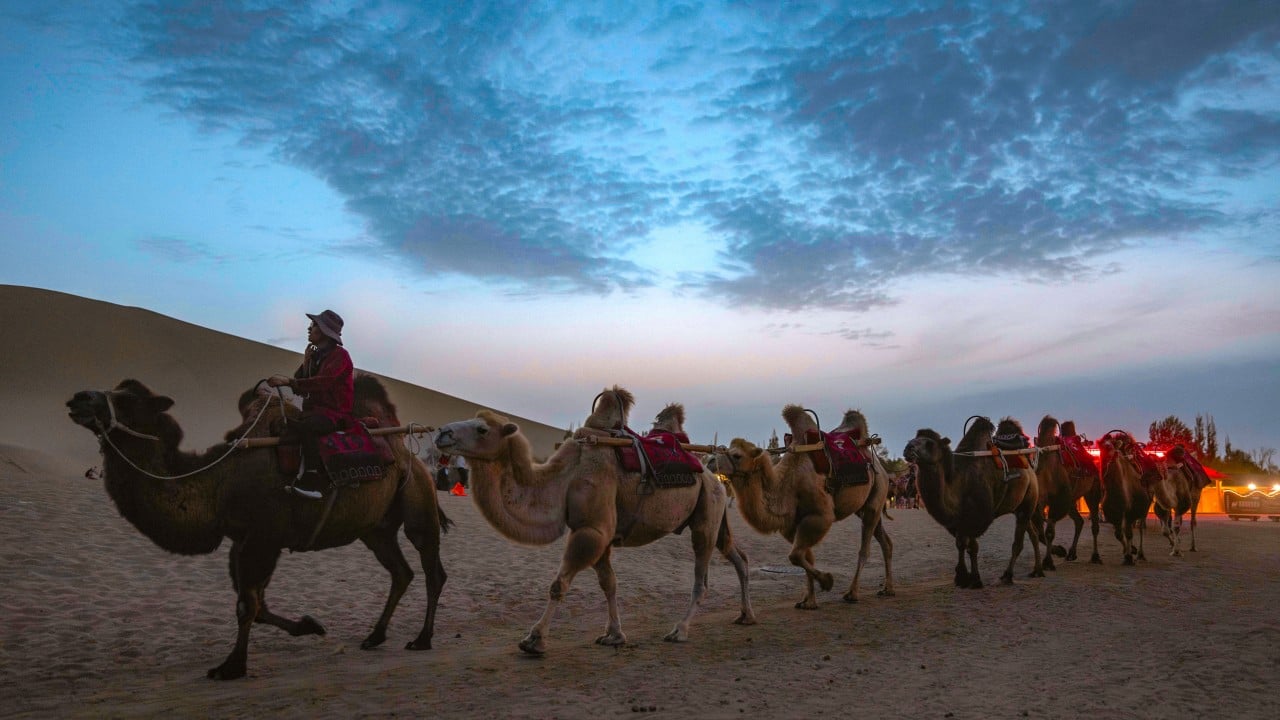
Long before the Silk Road, silkworm cocoons already existed in Uzbekistan
Summarized and contextualized by DistantNews.
At a glance
News
Documents & data
Outcome reported
- A recent archaeological discovery in Uzbekistan suggests silkworm cocoons and mulberry trees existed there over 2,000 years before the Silk Road opened.
- This challenges the traditional view that sericulture originated solely in China and spread westward along the Silk Road starting in the 2nd century BC.
- The findings indicate a much earlier presence of sericulture in Central Asia, predating the established Silk Road trade routes.
A significant archaeological discovery in Uzbekistan has potentially rewritten the timeline of silk production, suggesting that silkworm cocoons and mulberry trees were present in the region more than 2,000 years before the famed Silk Road facilitated trade.
Traditionally, historical scholarship posits that sericulture, the practice of cultivating silkworms, and silk-reeling technology originated in China between 8,500 and 5,000 years ago. This knowledge and technology are believed to have spread westward along the Silk Road, beginning in the 2nd century BC.
The Silk Road itself, a network of land routes, officially began with Chinese diplomat Zhang Qian's envoy mission in 138 BC. While his mission failed to achieve its military objective against the Xiongnu confederation, it unexpectedly opened a route connecting China through Central and West Asia to the Mediterranean. Chinese silk became the most representative commodity traded along this route, giving it its name.
However, the recent findings in Uzbekistan, made by Chinese scientists, indicate that the precursors to the silk industry were established in Central Asia much earlier than previously thought. This discovery challenges the long-held narrative of China as the sole origin point and disseminator of sericulture, suggesting a more complex and ancient history for silk production in the region.
DistantNews Editorial
Originally published by South China Morning Post. Summarized and contextualized by our editorial team with added local perspective. Read our editorial standards.
More Stories


From Our Blog

Countries Without a Free Press: What You Need to Know

What Press Freedom Means for the News You Read

What Gets Lost (and Found) When News Is Translated

The Critical Role of Diaspora Media in Global News

What Travellers Should Know About Countries with Restricted Press
