


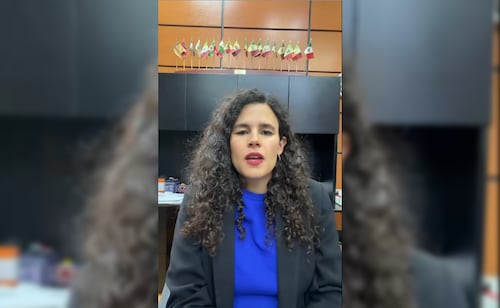
Luisa Alcalde denies creating 'blacklist' of journalists, says she presented analysis of digital ecosystem
Translated from Spanish, summarized and contextualized by DistantNews.
At a glance
News
Sources not specified
Context piece
- Mexico's Attorney General Luisa María Alcalde Luján denied accusations of creating "blacklists" of journalists.
- She stated that a recent broadcast presented an "analysis" of digital ecosystems and artificial trend amplification, not a list of government enemies.
- Alcalde clarified that the broadcast examined how coordinated narratives are amplified by anonymous accounts and bots, without accusing media or journalists of directly financing them.
Mexico's Attorney General, Luisa María Alcalde Luján, has vehemently denied claims that she presented "blacklists" of journalists during a broadcast titled "Derecho de Réplica." Addressing the controversy via social media, Alcalde asserted that the program instead offered an "analysis" of digital ecosystems and the artificial amplification of online trends.
I have seen some reactions to yesterday's 'Derecho de Réplica' program. There are even those who talk about me presenting a supposed list of journalists who are enemies of the government. That is not the case.
Alcalde explained that the broadcast focused on how specific news, opinions, or publications, regardless of their origin, can be picked up and amplified. She detailed a process where anonymous accounts and coordinated narratives connect these contents to position specific trends. The Attorney General emphasized that this analysis does not imply that the journalists or media outlets themselves are part of any illicit operation or are directly financing bots and trolls.
What we presented was an analysis of how a digital ecosystem of artificial amplification of trends functions and who appears in this ecosystem.
"What we presented was an analysis of how a digital ecosystem of artificial amplification of trends functions and who appears in this ecosystem," Alcalde stated. She further elaborated that a digital network, reportedly comprising over half a million bots across various countries, is used to artificially elevate these contents into widespread conversations. The government's aim, she clarified, is to study and expose these phenomena, asserting that "there are no blacklists, nor are we saying that the media are financing bots or trolls."
A news item, an opinion, or a publication can be issued by a journalist, media outlet, or politician, and that does not mean that this person or outlet is part of any operation.
However, the broadcast, which aired on August 12, 2026, did display lists of media outlets, journalists, and politicians. Opposition groups had previously described such presentations as an "intimidation tactic." Alcalde maintained that the public has a right to know about the funding and mechanisms behind these digital amplification efforts, distinguishing the analysis of the phenomenon from direct accusations against individuals or organizations.
This is precisely what we are studying. There are no blacklists, nor are we saying that the media are financing bots or trolls. What we assure is that there are people who are financing, and it is evident, and people have the right to know about this type of phenomenon.
DistantNews Editorial
Originally published by El Universal in Spanish. Translated, summarized, and contextualized by our editorial team with added local perspective. Read our editorial standards.
More Stories

From Our Blog

What Press Freedom Means for the News You Read

What Gets Lost (and Found) When News Is Translated

The Critical Role of Diaspora Media in Global News

What Travellers Should Know About Countries with Restricted Press

A Digital Nomad's Guide to Following Local News
