


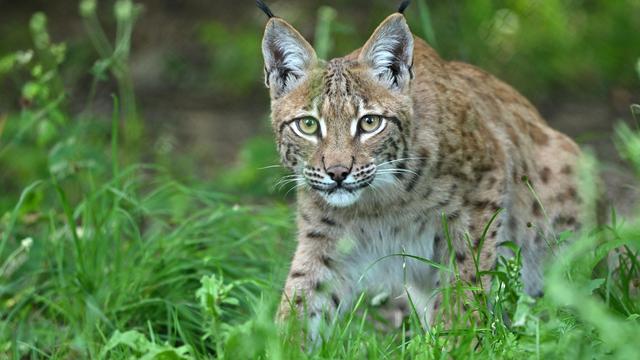
Lynx Sightings Increase in North Rhine-Westphalia Forests; Reintroduction Planned
Translated from German, summarized and contextualized by DistantNews.
At a glance
News
Named sources
Context piece
- Lynxes have been sighted multiple times in the Lippe district of North Rhine-Westphalia, Germany.
- While occasionally seen, the lynx is not yet permanently established in the region.
- Conservation groups plan to reintroduce lynx to NRW forests within five years, starting with a release in the Rothaargebirge.
Lynxes, with their distinctive spotted fur, tufted ears, and short tails, have been sighted on three separate occasions in the Lippe district of North Rhine-Westphalia (NRW), Germany. These sightings have been confirmed by the State Office for Nature, Environment and Climate NRW (Lanuk) and a lynx and wolf advisor. However, it remains unclear whether these sightings involve a single animal or multiple individuals.
Despite these occasional appearances in NRW's forests, the lynx has not yet become a permanent resident in the state. Christine Thiel-Bender, a species protection officer for BUND NRW, stated that the animals seen are likely from a border region, possibly crossing the Weser river. Ole Anders, coordinator of the Harz Lynx Project, agrees, suggesting the lynx on the recordings likely originated from the Harz region.
Currently, Germany is home to approximately 200 lynxes, with about 160 inhabiting the area from the Harz mountains to the Weser river. This population is the result of reintroduction efforts, as the species had been extinct in German territories for 200 years. Between 2000 and 2006, 24 lynxes were released in the Harz as part of a resettlement project, with similar initiatives taking place in other German regions.
Conservationists are now planning to reintroduce lynxes to NRW's forests within the next five years. The BUND and the NRW Foundation aim to release the first animal into the North Rhine-Westphalian forest, with further releases planned subsequently. Large forest areas like the Rothaargebirge are being considered as potential release sites. Additionally, the Wuppertal Zoo is involved in breeding lynxes, with a pair named Viktor and Missy intended to produce offspring for potential release into the wild, though they have not yet successfully bred.
DistantNews Editorial
Originally published by Die Zeit in German. Translated, summarized, and contextualized by our editorial team with added local perspective. Read our editorial standards.
More Stories


From Our Blog

What Gets Lost (and Found) When News Is Translated

How the Same Story Looks Different in Different Countries

The Critical Role of Diaspora Media in Global News

What Travellers Should Know About Countries with Restricted Press

A Digital Nomad's Guide to Following Local News
