


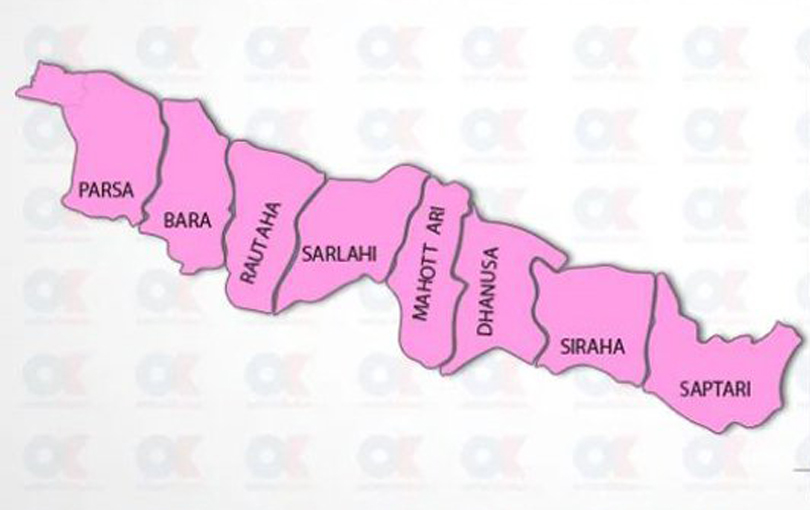
Madhesh after federalism: Political gains, governance failures and a crisis of trust
Summarized and contextualized by DistantNews.
At a glance
In-depth
Sources not specified
Context piece
- Madhesh province is considered the birthplace of federalism in Nepal, promising representation and autonomy.
- Madhesi parties initially rejected the 2015 Constitution but later accepted the federal system.
- The first five years of provincial governance saw visible development but also governance failures and a crisis of trust.
Madhesh province, located in southern Nepal, is often hailed as the cradle of federalism in the country. The movement that originated in its plains was driven by more than just the creation of a new government layer; it represented a profound promise of political representation, enhanced autonomy, improved access to governance, and an end to reliance on Kathmandu for decisions. The push for federalism gained momentum with the first Madhesh movement in 2006/07, advocating for an autonomous Madhesh, federal governance, and inclusive representation.
Despite initial rejection of the 2015 Constitution due to unaddressed concerns, Madhesi-based parties eventually accepted the federal framework it established. This led to the formation of Madhesh Province from eight Tarai-Madhesh districts. For the parties championing federalism, this marked a pivotal moment, transforming political struggle into an opportunity to govern. With a majority in the provincial assembly, Madhesh-based parties formed the government, installing Lalbabu Raut as the first chief minister, a symbolic leadership from the movement's heart.
Raut acknowledged the high expectations, promising good governance and unwavering efforts to maintain law and order for development and prosperity. The initial five years of provincial rule brought tangible changes: paved roads, new public structures, established institutions, and passed laws. Federalism also unlocked unprecedented political opportunities, bringing individuals from marginalized communities into provincial leadership roles. Leaders like Upendra Yadav were instrumental in embedding federalism into Nepal's political discourse.
However, the transition to governance presented distinct challenges. The focus shifted from advocating for federalism to the practicalities of governing. Questions arose about the effectiveness of the new system, particularly concerning governance failures and a growing crisis of trust among residents. While visible development occurred, the administration's ability to deliver on the core promises of federalism, such as equitable governance and genuine autonomy, faced scrutiny. The province grappled with balancing the symbolic gains of federalism against the concrete demands of effective and trustworthy governance.
development and prosperity would not be possible without good governance and promised that his government would leave no stone unturned to maintain law and order and good governance.
DistantNews Editorial
Originally published by OnlineKhabar English. Summarized and contextualized by our editorial team with added local perspective. Read our editorial standards.
More Stories
From Our Blog

What Gets Lost (and Found) When News Is Translated

The Critical Role of Diaspora Media in Global News

What Travellers Should Know About Countries with Restricted Press

A Digital Nomad's Guide to Following Local News

How the Same Story Looks Different in Different Countries
