

Magyar Outpaces Orbán: Hungary's New Premier Faces Early Tests
Translated from Polish, summarized and contextualized by DistantNews.
At a glance
Analysis
Named sources
Context piece
- Péter Magyar, the new Hungarian Prime Minister, faces challenges in his early days, including controversial reforms and internal party tensions.
- Unlike some Polish politicians, Magyar is willing to apologize for perceived "mistakes," a trait contrasted with Viktor Orbán's approach.
- Despite a slight dip in support, Magyar's party, Tisza, remains dominant, with his willingness to rectify decisions seen as a strength.
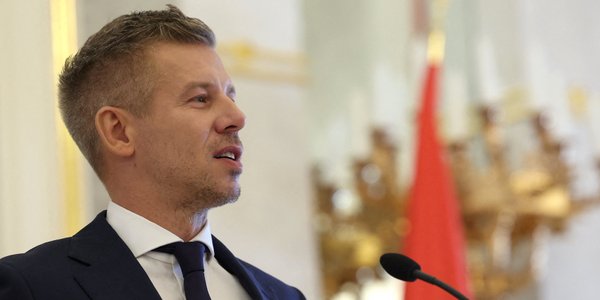
Péter Magyar, the new prime minister of Hungary, is navigating a complex political landscape marked by controversial reforms and internal party dynamics. While he has introduced changes that raise concerns about the rule of law, his approach differs significantly from that of his predecessor, Viktor Orbán, particularly in his willingness to acknowledge and apologize for missteps.
Speaking plainly: I don't know the details of Ziobro's activities. I only know about the suspicions, I saw his indictment. However, my ex-wife never broke the law. In this sense, they are completely different.
Magyar's administration has faced scrutiny over its handling of judicial reforms and nominations. For instance, his initial proposal for the new Minister of Justice, his ex-wife Judit Varga, who served in Orbán's government during periods of alleged rule of law violations, drew criticism. Similarly, his consideration of his brother-in-law for Justice Minister, despite the individual's qualifications, was poorly received by the public, especially given the country's recent history of nationalistic propaganda.
However, Magyar has demonstrated a capacity for self-correction. Unlike Orbán, who rarely apologized, Magyar has shown a willingness to gauge public sentiment and adjust his decisions. This flexibility was evident when chess grandmaster Judit Polgár, initially proposed for president, withdrew her candidacy, and Magyar began exploring other options. Analyst Szabolcs Panyi notes that this ability to apologize and rectify decisions is a key strength for Magyar.
Magyar promised that the appointment of the new president would be preceded by broad consultations, after which he practically pulled the candidacy of Judit Polgár out of a hat.
Despite these challenges, Magyar's party, Tisza, maintains a strong position. While support saw a slight decrease from May to July, it remains substantial. The index of trust in Magyar personally has also seen a decline, though it remains high. The party, built rapidly over two years, largely unites individuals opposed to Viktor Orbán's long tenure, suggesting that internal cohesion may be tested as the government confronts the legacy of the previous administration.
What is good about Magyar is that he tries to sound out public moods and rectify his decisions. He can apologize for his decisions. Orbán never apologized.
DistantNews Editorial
Originally published by Rzeczpospolita in Polish. Translated, summarized, and contextualized by our editorial team with added local perspective. Read our editorial standards.
More Stories

From Our Blog

What Gets Lost (and Found) When News Is Translated

The Critical Role of Diaspora Media in Global News

What Travellers Should Know About Countries with Restricted Press

A Digital Nomad's Guide to Following Local News

How the Same Story Looks Different in Different Countries
