


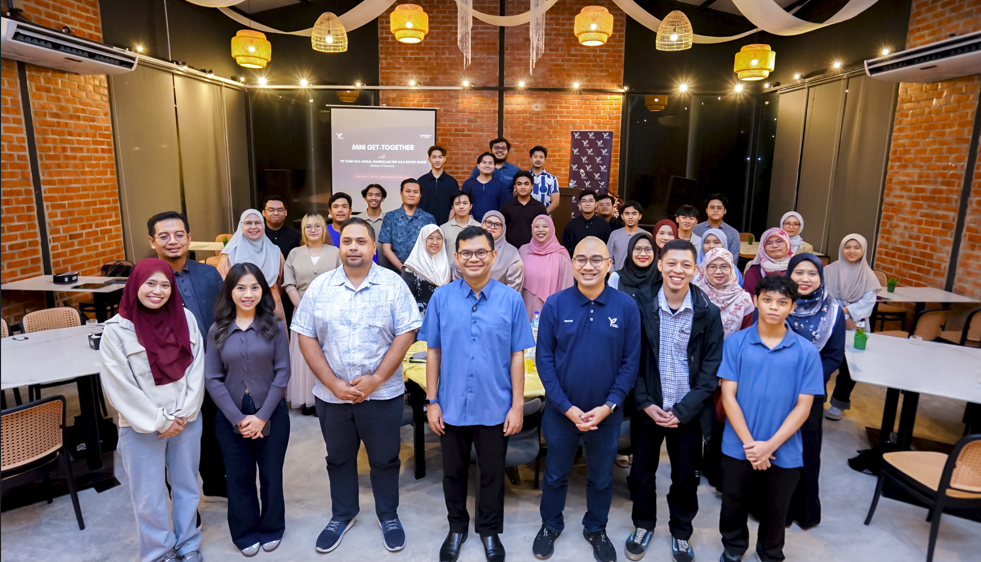
Malaysia aims to train 2,000 Bumiputera in chip design by 2027
Translated from Malay, summarized and contextualized by DistantNews.
At a glance
News
Named sources
New plan
- Yayasan Peneraju aims to develop over 2,000 Bumiputera talents in front-end chip design by 2027, with 150 talents targeted for 2026.
- This initiative supports the Malaysian Ministry of Economy's national goal of producing 10,000 Integrated Circuit (IC) design professionals.
- The program focuses on high-growth sectors like semiconductors, digital technology, and R&D to ensure Bumiputera professionals contribute to Malaysia's value chain in the semiconductor industry.
Yayasan Peneraju (YP) is setting an ambitious goal to cultivate over 2,000 Bumiputera talents in front-end chip design by 2027. The foundation plans to train 150 talents in 2026, with the first cohort expected to commence in August of this year. This strategic initiative directly supports the Malaysian Ministry of Economy's national objective to nurture 10,000 Integrated Circuit (IC) design professionals.
The world today is changing rapidly. Artificial intelligence, data centers, electric vehicles, industrial automation, cybersecurity, and defense technology all depend on semiconductors.
Minister of Economy Akmal Nasrullah Mohd Nasir emphasized that talent development is fundamental to Malaysia's advancement in the semiconductor value chain. He highlighted the need for the nation to move beyond mere manufacturing and build strengths in technology, talent, intellectual property, and local product creation. "The world today is changing rapidly. Artificial intelligence, data centers, electric vehicles, industrial automation, cybersecurity, and defense technology all depend on semiconductors," he stated.
Malaysia cannot remain solely a manufacturing location; we must dare to move higher up the value chain by building strengths in technology, talent, intellectual property, and the capability of local companies to create their own value.
Malaysia aims to develop ten local semiconductor companies with revenues between RM1 billion and RM4.7 billion, alongside supporting at least 100 other companies generating around RM1 billion annually, as outlined in the National Semiconductor Strategy. YP's future direction, particularly from 2026 onwards, will concentrate on developing Bumiputera talent for high-growth and future-oriented sectors.
Our goal is clear. YP needs to be a more strategic talent pipeline for the future economy.
"Our goal is clear. YP needs to be a more strategic talent pipeline for the future economy," said Akmal Nasrullah. He added that YP's targets of 7,000 technology program registrations in 2026 and 15,000 talents annually by 2028 represent a long-term investment to ensure more Bumiputera individuals can contribute to high-value sectors such as semiconductors, digital technology, R&D, and future industries. This aligns with the Thirteenth Malaysia Plan's objective of developing 100,000 talents for high-growth sectors over five years.
YP's targets to achieve 7,000 technology program registrations in 2026 and 15,000 talents per year by 2028 are not just participation numbers, but long-term investments.
DistantNews Editorial
Originally published by Utusan Malaysia in Malay. Translated, summarized, and contextualized by our editorial team with added local perspective. Read our editorial standards.
More Stories



From Our Blog

What Gets Lost (and Found) When News Is Translated

The Critical Role of Diaspora Media in Global News

What Travellers Should Know About Countries with Restricted Press

A Digital Nomad's Guide to Following Local News

How the Same Story Looks Different in Different Countries
