


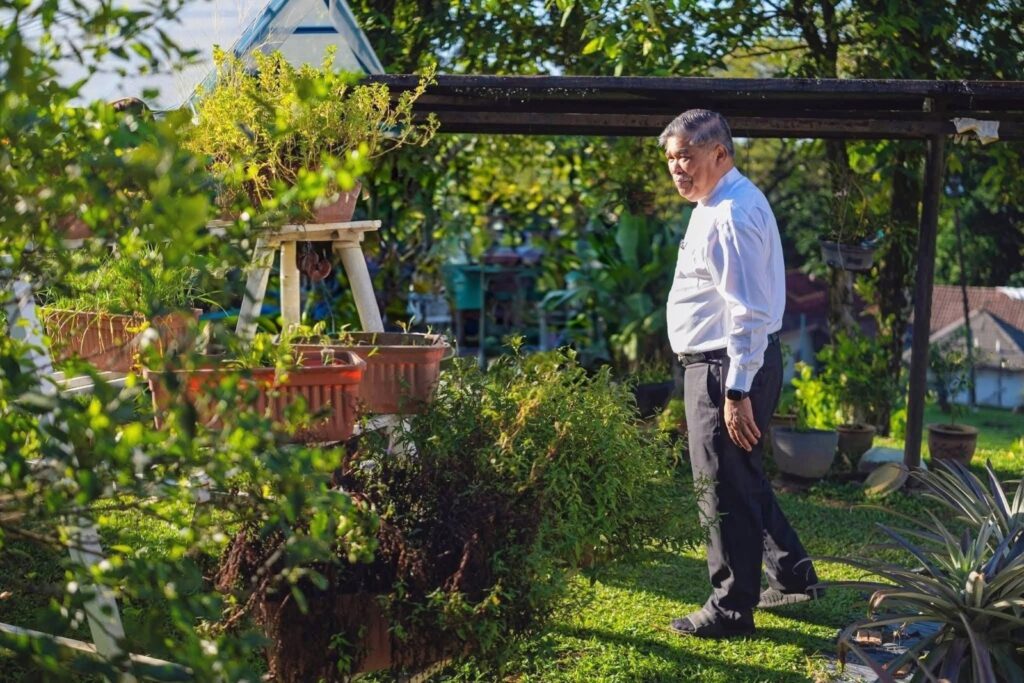
Malaysia launches 'Grow Your Own Food' campaign amid global supply chain fears
Translated from Malay and summarized by DistantNews. Read the original for the full story.
At a glance
News
Sources not specified
New plan
- Malaysia launched the 'Grow Your Own Food' (Kendiri) campaign to mitigate potential food supply disruptions and price increases due to global geopolitical uncertainty.
- The campaign encourages citizens to cultivate vegetables and herbs at home, providing a supplementary food source.
- This initiative aims to ensure food availability at the household level and reduce reliance on imported agricultural inputs like fertilizer.
Malaysia has launched the 'Kebun di Rumah Sendiri' (Kendiri), or 'Grow Your Own Food,' campaign as a proactive measure against potential disruptions in the food supply chain and rising prices, exacerbated by global geopolitical tensions. Agriculture and Food Security Minister Datuk Seri Mohamad Sabu stated that current geopolitical uncertainties could significantly impact food supply chains and increase the cost of agricultural inputs, many of which are imported.
When the supply chain is disrupted, it will lead to price increases. Fertilizers like urea and phosphate, and various other types, all come from abroad.
"When the supply chain is disrupted, it will lead to price increases. Fertilizers like urea and phosphate, and various other types, all come from abroad," Mohamad explained. "We don't know how long these geopolitical conflicts will last, so preparations must be made to increase food production in the market if the food supply is affected and prices rise."
The Kendiri campaign is not intended to replace the national food supply system but rather to serve as an additional source of food. It aims to empower households to ensure a consistent food supply and cope with potential price hikes. The initiative promotes growing vegetables and herbs at home, emphasizing that even limited spaces can be utilized for cultivation.
We don't know how long these geopolitical conflicts will last, so preparations must be made to increase food production in the market if the food supply is affected and prices rise.
"We want to provide an umbrella before the rain," Mohamad said, illustrating the campaign's precautionary nature. "We don't want this situation to continue and affect the supply, especially of fertilizers, increasing food prices, and causing hardship to the people."
We want to provide an umbrella before the rain.
Guidance on cultivation techniques is available through the Department of Agriculture, and community knowledge sharing is encouraged. The campaign, guided by the principle of 'Use the Space We Have,' promotes the theme 'Plant What We Eat, Eat What We Plant.' This approach not only helps reduce household expenses but also educates younger generations about the food production process from seed to harvest. The government continues its commitment to urban and community agriculture, having allocated RM114.24 million since the Urban Agriculture Program began in 2014.
Plant What We Eat, Eat What We Plant.
About this summary
Originally published by Utusan Malaysia in Malay. Translated, summarized, and contextualized automatically by DistantNews, with a note on how the source frames the story. Not individually reviewed before publishing. How this works.
More Stories


From Our Blog

What Gets Lost (and Found) When News Is Translated

The Critical Role of Diaspora Media in Global News

What Travellers Should Know About Countries with Restricted Press

A Digital Nomad's Guide to Following Local News

How the Same Story Looks Different in Different Countries
