


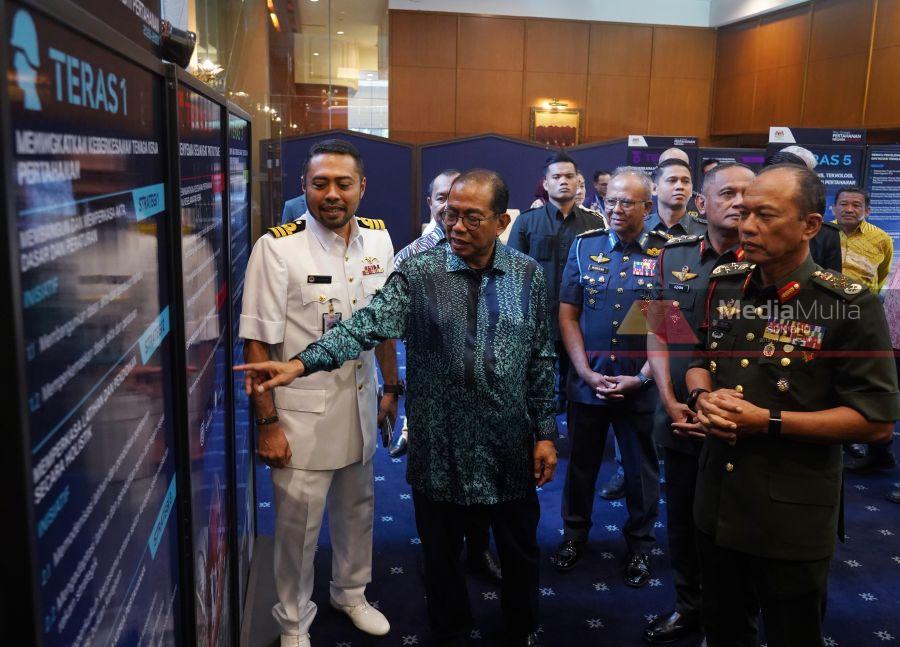
Malaysia Launches New National Defense Strategy for 2026-2030
Translated from Malay, summarized and contextualized by DistantNews.
At a glance
News
Named sources
New plan
- Malaysia's Ministry of Defence (MINDEF) launched new strategic plans for national defense for 2026-2030.
- These plans, the National Defence Strategic Plan (PSPN) and Defence Capacity Action Framework (RTKP), aim to enhance readiness amid complex security challenges.
- The initiatives address geopolitical shifts, technological advancements like AI, and non-military threats, emphasizing a comprehensive approach to national security.
Malaysia's Ministry of Defence (MINDEF) has introduced a new strategic direction for the nation's defense sector, unveiling the National Defence Strategic Plan (PSPN) 2026-2030 and the Defence Capacity Action Framework (RTKP) 2026-2030. These initiatives are designed to guide the country's defense development over the next five years, ensuring robust capabilities to face evolving security challenges.
The PSPN 2026-2030 builds upon the aspirations of the Defence White Paper and the 13th Malaysia Plan, aiming to bolster national defense readiness in an increasingly complex, challenging, and uncertain security landscape. It represents an enhanced iteration of the previous MINDEF Strategic Plan (2021-2025), incorporating a more inclusive, adaptive, and responsive approach. The plan outlines seven strategic pillars, 29 main strategies, and 103 specific initiatives to strengthen national defense capabilities by 2030.
Complementing the PSPN, the RTKP 2026-2030 supports the Defence White Paper's vision by focusing on developing defense capacity through a Whole-of-Government and Whole-of-Society approach, termed HANRUH. This framework prioritizes the development of defense personnel, including armed forces members, volunteers, veterans, and civilian defense staff, as well as nurturing talent in defense science, technology, and industry. It centers on three key pillars: enhancing the effectiveness of the defense workforce, instilling patriotism, and fostering talent in defense-related fields.
Minister of Defence Datuk Seri Mohamed Khaled Nordin highlighted that these initiatives were developed through collaborative efforts involving MINDEF, the Malaysian Armed Forces (ATM), and strategic partners. He noted that the global defense and security landscape is significantly influenced by geopolitical developments, technological progress, and ongoing conflicts worldwide. The rise of disruptive technologies like artificial intelligence (AI) and automation, coupled with complex non-military threats and protracted armed conflicts, are drastically reshaping security dynamics. These factors were thoroughly examined during the Mid-Term Review of the Defence White Paper to identify and address gaps, leading to the creation of more responsive and adaptive national defense plans.
DistantNews Editorial
Originally published by Utusan Malaysia in Malay. Translated, summarized, and contextualized by our editorial team with added local perspective. Read our editorial standards.
More Stories

From Our Blog

What Gets Lost (and Found) When News Is Translated

The Critical Role of Diaspora Media in Global News

What Travellers Should Know About Countries with Restricted Press

A Digital Nomad's Guide to Following Local News

How the Same Story Looks Different in Different Countries
