

Malaysia's EV Market Poised for Rapid Growth in Late 2026, Driven by New Models and Policies
Translated from Malay, summarized and contextualized by DistantNews.
At a glance
News
Official statement
New plan
- Hong Leong Investment Bank (HLIB) forecasts rapid growth in electric vehicle (EV) adoption in the second half of 2026, driven by more affordable models and increased charging infrastructure.
- EV sales in Malaysia reached 25,500 units in the first five months of 2026, capturing 8.1% market share, with Proton's e.MAS models leading sales.
- New policies starting July 1, 2026, will restrict imports of fully built EVs valued below RM200,000, potentially favoring locally assembled models from Proton and Perodua.
Electric vehicle (EV) adoption in Malaysia is expected to accelerate significantly in the latter half of 2026, according to Hong Leong Investment Bank (HLIB). This growth is anticipated due to the introduction of more budget-friendly EV models and an expansion of charging facilities nationwide.
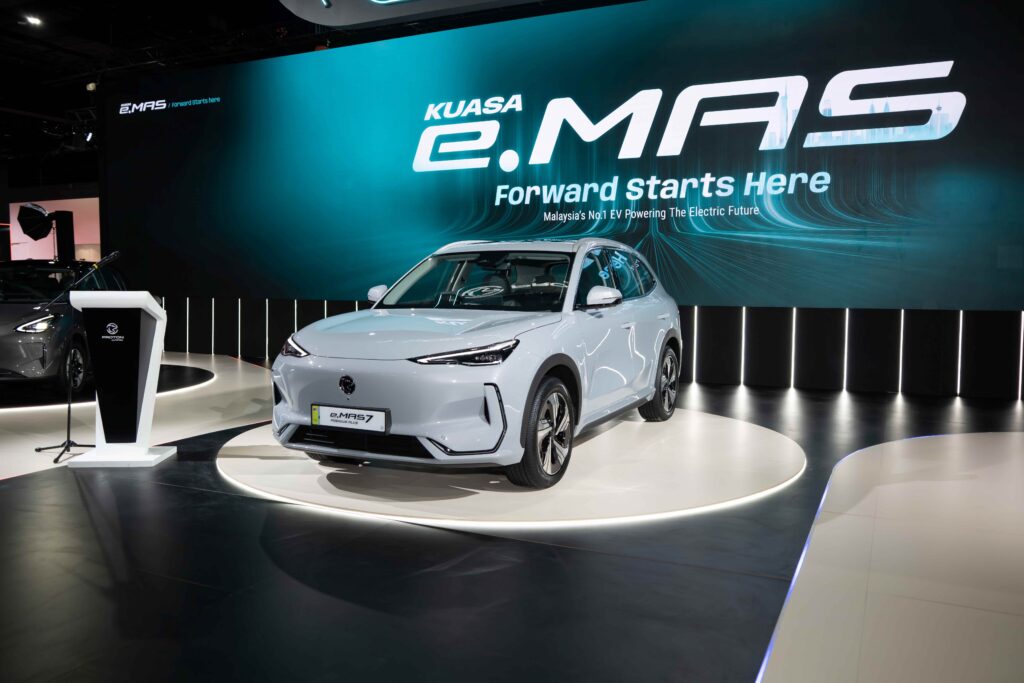
During the first five months of 2026, EV sales in Malaysia reached 25,500 units, boosting the market share to 8.1 percent, a notable increase from 3.8 percent in 2025. Proton has emerged as a leader in this segment, with its e.MAS 5 model selling 9,356 units and the e.MAS 7 model selling 2,286 units. BYD's Atto 3 followed with 1,873 units sold. Perodua also contributed by reducing the price of its QV-E EV model to RM63,500 under a battery leasing scheme or RM87,500 for direct purchase.
However, a new policy effective July 1, 2026, will impose restrictions on fully built-up (CBU) EV imports. Only models with a minimum value of RM200,000 and a motor power of at least 180 kilowatts will be permitted entry into Malaysia. HLIB suggests this measure might limit the availability of cheaper imported EVs but could benefit local manufacturers like Proton and Perodua, which can offer models through local assembly (CKD).
HLIB maintains an "Overweight" rating on the automotive sector, projecting resilient industry performance throughout 2026, supported by strong sales from Perodua and Proton. The bank also highlighted a RM10 million matching grant program introduced in the 2026 Budget to encourage owners of vehicles older than 20 years to trade them in for new Proton or Perodua models, offering rebates up to RM4,000. Eligible taxi and e-hailing drivers will receive full exemptions on excise duty and sales tax. HLIB also anticipates the Malaysian Ringgit to strengthen by the end of 2026, potentially reducing import costs for CBU vehicles, CKD kits, and components, benefiting companies with exposure to the Japanese Yen.
DistantNews Editorial
Originally published by Utusan Malaysia in Malay. Translated, summarized, and contextualized by our editorial team with added local perspective. Read our editorial standards.
More Stories

From Our Blog

What Gets Lost (and Found) When News Is Translated

The Critical Role of Diaspora Media in Global News

What Travellers Should Know About Countries with Restricted Press

A Digital Nomad's Guide to Following Local News

How the Same Story Looks Different in Different Countries
