


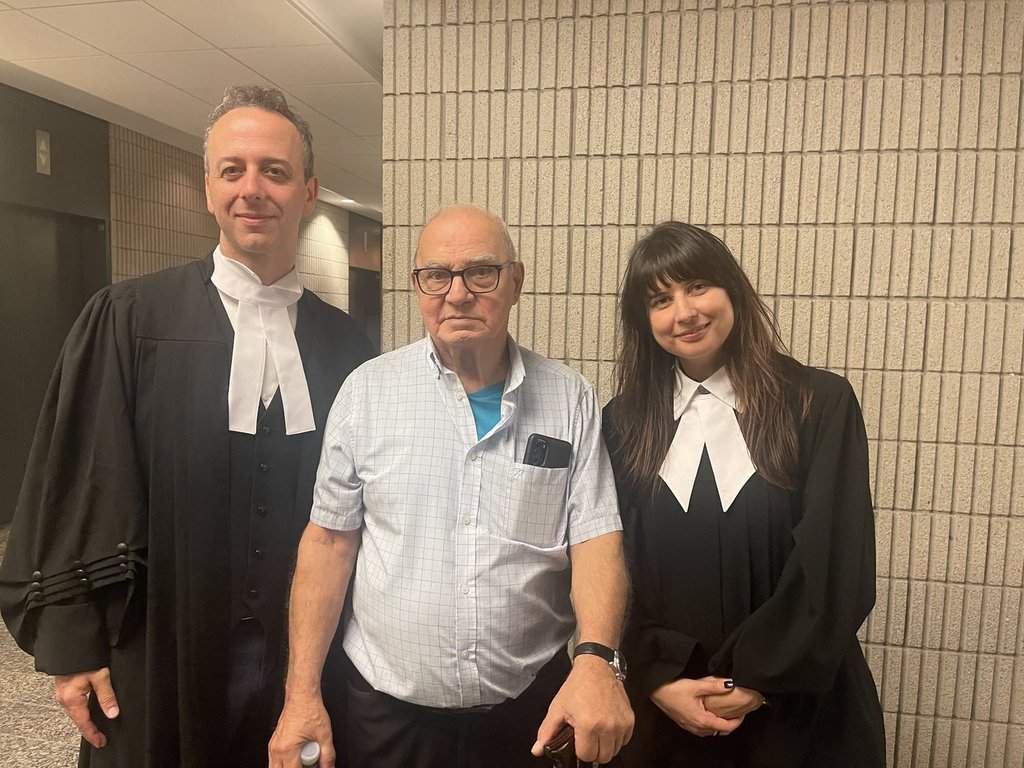
Man acquitted of decades-old murders settles lawsuit with Montreal and Quebec
Summarized and contextualized by DistantNews.
At a glance
News
Sources not specified
Outcome reported
- Claude Paquin, a Quebec man acquitted in 2024 of a 1978 double murder, has settled a lawsuit against the city of Montreal and the provincial government.
- Paquin alleged that police and justice system officials knew for decades that his 1983 conviction was based on false evidence.
- He served 18 years in prison and over 23 years on parole before being freed after the federal justice minister ordered a new trial, with the settlement amount undisclosed.
Claude Paquin, a Quebec man exonerated in 2024 of a decades-old double murder, has reached a settlement in his civil lawsuit against the city of Montreal and the provincial government. Paquin had alleged that law enforcement and justice system representatives were aware for decades that his 1983 conviction for the 1978 murders of Ronald Bourgouin and Sylvie Revah was based on fabricated evidence.
The Plaintiff holds the grim record for the longest unjustified deprivation of liberty ever documented in Quebec.
Paquin was released in 2024 after Quebec's Crown prosecutor's office declined to prosecute him for a second time. He had already spent 18 years in detention and more than 23 years on parole under strict conditions before his liberation. The federal justice minister had ordered a new trial, leading to his acquittal.
His story illustrates a Dantean judicial process, a series of grave, gross, and malicious state errors that imprisoned him for the better part of his adult life within an institutional grinder that was crushing, irreversible, and inescapable.
The city and the province issued a joint statement expressing hope that the settlement would allow Paquin to move forward from a difficult period in his life. The financial terms of the settlement were not disclosed. Paquin's lawyers had argued in court documents that he held "the grim record for the longest unjustified deprivation of liberty ever documented in Quebec," describing his experience as a "Dantean judicial process" marked by "grave, gross, and malicious state errors."
This determination is a result of the identification of new and significant information that was not submitted to the courts at the time of Mr. Paquin’s trial or appeal, calling into question the overall fairness of the process.
At the time of his acquittal at age 81, Paquin had spent more than half his adult life deprived of his freedom. Lawyers for Projet Innocence Québec noted that Paquin's acquittal was based on new evidence not presented at his original trial. This included testimony from an informant who changed his story and admitted to receiving benefits for his testimony, as well as statements from another witness who asserted Paquin's non-involvement and concerns about the handling of the crime scene evidence. The federal justice department's decision to order a new trial in 2024 was based on the identification of significant new information that cast doubt on the fairness of the original process.
Ultimately, and too late, the (Quebec Crown)’s key witness in the plaintiff’s case, the informant Provençal, finally admitted to having perjured himself in order to falsely implicate the plaintiff in a conspiracy with (Montreal police) officers, declaring that he himself was the person truly responsible for the offence.
DistantNews Editorial
Originally published by Global News. Summarized and contextualized by our editorial team with added local perspective. Read our editorial standards.
More Stories

From Our Blog

What Gets Lost (and Found) When News Is Translated

The Critical Role of Diaspora Media in Global News

What Travellers Should Know About Countries with Restricted Press

A Digital Nomad's Guide to Following Local News

How the Same Story Looks Different in Different Countries
