


Manifesta: An Art Biennial in the Empty 'Slipper Churches' of the Ruhr Area
Translated from German, summarized and contextualized by DistantNews.
At a glance
In-depth
Named sources
Context piece
- The Manifesta 16 art biennial is transforming 12 disused churches in Germany's Ruhr region into exhibition spaces.
- The biennial aims to address the growing issue of empty churches, a consequence of declining religious affiliation and demographic shifts in the post-war industrial area.
- By using these spaces for art, Manifesta seeks to foster new encounters and showcase the region's diverse, often migrant, communities, challenging art's elitist perception.
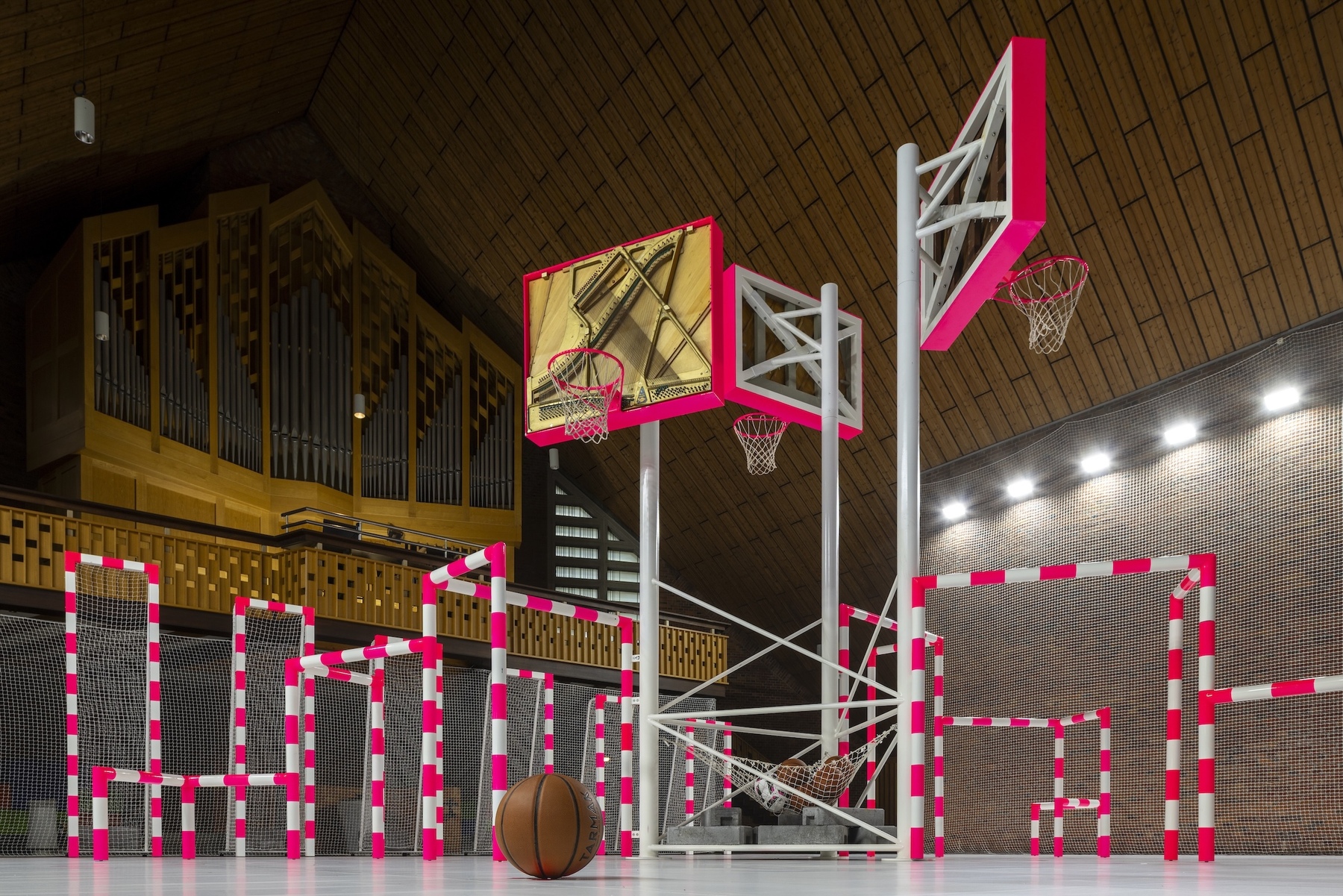
Europe can be understood by visiting Germany's Ruhr region, declared Frank Dudda, chairman of the Ruhr Parliament, at the opening of Manifesta 16. For 15 weeks, this traveling European art biennial will inhabit 12 churches across four cities along the Ruhr River, under the theme 'This is not a church.' The title itself highlights a pressing issue: an increasing number of sacred buildings are being deconsecrated or retired.
Following World War II, the Ruhrgebiet experienced a church-building boom, with structures erected every couple of kilometers, many serving as 'Pantoffelkirchen' (slipper churches) in new residential areas to meet the needs of over five million inhabitants. However, this landscape has dramatically changed. By the early 2000s, the Diocese of Essen alone had 368 Catholic church buildings, with no end to deconsecrations in sight. Despite a stable population post-coal and steel industry decline, these churches now stand empty due to declining faith, financial crises from church departures, and the shrinking social base of working-class parishes.
Maniifesta 16 reframes this decline not as a loss but as an opportunity for transformation. Eight curators are turning these churches into venues for new encounters. The question remains whether art can truly achieve this, especially in the 'Kohlenpott', the affectionate local name for the region, where art is often perceived as elitist. In a region where over 40 percent of residents have a migration background and unemployment is nearly double the national average, reaching 15 percent in the economically weakest city of Gelsenkirchen, the biennial directly addresses migrant communities.
Curator Gürsoy Dogtas is using four churches to engage these communities, demonstrating that art can emerge from the experiences of labor migrants. In the Thomaskirche, recently deconsecrated, Julia Logothetis, born in Turkey in 1945 and living in Vienna, displays works depicting the reality of a Kurdish worker's life, elevating the everyday. St. Bonifatius, now used as a storage space by a local baker, hosts a group exhibition of artists with migrant backgrounds. St. Anna, known for its 1970s glass art, serves as a 'quiet room' without a congregation, its altar area modified for a sound installation. St. Josef, already used for cultural events, features Penique Productions' installation using stacked pews within a giant inflatable structure.
If you want to understand Europe, you have to come to the Ruhr area.
DistantNews Editorial
Originally published by Die Presse in German. Translated, summarized, and contextualized by our editorial team with added local perspective. Read our editorial standards.
More Stories


From Our Blog

What Gets Lost (and Found) When News Is Translated

The Critical Role of Diaspora Media in Global News

What Travellers Should Know About Countries with Restricted Press

A Digital Nomad's Guide to Following Local News

How the Same Story Looks Different in Different Countries
