


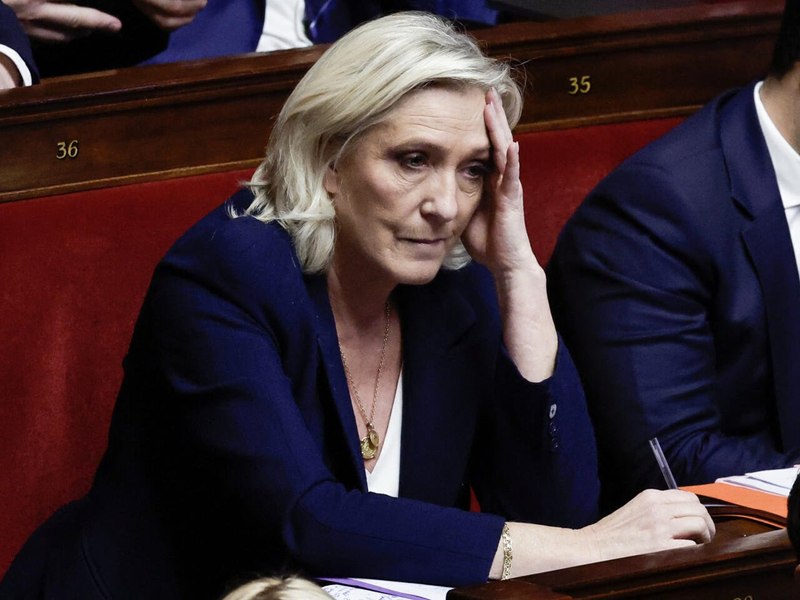
Marine Le Pen's political future hangs in the balance as court decides on presidential eligibility
Translated from Romanian, summarized and contextualized by DistantNews.
At a glance
News
Sources not specified
Under investigation
- Marine Le Pen awaits a court decision on July 7 that will determine if she can run in France's 2027 presidential election.
- She faces a ban from public office due to a conviction for misusing European Parliament funds.
- The verdict is crucial for her party, the National Rally, which may have to field a different candidate if Le Pen is disqualified.
Marine Le Pen, the leader of France's far-right National Rally party, faces a critical court ruling on July 7 that will decide her eligibility for the 2027 presidential election. The Paris Court of Appeal will rule on her appeal against a five-year ban from holding public office, a sanction imposed after her conviction in a case involving the embezzlement of European Parliament funds.
I am not afraid. If I can run, I will, as long as I can conduct my campaign.
The verdict is considered one of the most significant in recent French politics, as it will determine whether the party runs with the 57-year-old Le Pen, a three-time presidential candidate, or her 30-year-old protégé, Jordan Bardella, the current party president. Le Pen, who was defeated by Emmanuel Macron in the 2022 presidential election, has stated she is prepared for any outcome, saying, "I am not afraid. If I can run, I will, as long as I can conduct my campaign."
However, those close to her acknowledge that upholding the ban would be a major blow to the party. National Rally deputy Thomas Ménagé described such a decision as "a kind of personal drama" for their leader. The conviction stems from a Paris court's March ruling, which sentenced Le Pen to four years in prison, two of which were suspended, and imposed the five-year ban on public office, effective immediately.
a kind of personal drama
Prosecutors alleged that between 2004 and 2016, the National Rally party used European Parliament funds to pay staff who were actually working for the party in France. Investigators claim the system was initiated by Jean-Marie Le Pen and expanded under his daughter's leadership. Prosecutors argue Marine Le Pen "professionalized" the mechanism for diverting European funds. Le Pen denies the charges, calling the case a "witch hunt" and asserting the party acted in "good faith," though she admitted some parliamentary assistants performed party duties in France, believing it was permissible.
witch hunt
The prosecution is seeking a four-year suspended prison sentence for Le Pen. While acquittal is the most favorable scenario, most analysts believe the ban is likely to be upheld, potentially forcing the National Rally to pivot its presidential strategy.
good faith
DistantNews Editorial
Originally published by Adevărul in Romanian. Translated, summarized, and contextualized by our editorial team with added local perspective. Read our editorial standards.
More Stories



From Our Blog

What Gets Lost (and Found) When News Is Translated

The Critical Role of Diaspora Media in Global News

What Travellers Should Know About Countries with Restricted Press

A Digital Nomad's Guide to Following Local News

How the Same Story Looks Different in Different Countries
