


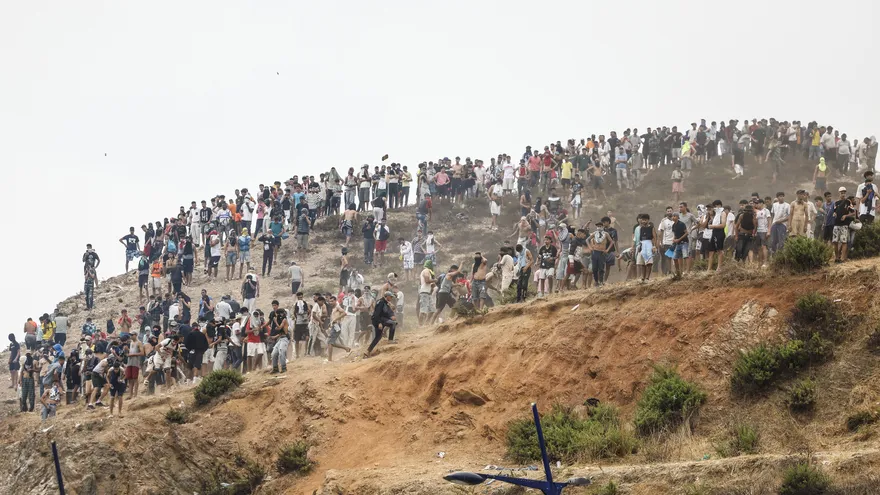
Mass Migrant Entry into Ceuta Sparks Diplomatic Crisis, Questions Morocco's Role
Translated from Spanish, summarized and contextualized by DistantNews.
At a glance
News
Sources not specified
Outcome reported
- Around 60,000 migrants entered the Spanish enclave of Ceuta from Morocco in a few days, overwhelming the territory's population.
- Most migrants have since left Ceuta, but the influx triggered a diplomatic crisis and questions about Morocco's role.
- Experts suggest the event may be linked to a Spanish court ruling on border procedures and potentially encouraged by migration policy announcements.
The Spanish enclave of Ceuta experienced an unprecedented influx of migrants, with approximately 60,000 individuals entering from Morocco over a three-day period. This surge, which overwhelmed the small territory of 18.5 square kilometers, represented about 70% of Ceuta's total population of 84,000.
While Spanish authorities reported that the majority of these migrants, around 48,000, had already returned to Morocco by Saturday, the mass entry sparked a significant diplomatic crisis within the European Union. The event raised serious questions about why Moroccan authorities appeared to permit such a large number of people to reach the Spanish border.
Experts point to several potential factors contributing to the timing and scale of the influx. One significant element cited is a Spanish Supreme Court ruling from July 8th. This ruling clarified that immediate deportations, known as "hot returns," do not apply to individuals arriving by sea, unlike those crossing land borders with fences. Spanish Prime Minister Pedro Sánchez suggested that human trafficking mafias exploited this decision.
However, some analysts believe the court ruling alone doesn't fully explain the mobilization. Other theories suggest the arrivals might have been encouraged by recent announcements regarding migration regularization by Sánchez's government or by the prospect of future opportunities. The situation has highlighted the complex geopolitical dynamics and migration challenges at Europe's southern border.
DistantNews Editorial
Originally published by TVN Panamá in Spanish. Translated, summarized, and contextualized by our editorial team with added local perspective. Read our editorial standards.
More Stories


From Our Blog

What Gets Lost (and Found) When News Is Translated

The Critical Role of Diaspora Media in Global News

What Travellers Should Know About Countries with Restricted Press

A Digital Nomad's Guide to Following Local News

How the Same Story Looks Different in Different Countries
