


Master of Color's Grand Exhibition in Paris: Hundreds of Matisse's Works in One Place
Translated from Polish, summarized and contextualized by DistantNews.
TLDR
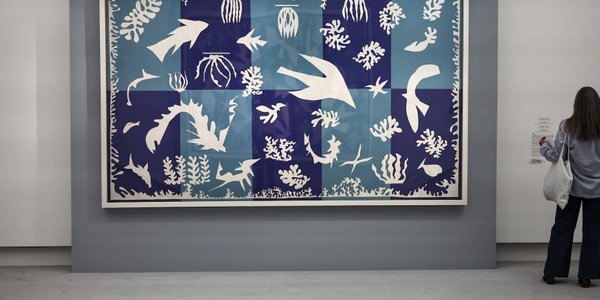
- A major exhibition of Henri Matisse's work, titled 'Matisse. 1941–1954,' has opened at the Grand Palais in Paris.
- The exhibition features over 300 works, focusing on the final 13 years of the artist's prolific life, including paintings, drawings, and cut-out gouaches.
- Many pieces are on loan from institutions like the Centre Pompidou and MoMA, showcasing Matisse's innovative late-career creations, particularly his cut-outs.
Paris, the global epicenter of art and culture, once again plays host to a monumental exhibition, this time celebrating the late works of the legendary Henri Matisse. The Grand Palais, freshly renovated, provides a magnificent setting for 'Matisse. 1941–1954,' an exhibition that promises to immerse visitors in the final, intensely creative period of one of the 20th century's most influential artists.
The end of life can turn out to be the most productive period of life – even in the situation of serious illness.
This retrospective is particularly significant as it delves into the last 13 years of Matisse's life, a period marked by serious illness following cancer surgery in 1941. Rather than diminishing his output, this adversity spurred an explosion of creativity, leading to some of his most innovative and impactful works. The exhibition meticulously curates over 300 pieces—spanning paintings, drawings, illustrated books, textiles, stained glass, and his celebrated cut-out gouaches—offering a comprehensive look at this late creative surge.
Color and mood came to the forefront in Fauvist paintings, while realistic depiction of the subject was less important.
From a French perspective, Matisse is not just an artist; he is a national treasure, a pioneer of Fauvism whose bold use of color and form revolutionized modern art. This exhibition, drawing heavily from the collections of the Centre Pompidou (currently closed for renovation) and prestigious international institutions like MoMA, underscores his enduring legacy. The focus on his late period, especially the development of his cut-out technique, highlights his relentless pursuit of artistic expression even in the face of physical limitations.
Instead of giving up, he not only continued to create but also began to explore entirely new forms of artistic expression.
The 'Matisse. 1941–1954' exhibition is more than just a display of art; it's a testament to the resilience of the human spirit and the power of artistic vision. It offers a unique opportunity for Parisians and international visitors alike to engage with the vibrant, expressive works that defined Matisse's final chapter, solidifying his place as a master of color and composition. The sheer scale and scope of the exhibition, bringing together such a vast collection of his late masterpieces, make it an unmissable event for art lovers worldwide.
In this final period of the Frenchman's career, hundreds of his most innovative works were created, which simultaneously had the greatest impact on artists of subsequent decades.
DistantNews Editorial
Originally published by Rzeczpospolita in Polish. Translated, summarized, and contextualized by our editorial team with added local perspective. Read our editorial standards.
More Stories



From Our Blog

What Gets Lost (and Found) When News Is Translated

The Critical Role of Diaspora Media in Global News

What Travellers Should Know About Countries with Restricted Press

A Digital Nomad's Guide to Following Local News

How the Same Story Looks Different in Different Countries
