


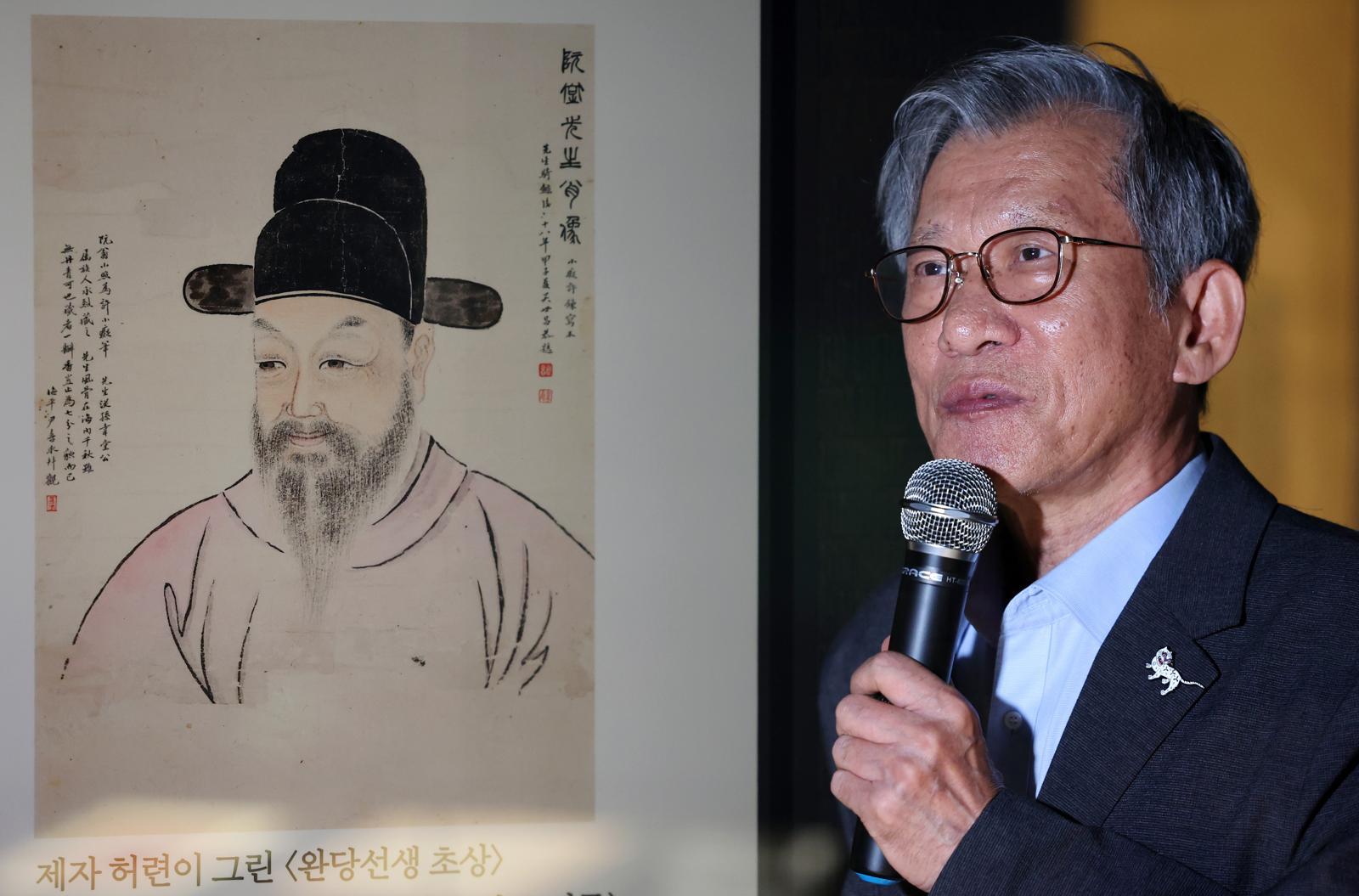
Meet 'Chusa Kim Jeong-hui' at the National Museum of Korea: From Late Works to Lee Kun-hee's Donations
Translated from Korean, summarized and contextualized by DistantNews.
At a glance
In-depth
Named sources
New plan
- The National Museum of Korea is hosting a new exhibition titled 'Chusa Kim Jeong-hui and His Companions'.
- The exhibition showcases the art and calligraphy of the renowned Joseon Dynasty scholar, Chusa Kim Jeong-hui.
- It features 38 items, including rarely seen works and pieces donated by the late Samsung Chairman Lee Kun-hee.
The National Museum of Korea has opened a new exhibition, 'Chusa Kim Jeong-hui and His Companions,' dedicated to the life and works of the celebrated Joseon Dynasty scholar. The exhibition, running until November 22, offers a comprehensive look at the artistic and intellectual legacy of Kim Jeong-hui, known by his pen name Chusa.
Visitors can explore 38 items, including paintings, calligraphy, letters, and rubbings from stone monuments. A highlight of the exhibition is 'Bul-i Seonlan-do' (Unconditional Zen Orchid), a late-period masterpiece by Chusa, notable for its harmonious blend of painting and calligraphy. The exhibition also includes six cultural assets being shown for the first time, among them pieces donated by the late Samsung Chairman Lee Kun-hee.
Chusa's art is not simply realism. In Chusa's era, the aesthetic standard shifted from realism to 'sa-ui' (writing meaning or spirit). We hope you can taste that world in this exhibition.
Curated in four parts, the exhibition delves into different facets of Chusa's life. The first section focuses on the man through letters to his wife, friends, and disciples. The second part examines his achievements as a epigrapher, while the third explores his interactions with Qing Dynasty scholars. The final section highlights his friendships with Buddhist monks, showcasing a less-known aspect of his life beyond his scholarly status.
Museum Director Yoo Hong-joon emphasized that Chusa's art was not solely a solitary pursuit but a product of collaboration and intellectual exchange with peers, disciples, and scholars from both Korea and China. This perspective challenges the common image of the solitary genius, presenting Chusa as an artist deeply engaged with his contemporaries. The exhibition aims to allow visitors to experience this unique world of art and scholarship.
Chusa's works were not achieved alone but were accomplishments made through discussions of art and학문 with acquaintances, disciples, and scholars from China and Joseon.
DistantNews Editorial
Originally published by Dong-A Ilbo in Korean. Translated, summarized, and contextualized by our editorial team with added local perspective. Read our editorial standards.
More Stories



From Our Blog

What Gets Lost (and Found) When News Is Translated

The Critical Role of Diaspora Media in Global News

What Travellers Should Know About Countries with Restricted Press

A Digital Nomad's Guide to Following Local News

How the Same Story Looks Different in Different Countries
