


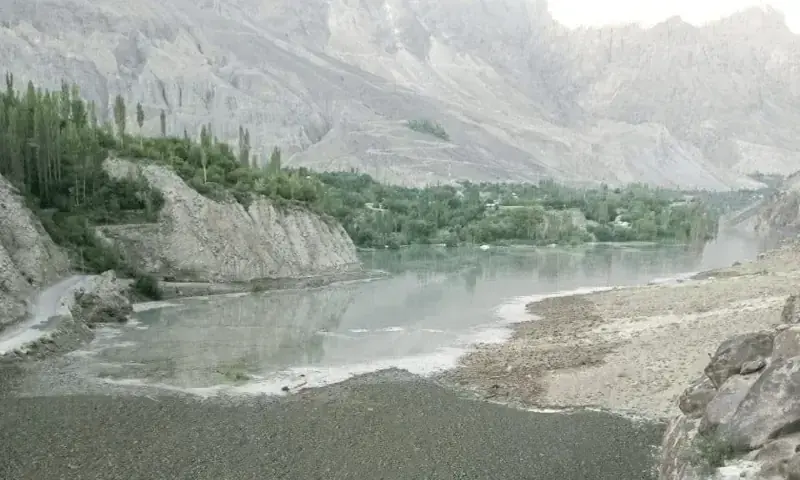
Melting Glaciers Fuel Fear of Floods in Pakistan's Hindu Kush
Translated from English, summarized and contextualized by DistantNews.
At a glance
News
Named sources
Context piece
- Communities in Pakistan's Hindu Kush region live in fear of glacial lake outburst floods (Glofs) due to rapidly melting glaciers.
- A 2019 outburst destroyed homes and orchards in the Golen valley, damaging a hydropower project and causing power outages.
- Over 80 potentially dangerous glacial lakes have formed in the region, exacerbated by climate change, impacting local lives and infrastructure.
Residents of the Golen valley in Pakistan's Hindu Kush region are living under the constant threat of devastating glacial lake outburst floods (Glofs). What was once a picturesque summer retreat is now a source of anxiety as melting glaciers form large, unstable lakes.
In July 2019, one such glacial lake burst, unleashing a torrent of water that destroyed homes, orchards, and damaged the headworks of the 108MW Golen Gol hydropower project, leaving the district in darkness for days. The following year, another Glof struck the valley. Safia Bibi, a Golen resident, recounted the terror of recent rains, fearing another flood, and recalled fleeing her home in 2020 with her infant daughter as a Glof carrying boulders and debris descended upon her village.
The Golen valley is not an isolated case; numerous remote valleys across the Hindu Kush face similar dangers. The Space and Upper Atmosphere Research Commission (Suparco) reports over 80 potentially dangerous glacial lakes in the region. These communities, historically living in harmony with nature, are now on the front lines of a climate catastrophe they did not cause.
The accelerating impact of climate change is particularly pronounced in the Hindu Kush, where rugged terrain and proximity to glaciers amplify the risks. The formation of these unfrozen glacial lakes poses a significant threat to millions living in the area, disrupting lives and damaging critical infrastructure.
Initially we were terrified, but later, when the men told us it was too cold and that we should not fear a flood from these clouds, only then did our frayed nerves calm.
DistantNews Editorial
Originally published by Dawn in English. Translated, summarized, and contextualized by our editorial team with added local perspective. Read our editorial standards.
More Stories
From Our Blog

What Gets Lost (and Found) When News Is Translated

The Critical Role of Diaspora Media in Global News

What Travellers Should Know About Countries with Restricted Press

A Digital Nomad's Guide to Following Local News

How the Same Story Looks Different in Different Countries
