


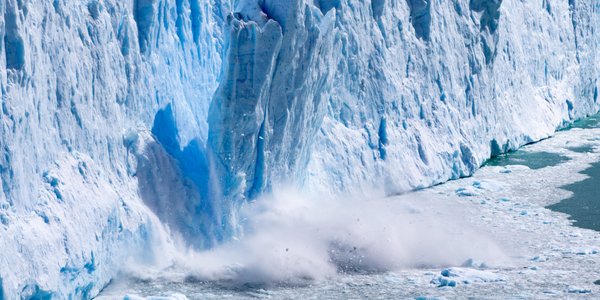
Melting Glaciers Release Mercury Into the Ocean, Driving Record Levels in Wildlife
Translated from Polish and summarized by DistantNews. Read the original for the full story.
At a glance
News
Named sources
Ongoing story
- Mercury accumulation in sediment around the Antarctic Peninsula has increased 160% since the preindustrial era, with the rise accelerating after the 1950s.
- Researchers say faster glacier melt is turning Antarctica from a mercury sink into a potential source for marine ecosystems.
- Toxic methylmercury could accumulate in wildlife, affect animal health and eventually enter commercial fisheries and the human food supply.
Antarctica is no longer simply storing mercury in its ice. As glaciers melt, the continent may release more of the toxic metal into surrounding marine ecosystems.
A team led by Chengzhen Zhou of Peking University examined 16 sediment cores from the continental shelf off the Antarctic Peninsula. The cores recorded mercury accumulation over the past 200 years. Nearly all showed a sharp increase from preindustrial levels, reaching 160%, with the fastest rise occurring from the 1950s onward.
Antarctica had long acted as a sink, trapping mercury in layers of ice and limiting the amount reaching the sea. Heavy industry has added more mercury to the environment, while greenhouse-gas emissions have accelerated glacier melt. The glaciers are now losing between 118 billion and 256 billion tons of ice each year, according to the article.
Maodian Liu, a co-author of the study, said climate change acts as "an amplifier of the mercury cycle." Once mercury reaches the ocean, microorganisms can convert it into methylmercury, a highly toxic form that readily enters living organisms and builds up in concentration.
The substance can disrupt animals’ neurological systems, behavior, growth and reproduction. It could also move through commercial fisheries and onto human plates. The article says mercury levels in Antarctic species, including Antarctic toothfish, marlin and sharks, already often exceed earlier records and safety limits.
Climate change acts as an amplifier of the mercury cycle.
About this summary
Originally published by Rzeczpospolita in Polish. Translated, summarized, and contextualized automatically by DistantNews, with a note on how the source frames the story. Not individually reviewed before publishing. How this works.
More Stories



From Our Blog

What Gets Lost (and Found) When News Is Translated

The Critical Role of Diaspora Media in Global News

What Travellers Should Know About Countries with Restricted Press

A Digital Nomad's Guide to Following Local News

How the Same Story Looks Different in Different Countries
