

Mercedes-Benz CEO: State shouldn't dictate consumer choices
Translated from Polish, summarized and contextualized by DistantNews.
At a glance
Interview
Named sources
Context piece
- Mercedes-Benz CEO Ola Källenius highlighted the company's significant investments in Poland, particularly a major van division transformation.
- Källenius emphasized that Mercedes is evolving into a "smart device on wheels," integrating AI and digital services into its vehicles.
- He defended European automakers against accusations of falling behind in the technological revolution, citing the complexity of transforming established product lines.
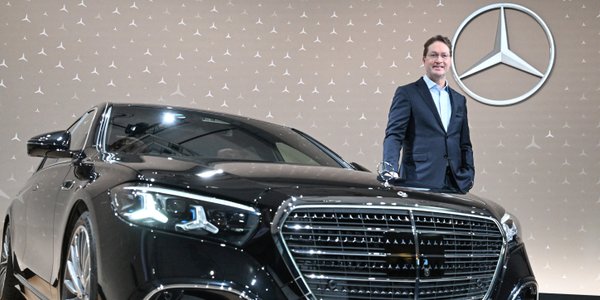
Mercedes-Benz CEO Ola Källenius is emphasizing the company's commitment to Poland, announcing substantial investments and highlighting a significant transformation within its van division. The company is undertaking its largest investment cycle in the light commercial vehicle segment in over 25 years, aiming to overhaul its entire portfolio within the next two to three years.
We are building a world-class Mercedes-Benz factory in Jawor. This is a new commitment to Poland and a project that still has room for development.
"We are building a world-class Mercedes-Benz factory in Jawor," Källenius stated, underscoring this as a new commitment to Poland with ample room for future development. He also noted the opening of the first Maybach Atelier in Europe in Poland, attributing this decision to the market's exceptional dynamism.
Källenius described the modern Mercedes as more than just a car manufacturer, defining it as a "smart device on wheels." He explained that while the physical product remains essential for real-world mobility, it is now deeply integrated into the digital realm. The new MB.OS platform, powered by AI and software, connects drivers to digital services, smartphones, and smart homes, enabling autonomous driving capabilities in certain situations.
In the simplest terms, we are a car company and a manufacturer of light commercial vehicles. But that means something different today than it did ten years ago.
Each new vehicle is equipped with advanced technology, including Nvidia supercomputers, numerous sensors, and generative AI-powered driving assistance systems. The Mercedes Virtual Assistant, utilizing powerful language models, further enhances the in-car experience.
The car becomes an intelligent device on wheels: it connects the driver to digital services, a smartphone, or a smart home, and in some situations, it can drive autonomously.
Addressing concerns that European automakers might be lagging in the technological revolution, Källenius acknowledged the different challenges faced by established manufacturers compared to startups. "If you found a company from scratch and build one architecture for one model, the mission is simple," he said. "If you have 45 models, some on older architectures and some on new ones, you have to carry out the change without interrupting operations." He positioned Mercedes as a leading traditional manufacturer navigating this complex transition.
If you found a company from scratch and build one architecture for one model, the mission is simple. If you have 45 models, some on older architectures and some on new ones, you have to carry out the change without interrupting operations.
DistantNews Editorial
Originally published by Rzeczpospolita in Polish. Translated, summarized, and contextualized by our editorial team with added local perspective. Read our editorial standards.
More Stories


From Our Blog

What Gets Lost (and Found) When News Is Translated

The Critical Role of Diaspora Media in Global News

What Travellers Should Know About Countries with Restricted Press

A Digital Nomad's Guide to Following Local News

How the Same Story Looks Different in Different Countries
