


Messi Wept: The End of the Age of the Savior
Translated from English, summarized and contextualized by DistantNews.
At a glance
In-depth
Sources not specified
Outcome reported
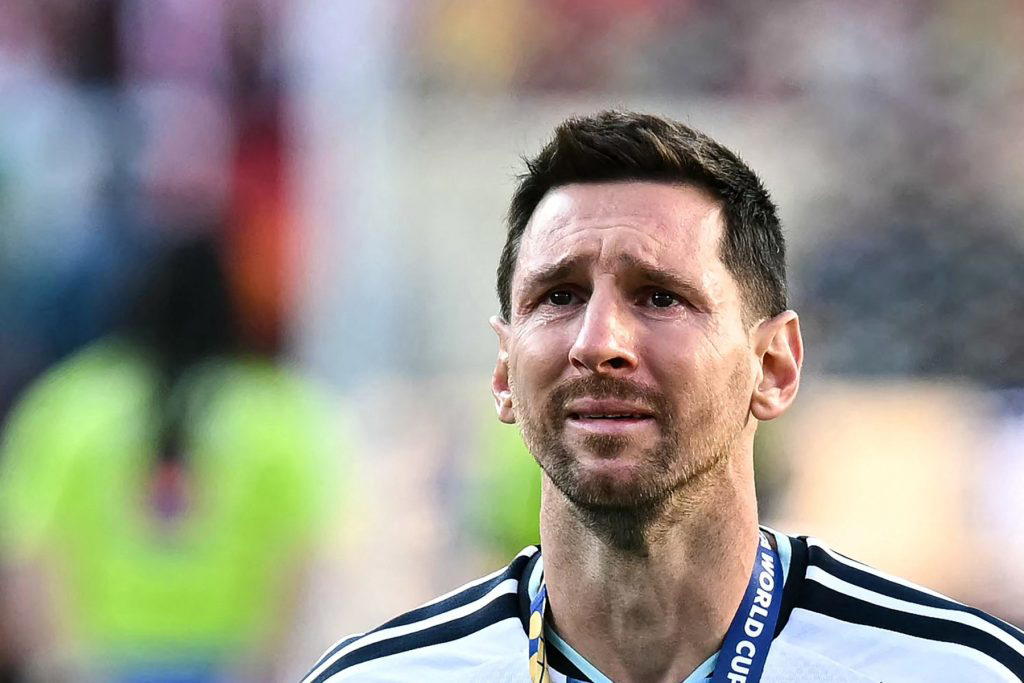
- Lionel Messi cried during the 2026 World Cup trophy ceremony after Argentina's final match against Spain.
- The image of Messi in tears is presented as a symbol of time's inevitable passage and the limitations of even extraordinary individuals.
- The article reflects on how society elevates celebrities, like Messi, to carry burdens once assigned to institutions, and how this fantasy of individual salvation has an expiration date.
The image of Lionel Messi weeping during the 2026 World Cup trophy ceremony, following Argentina's final match against Spain, has become a poignant symbol for the current generation. It confronts viewers with the undeniable truth that time, an indifferent force, eventually catches up to everyone, regardless of their status or achievements.
For two decades, Messi was perceived as an exception to the rules governing ordinary people, a recurring interruption in reality who bent matches to his will. He was less a footballer and more a force of nature, leading many to regard him as such rather than simply a man. This perception mirrors how civilizations elevate individuals, ancient societies had kings, religious ones had prophets, and modern societies have celebrities.
We now build monuments to footballers, musicians, billionaires, and political figures, asking them to shoulder burdens that were once the responsibility of institutions. This shift reflects a societal tendency to seek salvation from individual icons, a fantasy that has always possessed an expiration date. Messi, like Maradona and Pelé before him, never sought this role, yet football evolved beyond a mere game into a theater for this ancient human fantasy.
Watching Messi cry was not heartbreaking due to a perceived failure, but because time, the same force that humbled emperors and outlived conquerors, had finally arrived for him. This moment signifies the end of an era, the "Age of the Savior," where societies organized themselves around exceptional individuals, whether in sports, politics, or business, often leading to the collapse of teams or movements without their central personality. The article suggests that this reliance on individuals, rather than principles or robust institutions, ultimately proves unsustainable.
Jesus wept
DistantNews Editorial
Originally published by Vanguard in English. Translated, summarized, and contextualized by our editorial team with added local perspective. Read our editorial standards.
More Stories


From Our Blog

How the Same Story Looks Different in Different Countries

What Gets Lost (and Found) When News Is Translated

The Critical Role of Diaspora Media in Global News

What Travellers Should Know About Countries with Restricted Press

A Digital Nomad's Guide to Following Local News
