


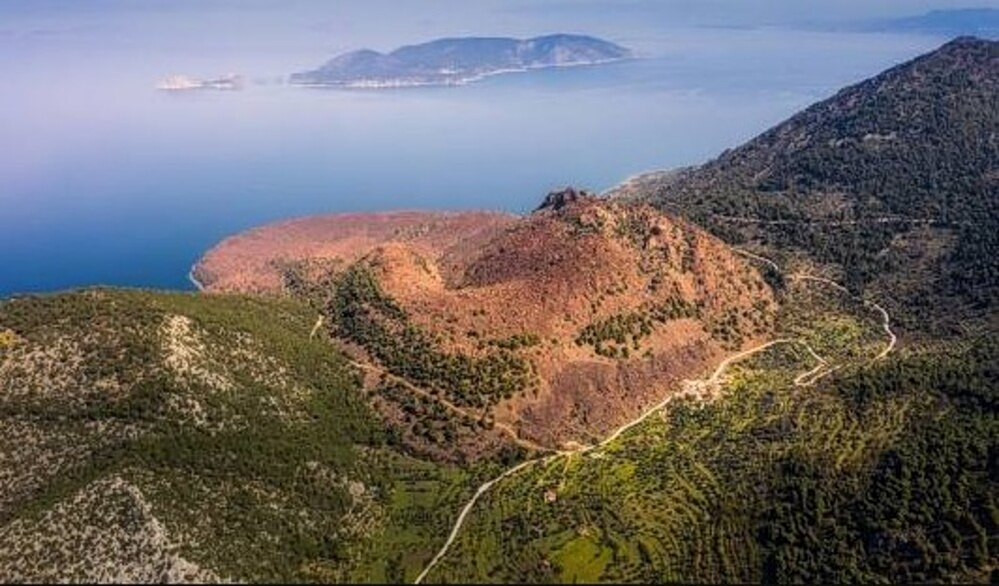
Methana Volcano's Dormancy Reassessed: Underground Activity Revealed
Translated from Greek, summarized and contextualized by DistantNews.
TLDR
- A 700,000-year volcanic history of the Methana volcano in Greece has been reconstructed by an international research team.
- Contrary to previous assumptions, the volcano showed significant underground magma activity even during periods of apparent dormancy.
- This discovery challenges the understanding of dormant volcanoes, suggesting they may not be as inactive as previously believed.
A groundbreaking international study, led by ETH Zurich, has rewritten the history of the Methana volcano in Greece, revealing a more dynamic past than previously understood. For over 100,000 years, this volcano, part of the South Aegean Volcanic Arc, was considered dormant. However, the research, which meticulously analyzed 700,000 years of volcanic activity, found that substantial underground magma movement persisted even during its quiet phases.
Greek volcanoes have much more to reveal.
This revelation, published in Science Advances, overturns long-held assumptions. Scientists previously believed that extended periods of inactivity, like the 110,000-year lull observed before Methana's current activity cycle, signaled a volcano's definitive end. The new findings, however, indicate that such long silences do not equate to cessation of activity. Instead, the magma chamber continued to grow, with crystallization intensifying, pointing to significant subterranean processes.
Our study shows that a long dormancy does not necessarily mean a system stops.
The key to this prolonged quietude, according to lead author Razvan-Gabriel Popa, lies in the magma's high water content. This characteristic slows magma ascent through crystallization, preventing eruptions and allowing magma to accumulate over vast timescales. When this deep magma becomes drier, eruptions can unexpectedly resume. This research fundamentally alters how volcanologists perceive 'extinct' or dormant volcanoes, suggesting many more may harbor hidden activity and could potentially erupt with greater force than anticipated.
Many more volcanoes that we consider extinct today may be in this state.
DistantNews Editorial
Originally published by Ta Nea in Greek. Translated, summarized, and contextualized by our editorial team with added local perspective. Read our editorial standards.
More Stories

From Our Blog

What Gets Lost (and Found) When News Is Translated

The Critical Role of Diaspora Media in Global News

What Travellers Should Know About Countries with Restricted Press

A Digital Nomad's Guide to Following Local News

How the Same Story Looks Different in Different Countries
