

Mexican lawmakers push for environmental law modernization
Translated from Spanish, summarized and contextualized by DistantNews.
At a glance
News
Named sources
New plan
- Mexican lawmakers and environmental experts are pushing to modernize the General Law of Ecological Balance and Environmental Protection (LGEEPA), enacted nearly 40 years ago.
- The current law, last updated in 1996, is insufficient to address severe environmental degradation in Mexico over the past 25 years, including forest loss and water contamination.
- Proposed updates aim to clarify municipal responsibilities in land use and urban planning, increase environmental sector funding, and incorporate new conservation measures.
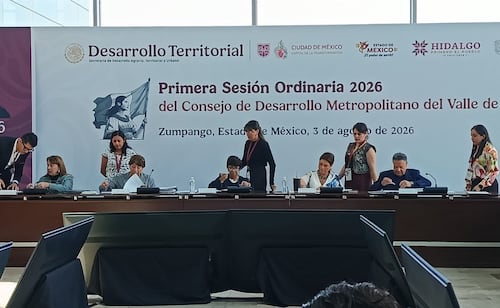
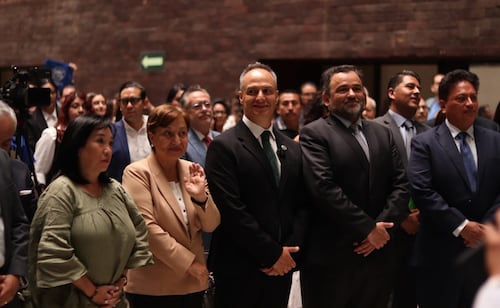
Lawmakers, federal authorities, academics, and civil society representatives have convened a National Forum to modernize Mexico's General Law of Ecological Balance and Environmental Protection (LGEEPA). Participants agreed on the urgent need to update the nearly four-decade-old legislation.
It has been a pillar upon which we have built Mexico's environmental framework, however, it was enacted in 1988, was updated in '96 and has received a lot of reforms, but in reality, it has been almost four decades since it was enacted in our country.
Jesús Martín Cuanalo Araujo, Secretary of the Environment and Natural Resources Commission, highlighted that while the LGEEPA has been a cornerstone of Mexico's environmental framework since its 1988 enactment and subsequent 1996 update, it is now outdated. He noted that Mexico has experienced severe environmental deterioration in the last 25 years, losing 5 million hectares of forests and jungles and contaminating 70% of its water bodies.
Cuanalo Araujo emphasized that the modernized LGEEPA must redefine municipal responsibilities. He pointed out that municipalities are central to land-use changes and disorderly urban growth, leading to water contamination. Many municipalities lack ecological land-use planning, resulting in significant environmental consequences.
That they are the basis of the change of land use, of disorderly urban growth, of the contamination of water bodies, and that the vast majority of municipalities in Mexico have not attended to planning with an ecological land-use planning program, which has led to great environmental consequences.
Iliana Villalobos Estrada, Undersecretary of Environmental Regulation at SEMARNAT, welcomed the forum, stating that dialogues with civil society, academia, professionals, and the legislative branch will foster effective legislation. She acknowledged that despite substantial government resources allocated to protecting natural areas and biosphere reserves, updating the LGEEPA is crucial. The revised law aims to introduce new conservation measures, recognize biological corridors, and certify forests and fishing sanctuaries.
We welcome this effort and the great interest in these environmental issues, I consider that these dialogues with civil society associations, academia, professionals, and of course the legislative power, will allow us to arrive at good legislation.
Following the inauguration, Cuanalo Araujo announced his intention to urge the legislative branch and the federal government to increase environmental sector funding during the September budget deliberations. He stressed the need for greater financial support to address the country's environmental challenges effectively.
In the LGEEPA, we are foreseeing the creation of other conservation measures that will complement these areas for conservation, recognizing biological corridors, marine, terrestrial, certified forests, fishing sanctuaries.
DistantNews Editorial
Originally published by El Universal in Spanish. Translated, summarized, and contextualized by our editorial team with added local perspective. Read our editorial standards.
More Stories

From Our Blog

What Press Freedom Means for the News You Read

What Gets Lost (and Found) When News Is Translated

The Critical Role of Diaspora Media in Global News

What Travellers Should Know About Countries with Restricted Press

A Digital Nomad's Guide to Following Local News
