

Mexican Parties' Agendas Dominated by 'El Mayo' Case and PRI's Fight with INE
Translated from Spanish and summarized by DistantNews. Read the original for the full story.
At a glance
Analysis
Documents & data
Outcome reported
- In July 2026, Mexican political parties' agendas were dominated by the 'El Mayo' Zambada and Rubén Rocha Moya case, the PRI's conflict with the INE over Morena's alleged narco ties, and the 4T alliance's fractures.
- Morena received the most coverage but had its worst effective balance, with 56% negative coverage, largely due to scandals involving Baja California's governor and tensions with Washington.
- The PRI engaged in a high-profile media battle with the INE regarding its accusations of Morena being a "narco-party," successfully framing the electoral authority's order to remove the messages as censorship.
Mexican political parties navigated a turbulent July 2026, with their media agendas heavily influenced by the diplomatic crisis surrounding Ismael "El Mayo" Zambada and Governor Rubén Rocha Moya, the PRI's contentious battle with the National Electoral Institute (INE) over accusations against Morena, and internal ruptures within the ruling 4T alliance in Chihuahua and Baja California.
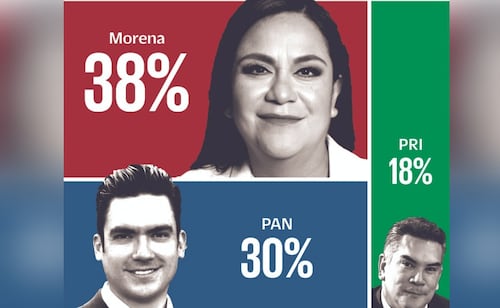
Morena, despite dominating media coverage with 38% of the total, experienced its poorest effective balance, with only 24% positive versus 56% negative coverage. This downturn was fueled by accumulated crises, including leaked audio exposing internal divisions within the 4T in Baja California, ongoing tensions with Washington concerning the Zambada case, scrutiny over candidate selection processes for 2027, and controversy surrounding Rosario Piedra Ibarra's re-election to the National Human Rights Commission (CNDH). However, Morena also saw successes, including the INE ordering the PRI to retract its anti-narco campaign messages and maintaining its lead in Nayarit's gubernatorial polls for 2027.
The PAN faced the highest proportion of negative coverage, with 67% of its media mentions being adverse. The arrest of former Baja California governor Ernesto Ruffo Appel for alleged tax evasion became a significant trigger, sparking accusations of political persecution from the opposition, while Morena defended the justice system's autonomy. Despite a strong response from PAN leader Jorge Romero denouncing a "witch hunt," the government effectively controlled the month's media narrative.
witch hunt, leave for the governor of Baja California, danger of the T-MEC
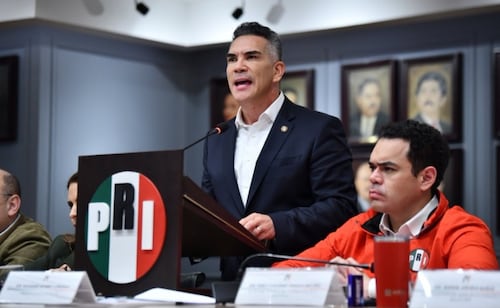
The PRI's media strategy centered on its high-stakes conflict with the INE over its "narco-party" claims against Morena. Although the INE ordered the PRI to remove its messages, the party, with 321 points of coverage and a -64 effective balance, leveraged this formal defeat into a narrative of victimhood and censorship. This issue consumed 50% of the PRI's coverage, with party leader Alito Moreno capitalizing on the electoral authority's resolution as a communication asset.
The PT registered a -20 effective balance, with the political fallout involving Baja California's governor Montserrat Caballero absorbing much of its negative coverage. Conversely, the PVEM achieved the highest positive sentiment, with 78% favorable coverage, showcasing its negotiation strength in Chihuahua.
the PRI managed what few parties achieve: using a formal defeat, the INE's order to lower its messages, to gain ground in the narrative of the censored victim.
About this summary
Originally published by El Universal in Spanish. Translated, summarized, and contextualized automatically by DistantNews, with a note on how the source frames the story. Not individually reviewed before publishing. How this works.
More Stories

From Our Blog

What Press Freedom Means for the News You Read

What Gets Lost (and Found) When News Is Translated

The Critical Role of Diaspora Media in Global News

What Travellers Should Know About Countries with Restricted Press

A Digital Nomad's Guide to Following Local News
